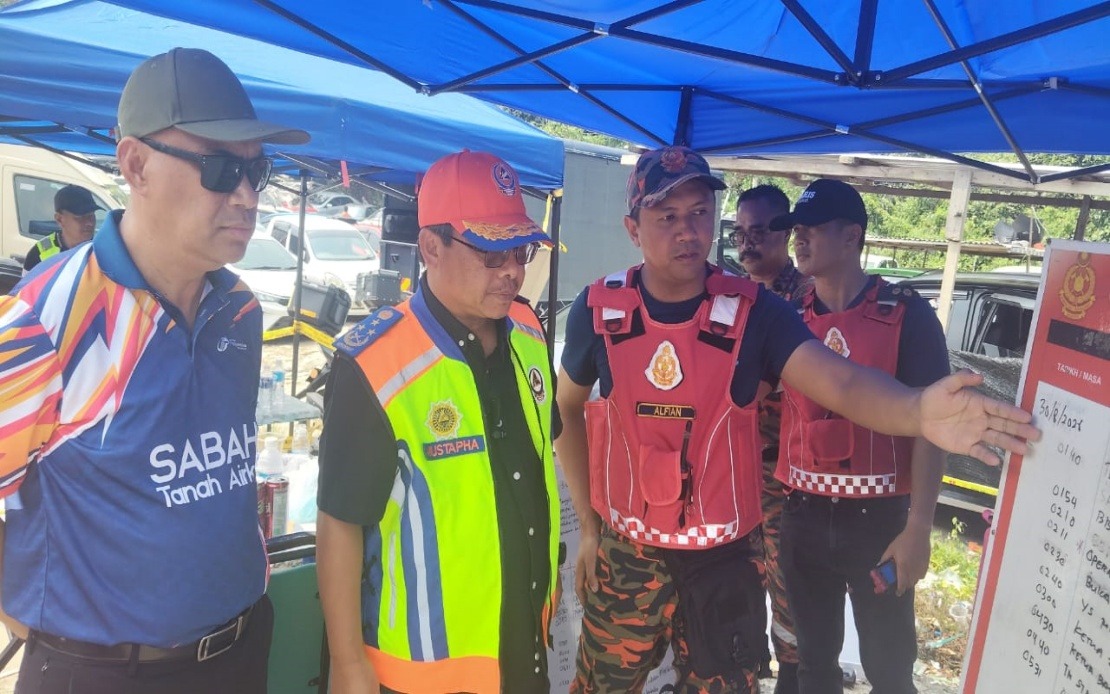
The morning hours of August 30 brought tragedy to the Kota Kinabalu community when a fire swept through Kampung Lok Buta, claiming three young lives and devastating the neighbourhood in the pre-dawn darkness. The blaze, which erupted at 1.40 am, destroyed more than 200 residential structures and displaced over 200 victims, prompting an immediate government response to coordinate relief and support efforts across multiple agencies.
Authorities swiftly established two temporary relief centres at Dewan Kampung Likas and Dewan Damai to serve as operational hubs for managing the aftermath. These facilities were designed to streamline the registration process for displaced residents, coordinate inter-agency responses, and manage incoming donations from the public and private sectors. The systematic approach reflected the scale of the disaster, with officials recognising that such operations require centralised coordination to prevent duplication and ensure resources reach those most in need.
The three fatalities were identified as Nana Abdullah, aged four; her brother Mohd Asrul Abdullah, aged six; and their cousin Nurfarahdilah Mohd Tajihah, aged eight. Their deaths represent not only a profound loss for their families but also a stark reminder of the vulnerability of young children in fire emergencies, particularly in densely populated residential areas where escape routes may be limited and response times critical. The tragedy underscores ongoing concerns about fire safety protocols in informal settlements across Malaysian urban centres.
Minister in the Prime Minister's Department (Sabah and Sarawak) Datuk Mustapha Sakmud visited the affected area the same day and confirmed that the Kota Kinabalu City Hall had formally declared Kampung Lok Buta a disaster zone. This designation unlocks accelerated access to government assistance programmes and enables faster deployment of resources typically reserved for emergency situations. The formal status also signals to federal agencies that enhanced coordination mechanisms should be activated to support the recovery process.
Datuk Mustapha emphasised the importance of identifying students among the victims to ensure the fire would not derail their education. This focus reflects awareness that disasters can have cascading effects on vulnerable populations, particularly children whose schooling may be interrupted by displacement and trauma. By flagging this concern early, the minister signalled the need for an integrated response that addresses both immediate survival needs and longer-term stability for affected families.
The minister committed to liaising with the Ministry of Education to ensure that students from schools, higher education institutions, and TVET programmes received appropriate support mechanisms. Such coordination is essential in a disaster context, as educational institutions typically hold records of enrolled students and can help identify those in the affected area who may require alternative learning arrangements, financial assistance, or psychological support services.
Datuk Mustapha indicated that initial financial assistance would be extended to the families of the three deceased children, acknowledging both the humanitarian imperative and the role of government in providing immediate relief during catastrophic loss. The provision of emergency cash assistance serves multiple purposes: it addresses immediate needs such as funeral arrangements and temporary shelter while also recognising the state's duty of care toward citizens affected by disaster.
Plans were set in motion to elevate the matter to the federal level through the Malaysia Agreement 1963 (MA63) Implementation Action Council, which includes Prime Minister Datuk Seri Anwar Ibrahim and Sabah Chief Minister Datuk Seri Hajiji Noor. This escalation suggests that authorities anticipated the need for resources and policy measures beyond the scope of city-level response, particularly given the scale of destruction and the loss of life. The proposed briefing to both national and state leaders indicates recognition that Kampung Lok Buta's recovery may require coordinated support across multiple government tiers.
Datuk Seri Dr Sabin Samitah, Kota Kinabalu's mayor and chairman of the District Disaster Management Committee, accompanied the minister during site visits and was positioned to brief higher-level officials on ground realities and recovery needs. This collaborative approach reflects Malaysia's disaster management framework, which emphasises multi-level governance coordination and information flow between local, state, and federal authorities.
The Kampung Lok Buta fire represents a significant test of Kota Kinabalu's capacity to manage large-scale residential disasters. Fire emergencies in informal settlements often pose particular challenges due to dense housing patterns, limited access roads, and infrastructure constraints that can hinder evacuation and emergency response. The scale of destruction—affecting over 200 households—demonstrates the speed and intensity with which fire can spread in such environments, highlighting the need for preventative measures including fire safety education, improved building standards, and enhanced early warning systems.
For Southeast Asian observers monitoring Sabah's development trajectory, the incident raises questions about urban planning and housing standards in rapidly growing cities. Many Malaysian towns experiencing population growth have witnessed informal settlements emerging on the urban periphery, often with minimal regulatory oversight regarding construction materials and fire safety compliance. The Kampung Lok Buta disaster illustrates how such vulnerabilities can translate into catastrophic human and economic loss within minutes.
The government's coordination efforts, while commendable in their speed and multi-agency character, also point to the need for stronger preventative frameworks. Investment in fire detection systems, community fire safety training, and improved building code enforcement in high-density residential areas could potentially reduce the frequency and severity of such incidents. The tragedy provides an opportunity for policymakers to evaluate whether current regulations adequately protect residents of informal settlements, and whether existing enforcement mechanisms function effectively in densely populated urban areas.
As Kota Kinabalu mobilises its relief infrastructure and higher-level officials engage with the situation, the focus has shifted from emergency response to medium-term recovery and eventual reconstruction. The coming weeks will test whether government agencies can maintain coordination momentum and deliver on commitments to assist affected families, particularly vulnerable groups such as children and students whose futures depend on rapid normalisation and stability.

