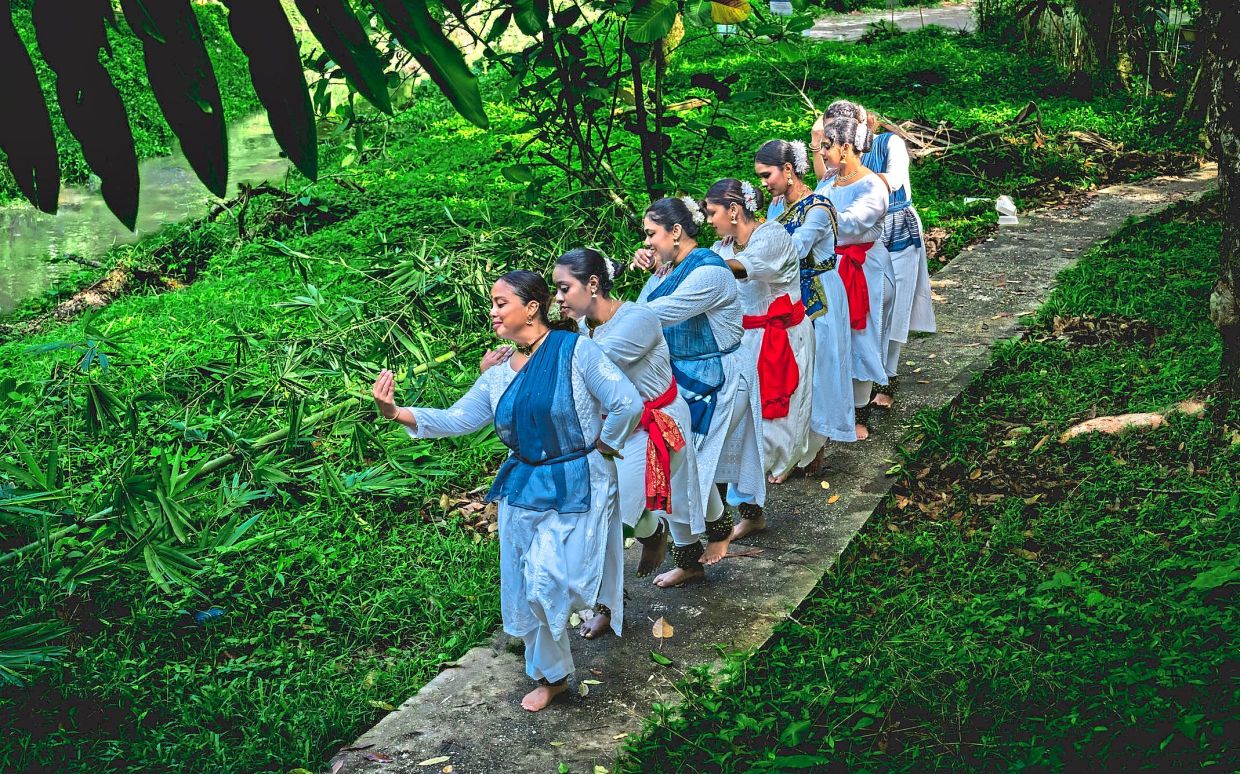
Three decades of artistic survival in Malaysia's uncertain performing arts landscape culminates this August when Kalpana Dance Theatre presents an ambitious bharatanatyam concert that merges classical Indian dance with urgent contemporary messaging about water conservation. Founded and directed by Shangita Namasivayam, the company has navigated the unpredictable terrain of cultural entrepreneurship much as a river carves through landscape—adapting constantly, yet maintaining its essential character. The production, scheduled for August 8 at the Shantanand Auditorium in Temple of Fine Arts, Kuala Lumpur, represents far more than a celebratory milestone: it signals how Malaysian-based classical dance institutions are responding to pressing global challenges by harnessing the expressive power of their art form.
Shangita describes the creative process as analogous to nurturing a child from fragile conception through patient development until the moment it becomes tangible before an audience. This philosophy has driven KDT's evolution, but the 30th anniversary production takes a distinctive turn by centering on two Indian rivers—the Ganga in the north and the Kaveri in the south—as both artistic inspiration and springboard for environmental discourse. The Ganga holds supreme spiritual and cultural significance across India, while the Kaveri, reverently called the "Ganga of the South," sustains agriculture, irrigation and power generation across southern states. Both waterways have nourished classical and folk dance traditions for centuries, embedding themselves into India's artistic vocabulary through performances that interweave mythology, regional musical idioms and sacred narratives.
The conceptual framework reflects Shangita's determination to make bharatanatyam relevant to younger generations grappling with environmental degradation. She frames the rivers metaphorically: the Ganga as "the shore of compassion" where spiritual transgressions dissolve, and the Kaveri as "the mother of prosperity" where life flourishes. Together, the narrative argues, they exemplify how water transcends its material function to become a manifestation of inner peace. Yet beneath this poetic language lies an unflinching assessment of current crises. Shangita explicitly connects the production to widespread water pollution, river abuse and ocean degradation, positioning the dance performance as a vehicle for consciousness-raising among her young dancers about humanity's destructive relationship with aquatic ecosystems.
This environmental commitment extends beyond symbolic choreography into tangible community action. KDT has partnered with The Alliance of River Three (ART!), a Malaysian volunteer-driven environmental organisation founded in 2018 by Kennedy Michael to rehabilitate the Klang River. ART! operates through community-constructed River Three Parks, weekly cleanup initiatives and long-term ecological restoration efforts, having earned recognition as a winner of The Star Golden Hearts Awards in 2020 for pioneering urban river ecosystem rehabilitation models. Since January 2024, KDT's dancers have participated in ground-level conservation work at Taman Melawati River Three SDG Park and the Mid Valley River Three SDG Park, both targeted for completion by 2030 as part of the Sustainable Development Goals framework. Shangita observes that such hands-on engagement has proven revelatory for her dancers, many of whom lack regular exposure to environmental fieldwork.
The artistic realisation involved extensive collaboration with Chennai-based creative partners whom Shangita has known and worked with for decades. Choreographer PT Narendran, musician OS Arun and scriptwriter Dr Va Ve Subramanian participated in months of deliberative discussions, gradually synthesising their ideas into a cohesive production that balances creative ambition with environmental purpose. This long-standing professional relationship provides what Shangita describes as "a certain level of comfort in familiarity," enabling deeper artistic exploration than would be possible with unfamiliar collaborators. The resulting script, delivered in Tamil with English narration, achieves what Shangita characterises as simultaneously poetic and profound—layering lyrical beauty with philosophical depth to create resonances across generational divides.
The performance itself embraces an egalitarian casting philosophy notably absent from conventional bharatanatyam concert culture. Rather than featuring soloists or highlighted performers, the production involves 54 dancers spanning ages six to 62, including dancers with disabilities, all receiving meaningful choreographic roles. This 90-minute thematic presentation represents a deliberate choice to democratise the stage and demonstrate that classical dance belongs to communities rather than virtuoso individuals. The supporting music ensemble comprises 30 artists; logistical constraints prevent bringing the entire Chennai contingent to Malaysia, necessitating creative workforce solutions that also generate opportunities for emerging Malaysian musicians and dancers to collaborate with internationally respected masters.
These cross-border artistic exchanges constitute a vital aspect of KDT's educational mission. Shangita emphasises that working alongside internationally recognised artists offers students far more than technical refinement in movement vocabulary and rhythmic precision. Such interactions cultivate deeper understanding of bharatanatyam's richness, internal diversity and capacity for evolution as a living performance tradition. Young dancers gain appreciation for how different masters bring distinctive philosophical approaches and technical perspectives, shaping them into intellectually engaged artists rather than mere technique reproducers. This pedagogical philosophy reflects broader recognition within the Malaysian dance community that meaningful arts education must involve performance experience and mentorship from established practitioners.
Financial precarity remains the persistent challenge threatening such ambitious undertakings. Shangita acknowledges her ongoing struggle to secure adequate funding, yet her conviction about art's transformative potential propels her beyond these limitations. She argues persuasively that classical dance education cannot exist purely within the classroom: students require performance opportunities to experience the heightened physical, emotional and psychological demands that distinguish artistic practice from mechanical skill acquisition. Stage performance generates qualitatively different effort and consciousness than regular classes, she suggests, embedding experiences that dancers must carry forward as cultural custodians. This perspective positions KDT not merely as an entertainment provider but as a guardian of living tradition whose responsibility extends to nurturing younger generations as thoughtful inheritors.
The August 8 production therefore occupies symbolic and practical significance within Malaysia's cultural landscape. It demonstrates how classical dance companies rooted in immigrant communities can simultaneously honour ancestral traditions while engaging urgent contemporary imperatives. By yoking bharatanatyam to environmental activism, KDT makes legible the connections between aesthetic practice and material world responsibility. The partnership with ART! illustrates that such linkages need not remain abstract: they can manifest through concrete collaborative action involving dancers and environmental volunteers working together toward ecosystem restoration. For regional observers, the production exemplifies how performing arts institutions might respond to climate anxieties not through abandoning artistic integrity but through deepening engagement with communities and causes that transcend entertainment.

