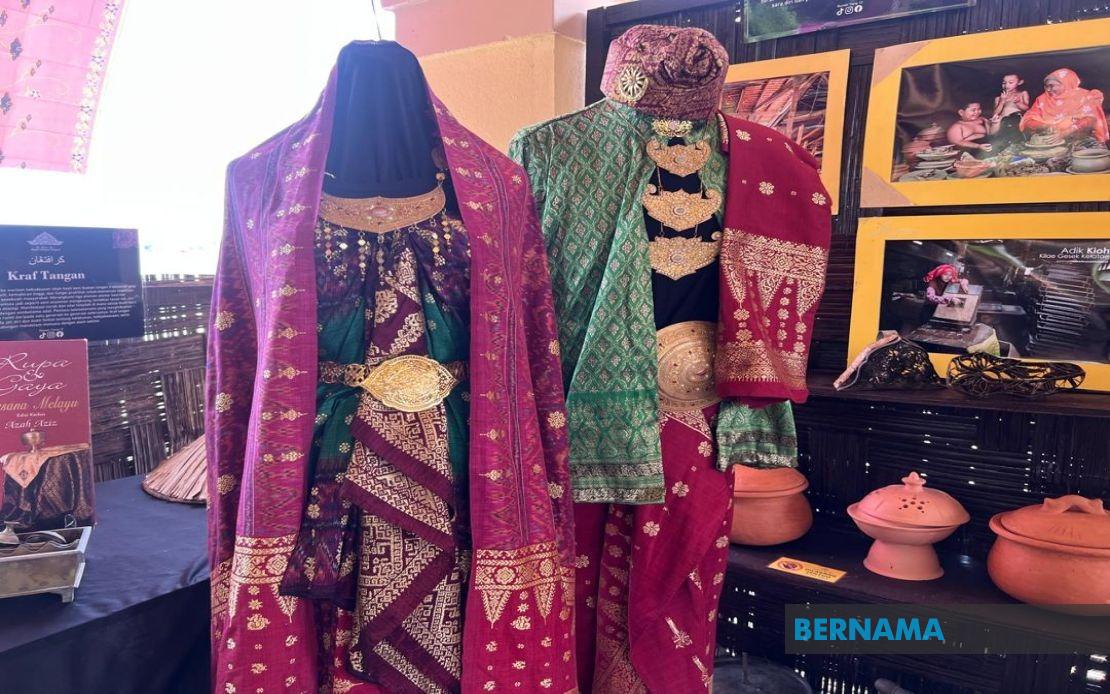
The ornate Kain Lima textile, a crowning achievement of Malay craftsmanship that once adorned royalty and celebrated ceremonial occasions, teeters on the edge of cultural extinction. As fewer artisans maintain the knowledge required to produce these intricate fabrics, custodians of Malaysia's textile heritage are mounting urgent efforts to preserve and resurrect public appreciation for this vanishing craft. The challenge reflects a broader struggle within Southeast Asia to sustain traditional arts in an era dominated by mass-produced alternatives and shifting consumer priorities.
Unlike the more widely recognised songket that relies on metallic threads woven into base cloth, Kain Lima employs a fundamentally different methodology that demands exceptional precision and artistic vision. According to Nik Mohd Murdani Nik Hassan, caretaker of Galeri Rumah Tiang 12, the technique's essence lies in the pre-treatment of threads themselves. Weavers carefully tie and dye individual strands before they ever reach the loom, creating a resist-dye process that generates extraordinarily fine motifs impossible to achieve through conventional methods. This upstream manipulation of thread produces the fabric's signature characteristic: a luminous colour-reflection effect that shimmers subtly as the wearer moves, distinguishing Kain Lima from merely decorative textiles that merely apply metallic embellishment to finished cloth.
The distinction matters enormously to those versed in traditional Malaysian textiles. Those familiar with the country's weaving heritage can immediately recognise Kain Lima through its unique pattern architecture, the density and arrangement of its weaving structure, and the specific combination of materials deployed throughout the process. Each completed piece represents the culmination of painstaking labour where individual motifs must be positioned with mathematical exactitude, combining multiple hues of pre-treated thread in sequences that demand unwavering focus across hours of repetitive work. This labour intensity directly translates into market value—contemporary Kain Lima pieces command between RM3,000 and over RM4,000 depending on factors including age, pattern complexity, physical condition, and the fineness of the weaving itself.
Historically, Kain Lima functioned as a supreme marker of status and sophistication within Malay society. Royal courts favoured the textile for sarongs, shawls, and ceremonial garments worn during significant state occasions and rituals. This association with nobility established Kain Lima as a luxury product fundamentally distinct from everyday fabrics, imbuing it with cultural prestige that extended beyond mere material worth. The decline in production represents not simply the loss of a commercial product but the erosion of a symbolic system through which communities expressed their values and hierarchies.
Galeri Rumah Tiang 12 has emerged as a vital repository for preserving knowledge about this heritage. Since Nik Mohd Murdani joined the institution in 2020, the gallery has assembled collections of Kain Lima sourced from private collectors, positioning these historic textiles as educational resources rather than sequestered possessions. The deliberate strategy to showcase examples of Kain Lima alongside songket and other traditional textiles creates opportunities for direct comparison, allowing visitors to perceive the technical differences that distinguish one craft tradition from another. This pedagogical approach serves dual purposes: it educates the general public about textile sophistication while simultaneously confronting the reality that acquiring new examples of authentic Kain Lima has become progressively harder across Malaysia.
The exhibition serves a particular constituency of cultural practitioners seeking to deepen their understanding of heritage crafts. Nur Anira Akmal Che Abdul Aziz, a 34-year-old handicraft producer from Pasir Mas, exemplifies how younger artisans are attempting to build bridges between traditional knowledge and contemporary creative expression. Her participation in heritage exhibitions reflects a deliberate effort to study the formal elements—patterns, motifs, and production methodologies—embedded within traditional textiles, seeking to translate these lessons into innovative contemporary work that maintains connection to local identity. The exchange between heritage preservation and creative innovation suggests one pathway through which traditions might achieve contemporary relevance without abandonment.
Yet such efforts remain insufficient to arrest the broader decline in traditional weaving practice. The economics of heritage textile production resist revival through individual initiative alone. Mastering Kain Lima requires years of apprenticeship under experienced practitioners, an investment in time and training that offers no guarantee of commercial viability in markets increasingly oriented toward mass-manufactured alternatives. Younger generations in rural weaving communities throughout Kelantan and other textile-producing regions face limited economic incentives to pursue textile arts when alternative employment in urban sectors or service industries offers more reliable income streams.
The cultural implications of Kain Lima's potential disappearance extend beyond nostalgia for past artistic achievements. The textile carries encoded knowledge about colour theory, pattern mathematics, and material properties accumulated across centuries of experimentation. This embodied knowledge, transmitted through apprenticeship and direct practice, cannot be adequately documented through photographs or written descriptions. When the final generation of master weavers retires without training successors, entire systems of aesthetic and technical understanding vanish irretrievably.
For Malaysian policymakers and cultural institutions, the Kain Lima situation presents a concrete case study in heritage preservation challenges. Exhibitions and public education, while necessary, prove insufficient without addressing the structural economic barriers that discourage artisans from continuing their practice. Potential interventions might include preferential procurement policies directing government textile needs toward traditional weavers, artist residency programmes that provide economic stability while building apprenticeship relationships, or targeted tourism strategies that position heritage textiles as premium cultural products justifying higher retail prices. Regional cooperation through ASEAN and broader Southeast Asian networks might facilitate knowledge exchange with countries facing parallel challenges in maintaining traditional weaving practices.
The Festival Kesenian Rakyat Kelantan provided an appropriate venue for contemporary discussions about Kain Lima's future, as Kelantan remains the primary repository of this weaving tradition within Malaysia. Yet festivals alone cannot sustain living craft traditions. Sustainable preservation requires embedding heritage textile production within viable economic systems while cultivating consumer appreciation among Malaysians themselves. Without intervention, future generations may encounter Kain Lima only in museum collections, understanding the textile as historical artifact rather than living cultural practice capable of inspiring contemporary creativity and linking individuals to their heritage.

