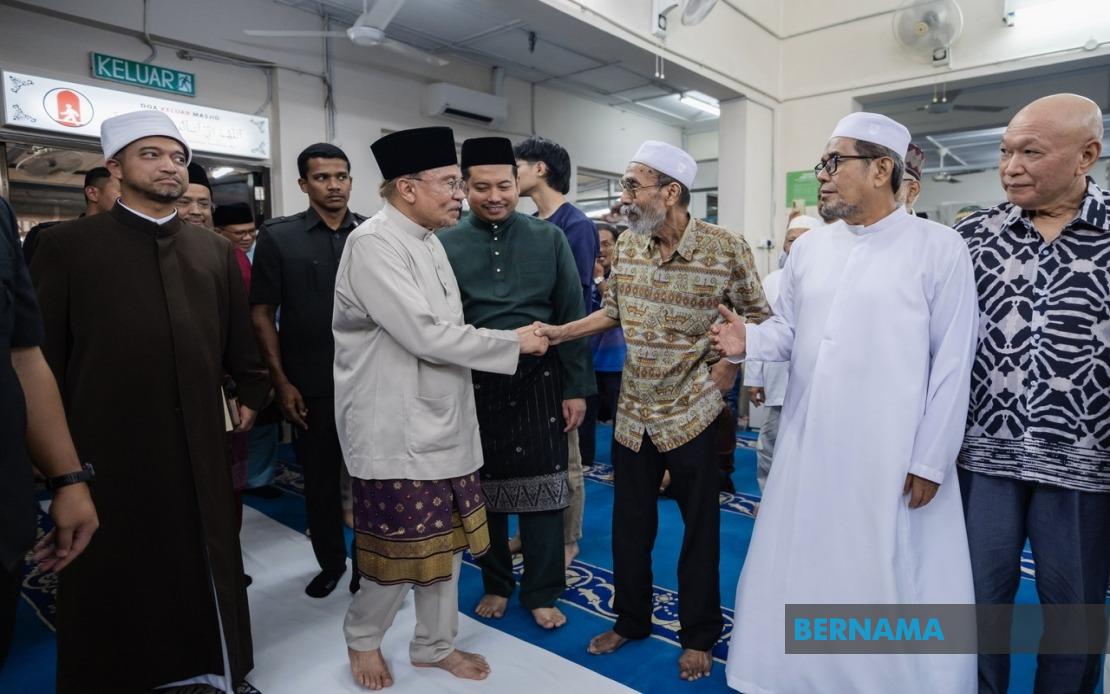
Prime Minister Datuk Seri Anwar Ibrahim has reassured stakeholders that the Johor-Singapore Special Economic Zone (JS-SEZ) remains on track, emphasising the collaborative nature of the undertaking between federal and state governments. Speaking after Friday prayers at Masjid As-Sodiqin in Taman Kobena, Anwar stressed that the project continues to advance according to its original timeline, dismissing concerns about delays or complications in its rollout.
The Prime Minister's remarks came in response to calls from Johor Menteri Besar Datuk Onn Hafiz Ghazi, who had urged the federal administration to accelerate the unveiling of the JS-SEZ master plan. Onn Hafiz had framed the announcement as necessary to maintain Johor's economic momentum and demonstrate continued commitment to the initiative. His intervention reflected underlying tensions about the pace of development and the need for clarity on implementation timelines.
Anwar clarified the governance structure underpinning the JS-SEZ, explaining that whilst the project operates under federal stewardship, it necessarily involves close coordination with the Johor state government. The Prime Minister delineated the respective roles of Malaysia and Singapore, noting that formal announcements and ceremonial signings fall within the domain of bilateral discussions between the Malaysian and Singaporean leaders. This characterisation sought to situate the JS-SEZ within a framework of high-level diplomacy rather than domestic political manoeuvrings.
The JS-SEZ represents a significant economic venture for the region, positioning Johor as a catalyst for cross-border growth and investment. The initiative aims to leverage the complementary strengths of both nations, with Malaysia offering land, labour, and resources whilst Singapore provides financial expertise, technology, and access to global markets. For Southeast Asia, the project signals confidence in regional economic integration despite geopolitical uncertainties affecting the broader Indo-Pacific.
Anwar's cautionary message to political leaders carried implicit criticism of attempts to inject partisan considerations into the project's management. His warning against politicisation appeared directed at various actors—whether within Johor's state administration, opposition parties, or civil society groups—who might seek to claim credit or assign blame for the initiative's pace. By framing the JS-SEZ as fundamentally non-partisan, Anwar sought to insulate the project from domestic political cycles and electoral considerations.
The Prime Minister further noted that clarifications regarding potential concerns or queries about the JS-SEZ had already been furnished by the Ministry of Economy. This assertion suggested that information asymmetries or confusion surrounding the project should not persist, as relevant authorities had provided comprehensive documentation and public statements. Anwar's approach emphasised transparency and institutional communication, positioning government agencies as reliable sources of information.
For Malaysia's economic agenda, the JS-SEZ occupies a prominent position within broader efforts to diversify and modernise the economy. The project aligns with federal initiatives to attract foreign direct investment, develop high-value manufacturing sectors, and integrate Malaysian industries into regional value chains. Johor, as the location of the zone, stands to benefit from infrastructure development, job creation, and enhanced business competitiveness, potentially addressing structural economic challenges in the southern state.
The timing of Anwar's intervention merits consideration against the backdrop of Malaysia's domestic political context. As Prime Minister overseeing a coalition government, Anwar must navigate competing interests from federal partners and state governments, particularly those held by different political coalitions. The Johor state government, governed separately from the federal administration, may harbour distinct priorities or timelines regarding the JS-SEZ announcement, necessitating diplomatic coordination.
Bilaterally, the JS-SEZ reinforces the Malaysia-Singapore relationship, which has historically balanced cooperation with periodic tensions over borders, water agreements, and trade. The special economic zone model allows both nations to pursue mutual economic gains whilst respecting sovereignty and political autonomy. For regional observers, the project demonstrates sustained commitment to bilateral engagement even amidst occasional diplomatic friction, providing a stabilising force in Southeast Asian affairs.
The Ministry of Economy's prior explanations regarding the JS-SEZ likely addressed recurring questions about environmental impacts, local community benefits, land acquisition processes, and employment provisions. Government agencies would have sought to demonstrate that the project conforms to sustainability standards, respects indigenous and community rights, and generates inclusive growth. Anwar's reference to these clarifications implicitly invoked institutional credibility and expert consensus.
Moving forward, the JS-SEZ's success will hinge upon maintaining political consensus across federal and state levels, delivering tangible economic benefits to participating communities, and securing sustained investment from both Malaysian and international actors. Anwar's public positioning as an advocate for focused, depoliticised execution reflects recognition that successful megaprojects require insulation from short-term partisan pressures. The Prime Minister's intervention thus signals his commitment to advancing the bilateral initiative whilst managing domestic political sensitivities.

