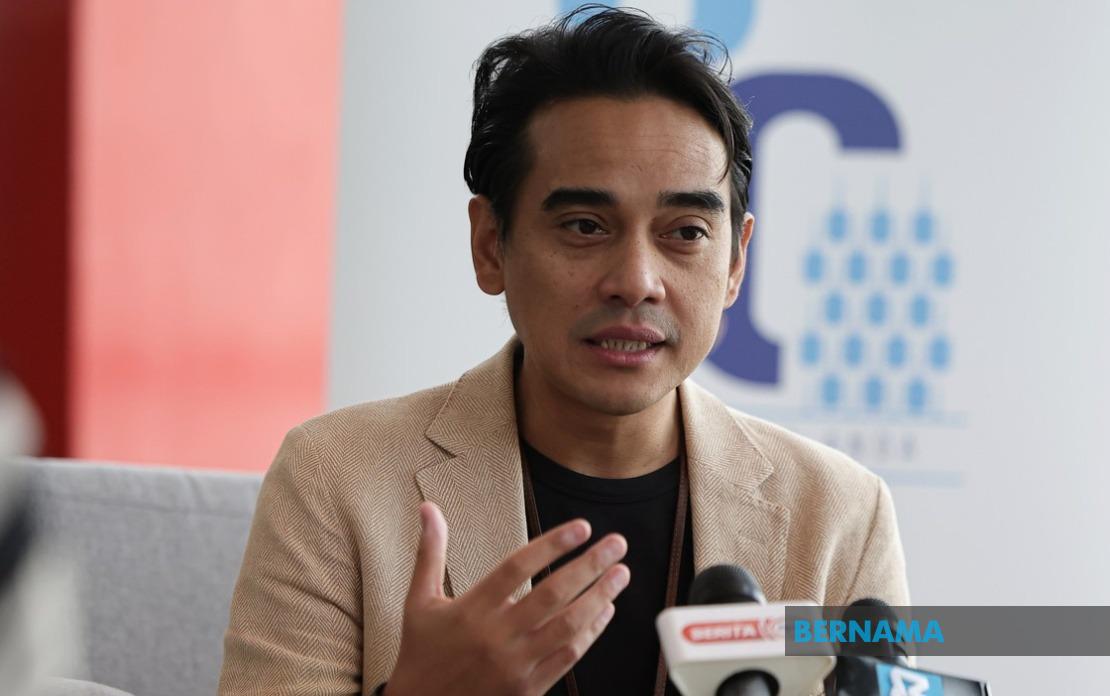
Journalists operating in Malaysia and across Southeast Asia face a critical inflection point where adapting to artificial intelligence has become essential for professional longevity, according to Ashwad Ismail, Director-General of Broadcasting. Speaking during an appearance on Bernama TV's The Nation programme in Kuala Lumpur on June 17, Ashwad reframed the technological disruption reshaping the media industry not as an existential threat but as an unprecedented opportunity for those willing to develop new competencies.
The Broadcasting chief's intervention arrives as newsrooms worldwide grapple with rapid AI integration, from automated content generation to data analysis and audience targeting. His message carries particular weight in Malaysia, where media organisations are simultaneously contending with digital transformation, changing consumption patterns, and audience fragmentation. Rather than allowing apprehension about technological displacement to paralyse the industry, Ashwad advocated for strategic upskilling and a fundamental reorientation of how journalists perceive their evolving role.
Crucially, Ashwad distinguished between job security based on traditional journalistic competencies and the enhanced career prospects available to practitioners who master AI tools. His blunt formulation—that journalists will not be replaced by machines, but rather by other journalists who possess superior AI literacy—encapsulates a competitive reality that should concentrate minds across newsrooms in Kuala Lumpur, Singapore, Bangkok, and Manila. The implication extends beyond individual advancement; it suggests that media organisations failing to equip their workforce with these capabilities risk losing institutional relevance and market share.
The Broadcasting chief emphasised that AI operates as a complementary force amplifying human capacity rather than supplanting journalistic judgment. This distinction matters profoundly for media ethics and public trust. Newsrooms deploying AI purely for cost reduction or speed without maintaining editorial standards risk accelerating the credibility crisis already afflicting legacy media. Conversely, organisations that integrate AI thoughtfully—leveraging it for labour-intensive tasks like data compilation, audience insights, and initial research—can redirect human resources toward investigation, analysis, and storytelling that requires contextual understanding and moral reasoning.
However, Ashwad acknowledged a significant governance gap. He argued that media organisations must establish transparent operational frameworks guiding AI deployment within newsrooms. These guidelines assume particular importance given AI's known vulnerabilities to bias, hallucination, and the amplification of existing societal prejudices. For Malaysian and Southeast Asian newsrooms, where media landscapes already navigate competing political pressures and audience polarisation, unregulated AI implementation could exacerbate misinformation and distort public discourse. Establishing clear protocols—defining which tasks AI should handle, requiring human verification of outputs, and maintaining transparency with audiences about AI deployment—becomes essential for responsible journalism.
Parallel to technological adaptation, Ashwad identified rebuilding audience trust as journalism's foundational challenge. His prescription centres on strengthening hyperlocal reporting and deepening community engagement—precisely those dimensions most threatened by industrial cost-cutting. This tension deserves careful analysis: while AI can automate routine tasks and augment reporting capacity, it cannot fabricate the labour-intensive, trust-building work of covering local government, school boards, and neighbourhood issues that sustain healthy information ecosystems. Southeast Asian media systems, often concentrated in major urban centres, particularly need this recommitment to hyperlocal journalism.
The human dimension in news gathering and presentation, which Ashwad stressed, directly counters the reductionist view of AI as a wholesale replacement for journalists. Audiences increasingly crave authenticity, local perspective, and evidence of genuine community understanding—attributes that emerge from persistent physical presence and relationship-building, not algorithmic processing. Malaysian readers and viewers are no exception; they navigate information environments saturated with generic content and seek journalism that reflects their specific contexts and concerns. This creates space for journalists willing to combine AI-enhanced efficiency with relationship-intensive, locally grounded reporting.
The timing of Ashwad's intervention, coinciding with HAWANA 2026—a major gathering of ASEAN media practitioners scheduled for officiation by Prime Minister Datuk Seri Anwar Ibrahim at PICCA Convention Centre @ Arena Butterworth, Penang on June 20—underscores the regional significance of this conversation. With over 1,200 expected attendees spanning media professionals and ASEAN delegates, the conference represents an opportunity for newsroom leaders across Southeast Asia to exchange practical strategies for AI integration while maintaining editorial integrity and public service commitments.
For Malaysian journalists and media organisations, the Director-General's message carries both challenge and encouragement. The challenge is unambiguous: professional obsolescence awaits those unable or unwilling to develop AI competency. The encouragement lies in recognising that technological change, while disruptive, also creates opportunities for media organisations that strategically position themselves. Those that master AI while simultaneously strengthening their commitment to community engagement, investigative rigour, and transparent practices may emerge with competitive advantages and renewed audience trust.
The broader regional context intensifies these dynamics. Singapore's media sector, already sophisticated in digital adoption, sets a competitive benchmark. Thai, Indonesian, and Philippine newsrooms face their own technological pressures alongside distinct political and regulatory environments. Malaysian media organisations operating in this competitive landscape cannot afford to treat AI literacy as optional or peripheral. Instead, investment in journalist training, newsroom infrastructure, and clear ethical guidelines for AI deployment should rank alongside traditional reportorial excellence as institutional priorities.
Looking ahead, the conversation must extend beyond technical implementation toward deeper questions about journalism's purpose in AI-augmented societies. As algorithms increasingly mediate information access and AI systems influence what stories get told and how, journalists must maintain independence and human judgment in their editorial decision-making. This requires not just understanding how AI works but maintaining the professional confidence and ethical clarity to question when and whether it should be deployed. For Malaysian journalism to thrive amid technological transformation, practitioners need both technical fluency and unwavering commitment to journalism's democratic function.