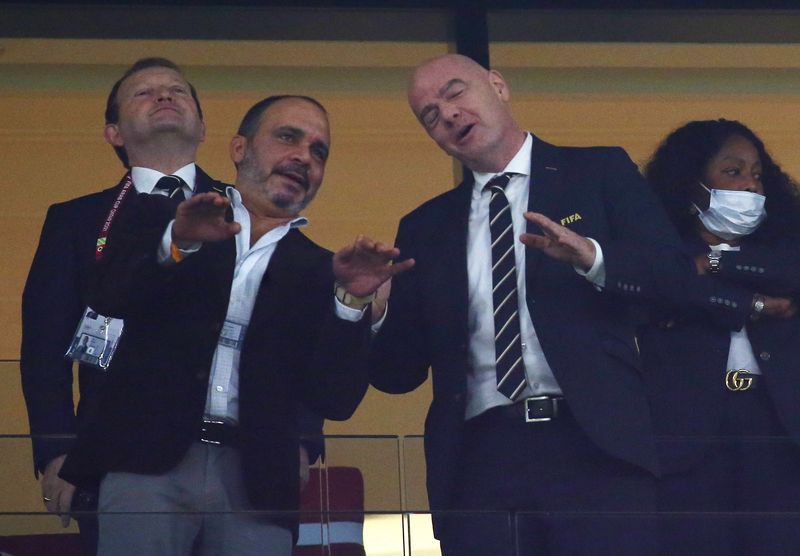
The head of Jordan's football association has launched a stinging public rebuke of FIFA President Gianni Infantino, claiming the world's soccer governing body attempted to leverage its influence by conditioning organisational support on political backing. Ali bin Hussein alleged that FIFA made verbal overtures during the recent World Cup, suggesting that an endorsement of Infantino "would go a long way to helping our FA out" after the organisation had previously declined assistance on multiple matters affecting Jordanian football. The accusation arrives as Infantino confronts mounting resistance from confederations and national associations globally, marking a significant crack in his leadership as FIFA navigates internal turbulence.
Bin Hussein's condemnation underscores the ethical concerns that have long shadowed international sports governance. In a statement posted on social media, the Jordan FA president emphasised that his association had consistently maintained principled standards, stating: "We pride ourselves in Jordan in upholding ethical values." He made clear that Jordan had rejected Infantino's bid for support previously and would continue to do so regardless of incentives offered. The characterisation of FIFA's conduct as "blackmail" reflects deepening frustration among smaller football nations that feel marginalised by the governing body's power structures and decision-making processes.
Infantino's position has deteriorated significantly in recent weeks following the collapse of an ambitious but controversial scheme to monetise FIFA's World Cup commercial rights. The Swiss administrator had proposed selling a minority stake in the tournament's operations to raise billions for global sports development initiatives. However, soccer confederations and national associations voted decisively against the proposal after Infantino imposed a strict September 19 deadline for decision-making. The rejection signalled a rare moment of unified pushback against his authority, with even senior FIFA officials distancing themselves from the initiative. FIFA Secretary General Mattias Grafstrom and renowned football executive Arsene Wenger both withdrew support, suggesting internal divisions at the organisation's highest levels.
Jordan's grievances extend far beyond questions of political endorsement and encompass systemic inequities that affect smaller nations participating in FIFA's flagship events. As a developing football nation with constrained financial resources, Jordan has faced multiple obstacles that underscore the uneven terrain of international competition. The kingdom's supporters encountered prohibitive ticket prices while simultaneously being denied visas to attend matches during the World Cup held in the United States, a contradiction that highlights the structural barriers confronting fans from less wealthy nations. Such barriers effectively prevent genuine global participation in football's premier competition, transforming it into an event primarily accessible to citizens of wealthy countries.
The financial dimension of Jordan's complaints reveals deeper inequities embedded within FIFA's operational framework. The association has been waiting since December for prize money owed for reaching the Arab Cup final in Qatar, a FIFA-sanctioned tournament that ostensibly rewards achievement yet systematically delays payments to participating nations. Simultaneously, FIFA has publicly celebrated its massive financial reserves, creating a jarring disconnect between the organisation's wealth and its apparent reluctance to promptly distribute earned revenues to member associations. This pattern suggests that smaller nations subsidise FIFA's operations through their participation while absorbing delays in receiving their due compensation.
Taxation disputes further illustrate how FIFA's governance structures disproportionately burden developing nations. Jordan faced substantial tax liabilities imposed by the United States government on its World Cup participation, costs channelled through FIFA's administrative structures. Critically, this tax burden fell exclusively on Jordan and other teams based outside North America, while Canadian and Mexican squads faced no equivalent obligations despite competing in the same tournament. The disparity reveals how geographic and geopolitical factors can create unequal competitive conditions masked by FIFA's nominally universal regulations. Jordan's players and staff ultimately saw money that should have funded their development diverted to foreign tax authorities, a reality that starkly illustrates how smaller nations bear disproportionate costs for global sporting participation.
Jordan's inaugural World Cup appearance in 2022 represented a historic milestone for the nation's football programme, yet the experience illuminated systemic disadvantages rather than opening pathways for advancement. Despite qualifying for the tournament for the first time in the country's history, Jordan exited during the group stage—a disappointing result compounded by financial complications and administrative obstacles that undermined the squad's preparation and support systems. The combination of delayed prize money from prior competitions, unexpected tax burdens, and visa denial complications created an environment where structural impediments overshadowed sporting ambition.
Bin Hussein's public statement carries particular significance because it represents rare candid criticism from a sitting federation president, suggesting that frustration with FIFA's governance has reached a threshold where officials feel compelled to speak openly despite potential repercussions. For Malaysian readers and Southeast Asian football stakeholders, the Jordan situation offers instructive lessons about navigating relationships with powerful international sports bureaucracies. Smaller nations across the region may encounter similar pressures and inequities when engaging with FIFA, particularly regarding tournament hosting, financial distributions, and administrative requirements that disproportionately affect developing football economies.
The broader context of Infantino's leadership crisis provides an opportune moment for reform-minded voices within global football to advance structural changes that would benefit smaller nations. The simultaneous rejection of the World Cup stake sale, the public backing away by senior FIFA officials, and the emergence of direct accusations of misconduct suggest that the FIFA president's authority has become genuinely contested for the first time in his tenure. Whether this pressure catalyses meaningful governance reforms that address inequities affecting nations like Jordan remains uncertain, but the moment represents a rare opening for challenging the status quo.
Malaysian football officials and administrators should monitor developments within FIFA closely, as the outcome of this internal power struggle will likely influence how the governing body treats Southeast Asian nations in future tournaments and administrative decisions. The principles Jordan's football association is defending—equitable treatment, ethical standards, and transparent financial dealings—are universal concerns that transcend geography or national football development levels. If FIFA fails to address the systemic issues that drove bin Hussein's accusations, smaller nations across Asia may find themselves navigating similar predicaments with limited institutional protection or recourse.

