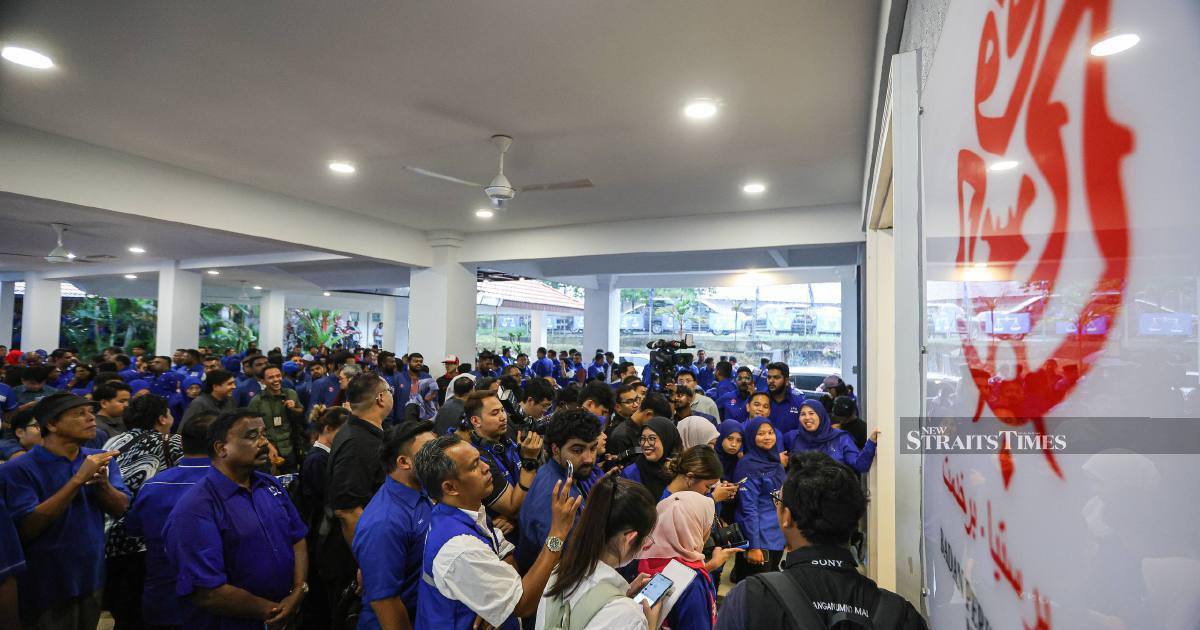
The mood at Johor Umno headquarters in Johor Baru has grown increasingly charged as Barisan Nasional prepares to formally unveil its slate of candidates for the 16th Johor state election. The gathering brings together party luminaries, division-level functionaries, and rank-and-file supporters all keen to witness the moment when the coalition's political fortunes for the state are set in motion. The palpable energy reflects both the importance of Johor as Malaysia's economic and political powerhouse and the stakes involved in any contest for control of the state assembly.
Barisan Nasional's approach to candidate selection for Johor carries particular significance given the coalition's historical dominance in the state. The preparation for this election cycle represents a critical juncture for the coalition to reassert its credentials following a period of political churn across Malaysia. The candidate announcement process typically involves negotiations among constituent parties—principally Umno, MCA, and MIC—with each jostling for seat allocations that reflect their perceived standing and grassroots strength. These internal dynamics often remain largely invisible to public view, making the formal announcement a carefully choreographed moment that projects unity and readiness.
Johor's electorate and political observers across the region are watching intently to gauge not merely who will contest but what these selections reveal about factional alignments within Barisan Nasional, particularly within Umno itself. The state has historically served as a testing ground for coalition strategies and as a bellwether for national political shifts. How the party distributes nominations among its various factions and geographic bases can signal broader internal calculations about future direction and leadership evolution. For Malaysian political analysts, Johor elections often provide early indicators of where broader national coalitions are heading.
The 16 state seats represent constituencies with vastly different characteristics—from urban centres with more transient, diverse populations to longstanding Malay-majority rural zones where community networks and traditional patronage ties remain influential. Candidate selection must therefore balance numerous considerations: loyalty to senior figures, perceived electability in specific districts, generational renewal, and geographic representation. Barisan Nasional's track record suggests the coalition pays careful attention to these micro-level political calculations, understanding that state elections are ultimately aggregations of local contests rather than simple nationwide referendums.
The participation of rank-and-file supporters in these proceedings underscores how candidate announcements function as morale-building events within party structures. For grassroots members, witnessing their own candidates unveiled represents vindication of their activism and a tangible stake in the electoral process ahead. The collective gathering also serves practical functions: it allows party machinery to commence on-ground operations, orient campaign volunteers, and begin the crucial work of voter registration and identification that precedes formal polling day. In Malaysian electoral practice, such foundational groundwork often determines outcomes as much as any national-level messaging.
For the broader Malaysian political landscape, Johor elections carry outsized importance. The state accounts for a substantial portion of the nation's population and economic output, and its representative character—containing Malay-Muslim majority areas alongside significant Chinese and Indian communities, plus urban and rural zones—makes it a microcosm of Malaysian society. When Barisan Nasional performs well in Johor, it typically signals the coalition's capacity to hold its traditional heartland. Conversely, slippage in Johor often presages wider coalition vulnerabilities nationally. The stakes therefore transcend state-level considerations and carry implications for federal politics and Malaysia's broader governance trajectory.
The timing of Johor's election campaign and candidate announcement also intersects with wider regional developments. Southeast Asia's political rhythms have grown increasingly interconnected, with elections and governance shifts in one country often rippling across neighbouring economies. Malaysia's stability and coalition politics carry weight for investors, diaspora communities, and neighbouring governments assessing the region's political-economic outlook. A well-executed transition in Johor, with confident candidate announcements and apparent party unity, can contribute to broader regional confidence narratives, whereas any visible discord might invite scrutiny and concern.
Barisan Nasional's internal composition and decision-making processes around candidate selection reflect the coalition's enduring character as a federation of ethnic-based parties negotiating within a structured framework. Unlike single-party systems or more ideologically unified coalitions, Barisan Nasional's strength has historically derived from its ability to manage diverse interests and ensure that member parties perceive themselves as stakeholders with genuine agency. The candidate announcement process therefore involves not just public revelation but also the culmination of behind-the-scenes dealmaking that sustains the coalition's internal cohesion. How visibly smooth or contentious this process appears can influence both party morale and public perception of coalition stability.
Looking forward, the Johor election carries particular significance for testing whether current configurations of support remain stable. Electoral dynamics in Malaysia have demonstrated considerable fluidity in recent years, with voters showing willingness to punish parties perceived as corrupt or unresponsive. Barisan Nasional's candidate selections must therefore project not just party continuity but also responsiveness to evolving voter concerns around economic management, development priorities, and governance standards. The candidates unveiled will carry responsibility for translating these broader political imperatives into compelling local narratives that resonate with Johor voters across diverse communities and constituencies.

