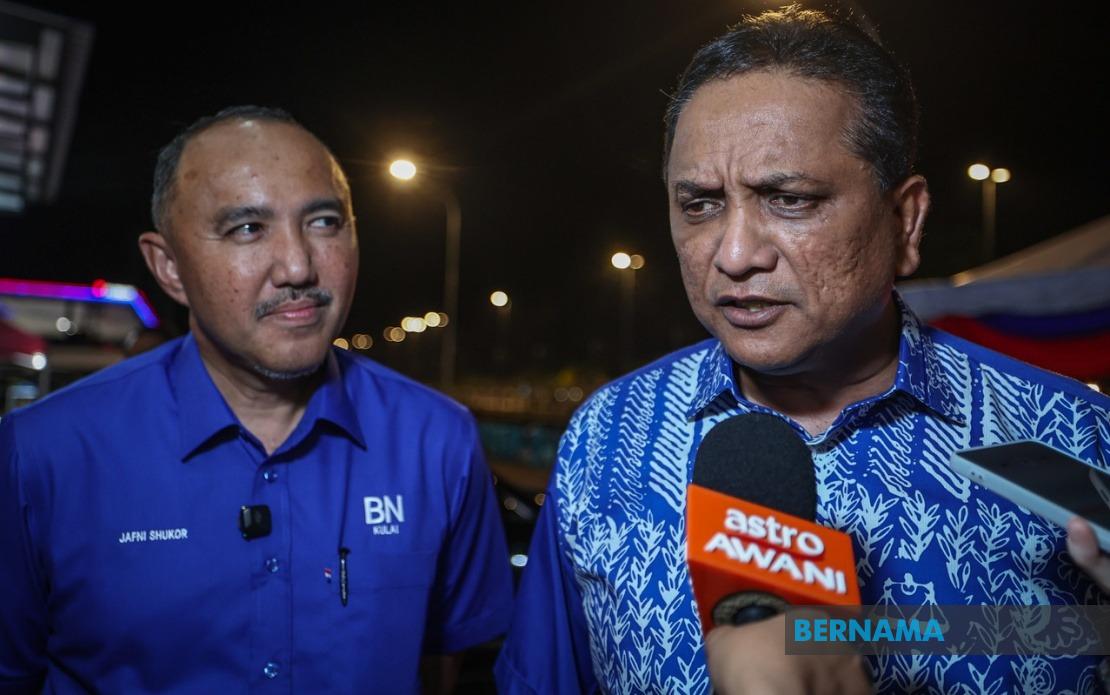
A senior UMNO figure has moved to dismiss mounting accusations that Johor's Regent wields excessive control over the state administration, insisting the criticism represents a fundamental misunderstanding of constitutional monarchy and governance. Datuk Seri Reezal Merican Naina Merican, a member of UMNO's Supreme Council, made the statement in Johor Bahru on June 25 following meetings with Barisan Nasional leadership in the Kulai constituency, directly addressing what he characterised as baseless and heavily exaggerated claims about the role of Tunku Mahkota Ismail in state affairs.
The controversy centres on accusations made by Datuk Dr Mohd Puad Zarkashi, a former Speaker of the Johor State Legislative Assembly, who recently departed from UMNO and alleged that Menteri Besar Datuk Onn Hafiz Ghazi had become answerable to the palace rather than functioning as an independent chief executive. Mohd Puad's departure from the party, timed strategically ahead of Johor's imminent state election, has injected fresh tension into the political landscape, with the former legislator's claims threatening to cast doubt on the autonomy of the state government just as voters prepare to go to the polls.
Reezal Merican's rebuttal emphasises that the Regent's interventions in state development matters should be understood within the proper constitutional framework rather than interpreted as political interference. He stressed that Tunku Mahkota Ismail's public statements and directives regarding Johor's progress are legitimate expressions of his authority and obligation to serve the people, arguing that such actions represent an appropriate exercise of royal responsibility rather than an attempt to manipulate executive governance. The UMNO leader framed the Regent's role as essential institutional architecture, describing it as a legitimate system of checks and balances over both the Menteri Besar and the State Secretary, mechanisms that exist precisely to prevent governmental excess.
The broader context involves Johor's preparation for state elections scheduled for June 27 as nomination day and July 11 as polling day. The timing of Mohd Puad's departure and his allegations appears deliberately calibrated to influence voter sentiment during this critical electoral window. Reezal Merican questioned the former Speaker's motivations, suggesting that bringing the Royal institution into partisan political debate at such a juncture represents an inappropriate and potentially destabilising move that prioritises narrow party interests over institutional respect.
From a governance perspective, the dispute reflects broader constitutional tensions visible across Malaysia's monarchical systems, particularly in states with assertive rulers invested in directing development agendas. Johor, as Malaysia's southernmost peninsula state, has historically maintained strong royal institutions with considerable de facto influence over administrative direction, a pattern that has generally commanded public support but occasionally sparked controversy among political competitors who find themselves at odds with palace preferences. The distinction between a Regent exercising constitutional authority and a Regent effectively controlling state government remains philosophically contested territory in Malaysian politics.
Reezal Merican's assertion that UMNO's Johor branch has never been characterised as palace-controlled carries significance within party circles, where such claims could potentially undermine confidence in the administration's legitimacy among grassroots supporters. By explicitly rejecting the puppet governance narrative, he attempts to reassure party members and voters that the state government retains operational independence even when following the Regent's policy directions, framing alignment as natural consensus rather than compulsion. This distinction matters considerably for electoral messaging, as suggestions of palace domination might discourage voter enthusiasm for candidates perceived as mere implementers of royal will.
The palace's involvement in Johor governance has historically encompassed strategic development initiatives, diplomatic relationships, and social policies, areas where the Regent's influence shapes outcomes sometimes as markedly as formal government machinery. However, modern Malaysian governance theory generally distinguishes between constitutional authority—which the Regent legitimately possesses—and operational control of day-to-day administration, which properly belongs to elected officials. The challenge facing Reezal Merican's defence involves explaining how significant palace influence operates within a system ostensibly built on elected leadership, a balance that remains inherently delicate.
Mohd Puad's decision to weaponise this constitutional tension by publicly raising palace-government entanglement concerns represents a notable departure from traditional norms of discretion surrounding royal authority in Malaysian political discourse. Historically, politicians have exercised considerable restraint in commenting on palace matters, treating such topics as sensitive constitutional ground where public debate risks damaging institutional respect. By abandoning this restraint, Mohd Puad signals either genuine conviction that the state faces governance problems or strategic calculation that Johor voters have grown receptive to messages questioning palace influence, potentially both.
For observers across Southeast Asia monitoring Malaysian constitutional developments, the Johor situation illustrates ongoing tensions between traditional monarchical authority and contemporary democratic accountability. As education levels rise and political information becomes more widely available, citizens increasingly scrutinise not just the formal locus of power but actual authority flows within their systems. Claims that institutions operate as puppets resonate because they speak to deeper anxieties about power concentration and accountability, concerns that transcend borders throughout the region.
Reezal Merican's intervention represents UMNO's official position heading into voting, essentially betting that Malaysian voters—or at minimum Johor voters—remain fundamentally comfortable with the current constitutional settlement regarding royal authority and state governance. Should Johor's electorate respond positively to Mohd Puad's message about palace dominance, it would signal meaningful shifts in public tolerance for traditional power arrangements, with implications extending well beyond a single state election. The June 27 nomination day and July 11 polling will test not merely which political coalition commands voter preference, but whether Malaysians have developed appetite for openly contesting the proper boundaries of royal institutional power in their political systems.

