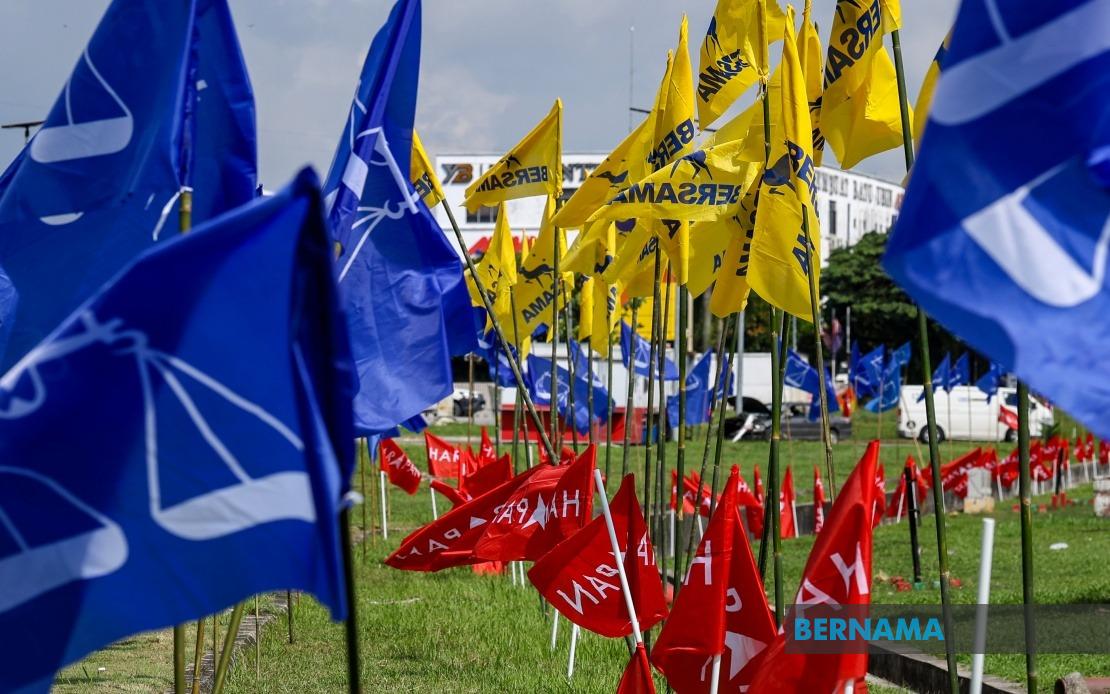
The opening week of Johor's 16th state election has unfolded with restrained momentum, marking a departure from the traditional election theatre that once dominated Malaysian political campaigns. Rather than staging the grand public rallies that characterised earlier electoral contests, all competing parties have consciously adopted a more granular approach to voter persuasion, centring on direct engagement within communities and individual household visits. This recalibration of campaign tactics reflects a broader evolution in how Malaysian politicians now seek to connect with constituents in an era defined by fragmenting media landscapes and heightened voter sophistication.
According to political analysts observing the campaign's trajectory, the adoption of personalised outreach represents a calculated strategic shift rather than a sign of waning political interest. Prof Datuk Dr Sivamurugan Pandian of Universiti Sains Malaysia characterises the first week as primarily foundational, a period during which parties establish crucial groundwork for more intensive phases ahead. He emphasises that the shift toward targeted engagement—encompassing house-to-house visits, intimate group meetings, and locally-focused community programmes—grants candidates invaluable opportunities to listen directly to voter concerns while simultaneously strengthening internal party structures. By concentrating resources on such face-to-face interactions, parties optimise their campaign machinery and deploy funds more efficiently, preserving energy and capacity for the anticipated acceleration in campaign intensity as polling day approaches.
The current campaign environment reflects deeper transformations in electoral competition across Southeast Asia. Dr Azmi Hassan, a geostrategist at the Nusantara Academy for Strategic Research, observes that modern political contests increasingly rely on data analytics and voter classification systems that would have seemed exotic merely a decade ago. Party operatives now segment the electorate into granular categories—white, grey, and black voters representing respectively committed supporters, undecided swing voters, and opposition loyalists—then craft tailored messaging for each segment through hybrid channels combining traditional door-knocking with sophisticated social media targeting. This evolution from mass mobilisation to micro-targeted persuasion marks a fundamental reconfiguration of how parties conceptualise and execute electoral strategy in Malaysia's increasingly digitised political sphere.
Yet despite the apparent shift toward intimate campaigning, multiple analysts caution that the genuine intensity of party machinery has not yet crystallised. The expectation among observers is that the second week of campaigning will witness a dramatic escalation as senior national leaders enter the fray, bringing with them the organisational capacity, media attention, and symbolic weight that distinguish higher-stakes electoral phases. Alongside this injection of top-tier political capital, analysts anticipate a corresponding surge in large-scale rallies and amplified digital campaigns targeting voters still undecided about their electoral preferences. The subdued opening week should thus be understood not as a permanent campaign model but rather as a deliberate holding pattern, with parties deliberately preserving rhetorical and logistical ammunition for deployment when the campaign enters its more critical final stretch.
Examining the substantive content of campaign messaging, researchers find that competing parties have not yet coalesced around singular dominant narratives capable of reshaping the broader electoral landscape. Mujibu Abd Muis of the Ilham Centre notes that campaign discourse has revolved consistently around three familiar themes: documentation of past governmental achievements, pledges regarding future development and governance, and claims that each party represents the surest path toward political stability. While these framings represent standard electoral rhetoric, they have not yet crystallised into issues of sufficient salience and emotional resonance to dominate public conversation. The critical test, Mujibu suggests, lies in whether parties can translate these abstract narratives into concrete connections with the lived experiences that preoccupy ordinary voters—the affordability of essential goods, employment availability, quality of local infrastructure, and the standards of public services that shape daily life.
Geographically, the campaign's initial phase has revealed telling patterns about where parties perceive their strengths and vulnerabilities. Mujibu's observation that campaign machinery has concentrated activity in northern Johor—encompassing constituencies in Muar, Tangkak, and Segamat along with sections of Batu Pahat and Kluang—reflects rational resource allocation based on parties' electoral calculations. These constituencies represent battlegrounds where victory is genuinely contested rather than foreclosed, and the deployment of senior political figures to these areas signals to party activists that these seats constitute the strategic prizes that will determine the election's outcome. The relative quietness in other regions may indicate either areas where outcomes appear more settled or constituencies deemed less susceptible to campaign persuasion.
The territorial dynamics of Johor state politics reveal an increasingly bifurcated electoral landscape divided along clear coalition lines. Mazlan Ali of Universiti Teknologi Malaysia observes that Pakatan Harapan perceives relative strength in southern and western Johor constituencies, while Barisan Nasional has consolidated advantages in eastern coastal districts, particularly Mersing and Kota Tinggi. This spatial distribution of coalition dominance shapes fundamentally how each political bloc deploys its campaign resources, concentrating intensity where outcomes genuinely hang in the balance rather than dissipating effort across territories where results appear predictable. Such strategic focusing of campaigns represents a maturation of Malaysian electoral competition, with parties deploying sophisticated geographic analysis to maximise return on campaign investment.
Beyond coalition competition, the 16th Johor state election encompasses a field of considerable complexity. With 172 candidates contesting across 56 state assembly seats, the election features sufficient competition to ensure genuine contestation in numerous constituencies. The electoral calendar—with early voting scheduled for July 7 and polling day fixed for July 11—compresses the campaign period, intensifying pressure on parties to establish momentum rapidly once the campaign truly accelerates beyond its measured opening week. The relatively short timeframe between the election's formal commencement and actual voting day means that the window for campaign persuasion remains limited, rendering the efficient deployment of campaign resources ever more critical to electoral success.
Across multiple analyses, a consensus emerges regarding voter participation as potentially the election's most consequential variable. All examining experts emphasise that voter turnout may ultimately exercise greater influence over the final outcome than the specific campaign messages parties project or the organizational superiority that one coalition may possess relative to another. This emphasis on participation reflects recognition that Malaysian voters have demonstrated volatility in their willingness to participate in elections, with turnout fluctuating significantly across different electoral contexts. Should turnout fall significantly below historical baselines, the results may diverge substantially from what standard polling or campaign momentum might otherwise predict, introducing an element of unpredictability that renders campaigns' grassroots engagement efforts—precisely what characterises this election's first week—potentially decisive in mobilising supporters to actually cast ballots.
The Johor election emerges as a significant electoral event not merely because it determines which political coalition will govern Malaysia's southernmost peninsular state, but because it provides crucial indicators regarding broader currents in Malaysian electoral politics. The campaign's apparent shift toward targeted, data-driven engagement rather than mass spectacle reflects broader transformations in how political competition functions across the region. As Malaysian politics increasingly reflects voters' demands for substantive policy engagement rather than performative campaign theatre, and as parties develop more sophisticated capacity to segment electorates and deliver tailored messaging, electoral campaigns themselves are undergoing fundamental transformation. Johor's election, observed through the analytical lenses that political scientists and strategists bring to bear, thus illuminates not merely the specific question of which political coalition will govern one Malaysian state, but the evolving character of electoral competition across Southeast Asia more broadly.

