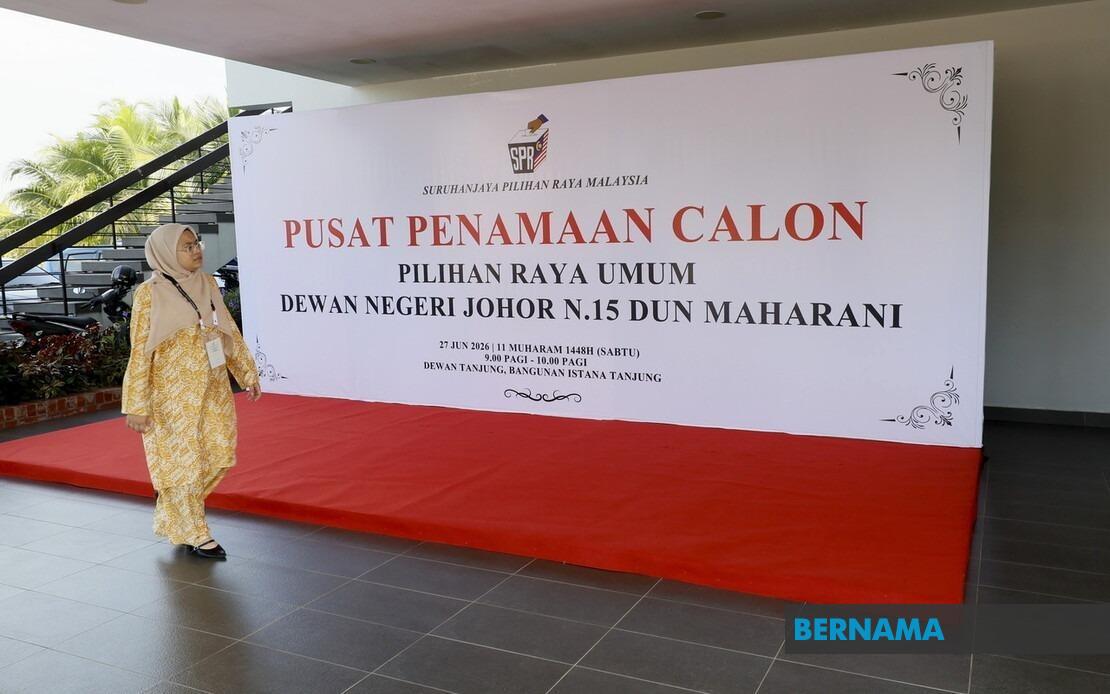
The 16th Johor State Election entered its formal phase today as nomination centres across the state opened their doors to prospective candidates seeking to represent their constituencies. Starting at 9 am, the Election Commission (EC) simultaneously activated 56 nomination processing centres (PPC) in a coordinated effort to receive and validate candidacy applications from parties vying for seats in the state assembly. Candidates had until 10 am to lodge their nomination papers with the respective Returning Officers, after which the official roster of eligible contenders would be published, formally triggering the commencement of the election campaign period.
The timing of this nomination exercise follows the dissolution of the Johor State Legislative Assembly on June 1, setting in motion the constitutional process for refreshing the state's political representation. By yesterday morning, the response from aspiring candidates had been notably strong, with 593 nomination forms already distributed to interested parties. More significantly, 133 prospective candidates had formally committed to contesting by submitting their required election deposits, signalling substantial engagement from multiple political movements across the state's political spectrum.
The Election Commission's timeline allocates a 14-day campaign period running through July 10 at 11.59 pm, providing parties with a focused window to present their manifestos and engage with voters. Early voting has been scheduled for July 7, giving certain categories of voters an opportunity to cast their ballots ahead of the main polling day on July 11. This compressed election cycle reflects the EC's administrative efficiency and the parties' readiness to mobilize their campaigns swiftly once the nomination process concludes and candidates are officially declared.
The electorate participating in this election represents a substantial demographic cross-section of Johor. Approximately 2.73 million registered voters are eligible to participate, comprising 2,703,175 ordinary voters along with 12,041 military personnel and their families, and 12,710 police personnel and their families. This voter base underscores Johor's significance as a major electoral battleground within Malaysia's political landscape, with the state's outcome potentially influencing broader national coalitional dynamics.
The competitive landscape reflects Malaysia's evolving multi-coalition politics. Pakatan Harapan enters the contest across all 56 seats through its component parties: PKR fielding 20 candidates, Amanah 19, and DAP 17. Barisan Nasional, the long-dominant coalition, is similarly comprehensive in its coverage, with UMNO contesting 36 seats, MCA 16, and MIC four. This full slate indicates BN's determination to defend its historically strong position in Johor, where it previously held 40 seats before the assembly's dissolution. Perikatan Nasional presents a more targeted approach, concentrating its efforts through PAS in 11 seats, Bersatu in 16, Malaysian Indian People's Party in five, and Pejuang in one seat, reflecting the coalition's strategic priorities within the state.
Beyond the three major coalitions, several smaller parties are contesting, adding further complexity to the election dynamics. MUDA, which entered parliament in 2022, is contesting four seats, while Parti Sosialis Malaysia is fielding a single candidate. Most notably, Parti Bersama Malaysia is making its electoral debut, contesting 15 seats, indicating new entrants are attempting to carve out political space in Malaysia's increasingly fragmented party ecosystem. The diversity of candidates and parties reflects broader processes of political realignment and experimentation occurring across Malaysia.
The nomination day atmosphere traditionally attracts considerable popular engagement, with party supporters converging at nomination centres to demonstrate backing for their candidates. The EC has emphasized strict compliance with electoral regulations, reminding all participants to observe the Election Offences Act 1954 and local authority by-laws. Particular attention is being directed toward campaign conduct restrictions, including limitations on the use of musical instruments and vehicle-mounted loudspeakers during campaign activities, measures designed to maintain electoral integrity and public order throughout the nomination and campaign phases.
Logistical preparations for managing the election process have been extensive. The police force has deployed 4,832 personnel across Johor to ensure security and manage traffic flow around nomination centres and other election-related venues. The deployment includes coordinated road closures and diversions affecting 19 major roads throughout the state, reflecting the comprehensive security and administrative arrangements mobilized for such a significant electoral event. These preparations demonstrate the operational scale required to manage simultaneous nominations across multiple locations in a large, densely populated state.
Weather conditions, while typically minor considerations, have warranted meteorological attention. The Malaysian Meteorological Department has forecasted rain in several Johor districts during the morning hours, with afternoon thunderstorms expected in parts of the state. Though such weather patterns are routine for Johor during this season, they remain relevant to logistics planning and voter accessibility considerations throughout the election period. Election administrators have factored such conditions into their operational schedules to minimize disruption to the nomination and subsequent campaign phases.
The Johor election assumes particular significance within Malaysia's current political context. As the nation's most populous state and a traditional stronghold of Barisan Nasional, electoral outcomes here carry implications extending beyond state-level governance to national coalition politics. The performance of each coalition will provide early indicators of voter sentiment following recent political developments and may influence calculations regarding future national electoral timing. For the coalition partners involved, the Johor contest represents an opportunity to test campaign strategies, assess candidate viability, and consolidate or rebuild voter bases ahead of potential national elections, making this state-level exercise consequential for Malaysia's broader political trajectory.

