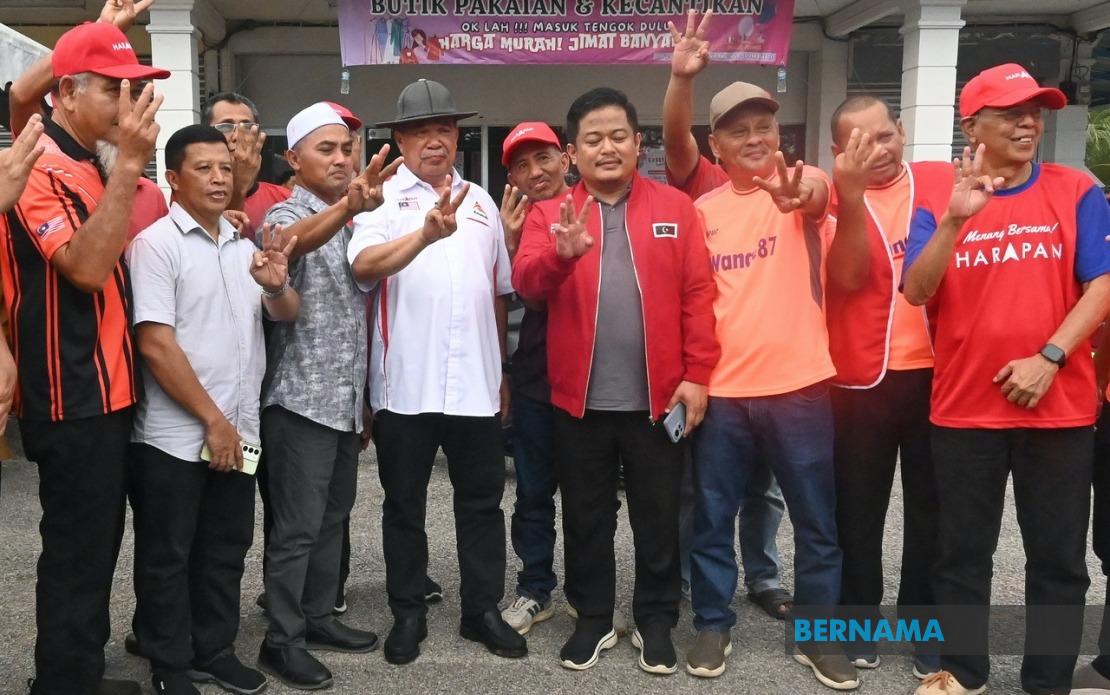
Amanah president Datuk Seri Mohamad Sabu has made a direct appeal to Johor voters ahead of Saturday's state election, insisting that Pakatan Harapan requires a mandate to translate its recently unveiled manifesto into tangible policy outcomes. Speaking in Rengit following a campaign roadshow, Mohamad Sabu framed the election as a test of whether voters believe PH's electoral promises represent genuine reform or merely repackaged pledges from other political actors.
The minister, who also holds the agriculture and food security portfolio, pushed back against opposition assertions that PH's manifesto amounted to derivative political messaging. He contended that the document reflected extensive grassroots consultation rather than superficial policy borrowing, drawing on months of engagement with communities across Johor to identify citizen concerns and priorities. This emphasis on consultation represents a core legitimacy claim for PH's campaign strategy in the southern state, where electoral dynamics have shifted considerably since the 2018 general election that first brought the coalition to federal power.
Crucially, Mohamad Sabu distinguished between the manifesto as a written pledge and its practical execution, arguing that the true measure of PH's commitment lies not in document production but in successful policy implementation. He suggested that victory in the Johor polls would enable PH-led state administration to commence implementing manifesto commitments as early as 12 July, immediately following polling day on 11 July. This timeline reflects confidence that PH can move swiftly from campaign promises to administrative action, a positioning that appeals to voters sceptical of politicians' follow-through on election pledges.
The campaign reception in rural Johor communities has emerged as a significant narrative in PH's election strategy. According to Mohamad Sabu, the coalition now encounters markedly warmer responses from village and rural market constituencies compared to the 2018 electoral cycle, when PH remained relatively unfamiliar to many grassroots voters outside urban centres. He described a transformation in public interaction patterns, with spontaneous greetings and photographic requests increasingly replacing the cooler receptions that characterised earlier campaign efforts. This shift suggests that PH has made progress in establishing brand recognition and personal connection with rural demographics, traditionally a strength of opposition parties and incumbent coalitions rather than reformist challengers.
The evolution of PH's rural campaign resonance carries particular significance for Johor state politics. The southern state has historically represented contested territory between competing coalition structures, with rural constituencies frequently decisive in determining overall electoral outcomes. If PH's claimed improvements in rural reception reflect genuine shifts in voter sentiment, the composition of Johor's legislature following Saturday's poll could shift substantially from previous configurations. However, such claims require independent verification, as campaign narratives frequently emphasise positive indicators whilst downplaying contrary evidence.
Modhammad Sabu's framing of the election contest positions Saturday's vote as pivotal for determining whether PH can consolidate its position within Malaysia's federal system by securing state-level governance platforms. Control of Johor would enhance PH's ability to implement development policies aligned with federal initiatives and strengthen its institutional presence across multiple territorial jurisdictions. Conversely, failure to capture the state would reinforce narratives of PH vulnerability in regions where opposition structures retain traditional support bases.
The minister's remarks occur within a broader context of heightened political competition across Malaysia's electoral landscape. The Johor state election represents one of several regional contests scheduled across the Malaysian federation over recent months, each testing the relative standing of competing coalitions and their appeal to distinct voter constituencies. Results in Johor may therefore reverberate beyond state boundaries, influencing calculations regarding coalition viability and voter preference patterns across other Malaysian regions.
PH's emphasis on manifesto-based campaigning reflects a strategic choice to ground its political messaging in specific policy commitments rather than relying principally on opposition to incumbent governance structures. This approach attempts to reposition PH from its earlier challenge-based positioning toward a programmatic vision of alternative administration. However, implementing manifestos successfully requires not merely electoral victory but subsequent bureaucratic capacity, financial resources, and sustained political will across multiple administrative levels—challenges that have historically tested reform coalitions entering office with ambitious reform agendas.
The polling arrangements for the Johor state election include early voting provisions for security force personnel on 10 July, with main polling scheduled for 11 July. These dates mark the culmination of an intensive campaign period during which various political actors have competed for voter attention and support. The outcome will clarify whether Mohamad Sabu's confidence in PH's rural campaign momentum translates into electoral gains or whether traditional coalition alignments persist despite apparent shifts in campaign reception patterns.

