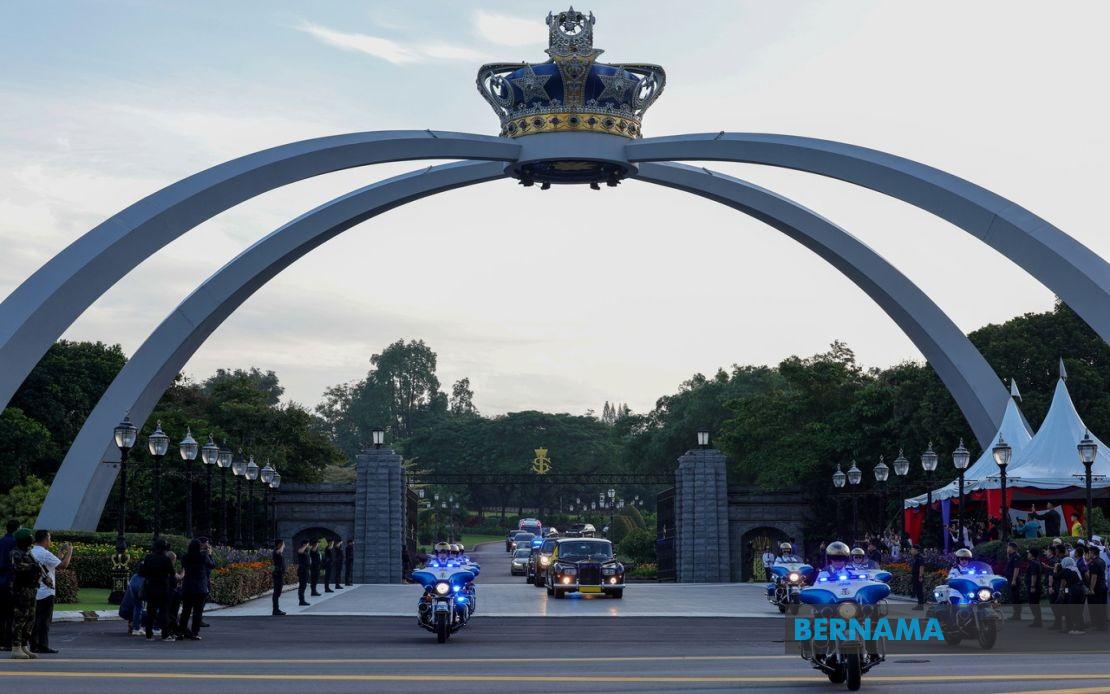
The formal swearing-in of Johor's State Executive Council members, which was slated to occur on Friday at the palatial Istana Bukit Serene in Johor Bahru, will now proceed the following day. Media representatives received notification of the schedule change on Friday morning, pushing the ceremony back to Saturday, though no statement clarified the reasons behind the postponement.
The delayed event will maintain its original ceremonial framework, proceeding under the auspices of Tunku Mahkota Ismail, the Regent of Johor. Menteri Besar Datuk Onn Hafiz Ghazi, alongside Johor Royal Council president Datuk Dr Rahim Ramli and State Secretary Datuk Mohammed Ridha Abd Kadir, are expected to participate in the proceedings once they are rescheduled.
This swearing-in represents the formal installation of the cabinet following Onn Hafiz's reappointment as Johor's chief minister. The previous Sunday, he had been sworn in for his second consecutive term, cementing his political standing within the state after Barisan Nasional demonstrated decisive dominance in the recent state electoral contest.
The electoral victory that preceded this governmental formation was emphatic by regional standards. Barisan Nasional captured forty-eight of the fifty-six available seats in the Johor State Legislative Assembly during the sixteenth state election held the previous Saturday, delivering a commanding majority that provides the administration with substantial legislative room to implement its agenda.
This level of electoral performance reflects the coalition's continued stronghold in Johor, traditionally one of Malaysia's most politically significant states. The scale of the majority means Onn Hafiz enters his second term with considerable parliamentary support, reducing the likelihood of internal dissension or defections that could destabilise the administration during its five-year tenure.
The postponement itself, while presented without official explanation, is not uncommon in Malaysian ceremonial state functions. Administrative adjustments to governmental schedules frequently occur due to logistical considerations, dignitary availability, or other operational factors that government agencies may choose not to publicise. For observers tracking Johor's political developments, the delay carries minimal substantive consequence beyond the rescheduling itself.
Onn Hafiz's tenure as Menteri Besar represents continuity within Johor's governance. As the Machap state assemblyman and now twice-elected chief minister, he carries the confidence of Barisan Nasional's leadership at both state and federal levels. His cabinet formation and the upcoming swearing-in ceremony signal the beginning of concrete policy implementation following the electoral cycle.
For Malaysian political observers, Johor's recent election result demonstrated the coalition's capacity to retain control of major state governments despite national political volatility. The state's political dynamics have long influenced broader Malaysian governance patterns, making developments in Johor pertinent to understanding the trajectory of Malaysian federalism and coalition politics more broadly.
The rescheduled Saturday ceremony will formalise the constitutional and ceremonial arrangements necessary for the new executive council to exercise full governmental authority. Once sworn in, these office holders assume responsibility for portfolios spanning public works, education, health, agriculture, and other critical state functions affecting Johor's 4.2 million residents.
With no public explanation for the postponement offered, speculation about the cause remains purely conjectural. Whatever procedural adjustment necessitated the one-day delay, the underlying political reality remains unchanged: Barisan Nasional and Onn Hafiz enter the new term with the electoral mandate and parliamentary support required to govern effectively through the coming five years, contingent upon maintaining internal coalition discipline and implementing policies that sustain public confidence.

