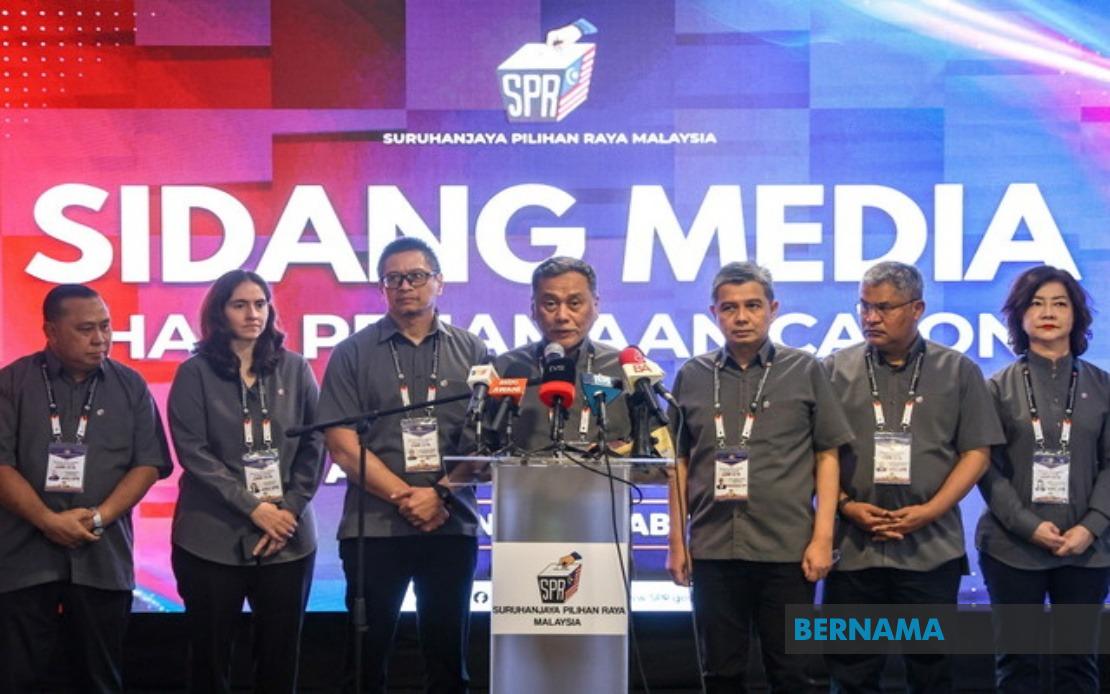
The stage is now set for Johor's 16th state election, with the Election Commission formally confirming that 172 candidates have successfully cleared the nomination process and will proceed to contest across the state's 56 legislative assemblies. The nomination deadline concluded on June 27, with all submissions reviewed and accepted at 56 separate nomination centres throughout Johor. According to Election Commission chairman Datuk Seri Ramlan Harun, every nomination paper met the required criteria, resulting in zero disqualifications and a full slate of candidates ready to campaign for voter support.
The gender composition of this election year reflects ongoing efforts towards greater female representation in Malaysian politics, though significant disparities remain evident. Of the total contestant pool, 138 are male candidates whilst 34 are female, representing approximately 20 percent female participation. This proportion, whilst marginally improved from previous cycles, underscores the continued male dominance in electoral competition at the state level and suggests that political parties across the spectrum still have considerable ground to cover in achieving gender balance within their candidate selections.
Barisan Nasional maintains its position as a major contender with 56 candidates fielded across all constituencies, a full slate that reflects the coalition's organisational capacity and established party structures throughout Johor. Pakatan Harapan matches this strength with an identical 56 candidates, demonstrating the opposition coalition's consolidation and readiness to mount a comprehensive challenge to BN's traditional dominance in the state. This parity between the two major coalitions suggests a competitive election where both sides have invested significant resources into candidate recruitment and preparation.
Perikatan Nasional presents itself as the third force in this contest with 33 candidates, a respectable showing that reflects the bloc's growing political infrastructure since its formation. The remaining candidates are distributed among smaller parties and independent candidates, with Parti Bersama Malaysia fielding 15 contestants, MUDA contributing four candidates, and both Parti Orang Asli Malaysia and Parti Sosialis Malaysia putting forward one candidate each. Six individuals have chosen to contest as independents, seeking to represent their constituencies outside traditional party frameworks.
The nature of electoral competition varies significantly across Johor's constituencies, creating different strategic scenarios for candidates and parties. Fourteen seats will witness straight fights between two candidates, representing the most straightforward electoral contests where voters face a binary choice. Twenty-seven constituencies are expected to feature three-cornered battles involving three separate contestants, complicating the vote distribution and potentially affecting outcome predictability. Twelve seats will see four candidates competing simultaneously, whilst three constituencies have attracted five candidates each, creating complex multi-way contests where vote fragmentation becomes a critical factor in determining winners.
This distribution of contest types reflects the varied strength and organisational presence of different political parties across Johor's diverse districts. Urban areas and more developed regions tend to attract larger numbers of candidates as multiple parties view them as winnable, whilst rural or traditionally aligned constituencies may see reduced competition. The clustering of candidates in certain areas whilst leaving others lightly contested demonstrates how electoral geography and party strategy intersect to shape the competitive landscape across the state.
The confirmed candidate roster and contest configurations now trigger the formal campaign period, during which candidates and their supporters will engage with voters across all demographics and constituencies. For Malaysian voters in Johor, this confirmation marks the practical beginning of electoral engagement, as campaign materials, rallies, and policy discussions will soon dominate the political landscape. The breadth of candidate diversity—spanning established major coalitions, emerging political forces, and independent representatives—offers voters a spectrum of choices reflecting different ideologies, local concerns, and visions for Johor's governance.
For Johor's electorate, the diversity of competing candidates and the varying contest structures across constituencies mean that voting patterns in one area may differ substantially from neighbouring districts depending on the available choices and local political dynamics. Voters in constituencies featuring straight fights face clear alternatives, whilst those in multi-candidate contests must weigh numerous options. This complexity underscores the importance of voter education and informed participation in determining which candidates and parties ultimately govern the state.
The confirmation of candidates also provides clarity for Johor's political parties as they finalise their campaign strategies and resource allocation. With all nominees officially registered and contest types determined, parties can now optimise their ground operations, messaging, and support deployment towards constituencies where they believe they maintain competitive advantages or where they seek to expand their presence. The coming weeks will demonstrate whether the numerical strength of major coalitions translates into electoral victories or whether smaller parties and independents can capitalise on specific local issues to gain representation.
This election represents another chapter in Johor's ongoing political evolution, a state that has traditionally leaned towards Barisan Nasional but has shown increasing openness to opposition representation in recent electoral cycles. The confirmation of this broad candidate field sets the framework within which voters will exercise their democratic choice and determine the composition of Johor's next state government.

