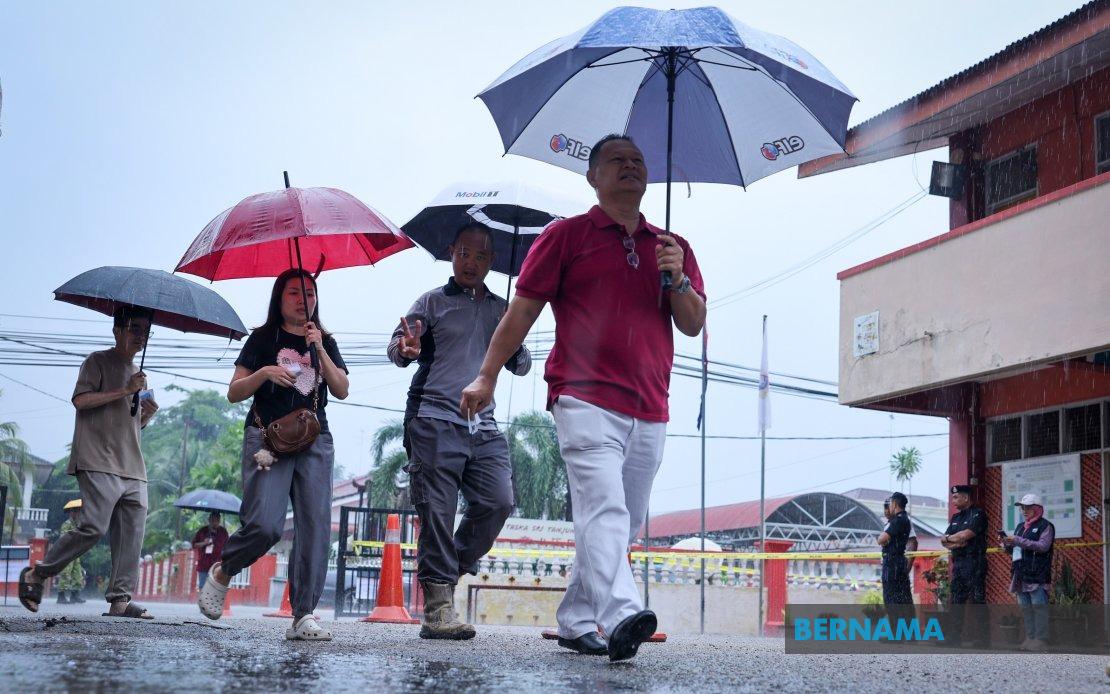
Johor's 16th state election unfolded on July 11 with voters across the southern state arriving at 1,076 polling centres in largely pleasant conditions, although residents in the Muar district contended with sustained heavy rainfall throughout the morning and early afternoon. The staggered opening of polling stations from 8am reflected the Election Commission's standard procedures, with voting locations remaining operational until their individually designated closing times before immediate ballot tallying commenced. Despite the inclement weather in one of Johor's major urban centres, voter participation remained robust, indicating strong civic engagement across the state regardless of meteorological challenges.
Election Commission officials, security personnel, and accredited media representatives were positioned at polling centres from as early as 7am, establishing the necessary infrastructure and documentation systems before the official voting window began. This early preparation ensured smooth operations throughout the day and facilitated efficient crowd management at individual polling stations. Ground observations by news agencies revealed that most centres, including Sekolah Kebangsaan Seri Pantai in Mersing, Dewan Raya Taman Ungku Tun Aminah in Johor Bahru, Sekolah Menengah Kebangsaan Senggarang in Batu Pahat, and Sekolah Jenis Kebangsaan Cina Kulai, benefited from clear skies and dry conditions that facilitated voter accessibility.
The administrative arrangements included specific provisions ensuring that persons with disabilities and elderly citizens could participate without unnecessary difficulty. Multiple accounts from polling centres highlighted that these voter demographics were among the earliest arrivals, having been accommodated through dedicated entry procedures and accessible voting arrangements. This prioritisation reflected electoral authorities' commitment to inclusive democratic participation across all demographic segments of Johor's eligible voting population.
The Muar district presented a contrasting scenario where persistent rainfall from the early morning hours tested voters' determination to exercise their franchise. Despite waterlogged conditions affecting numerous polling centres including Sekolah Jenis Kebangsaan Cina Limbong and Sekolah Kebangsaan Ismail 1, voter turnout remained steady. The willingness of constituents to navigate adverse weather conditions underscored the significance residents attached to this electoral contest and their commitment to the democratic process, transcending practical inconveniences posed by meteorological conditions.
Approximately 2.7 million registered voters across Johor held the authority to determine the composition of the state assembly through their ballots cast on July 11. These electors were tasked with selecting representatives from among 172 candidates contesting the 56 available state assembly seats. The scale of this electoral exercise represented a substantial democratic undertaking requiring coordination across diverse constituencies with varying demographic profiles, geographical characteristics, and socioeconomic compositions, making the election a significant political event within Malaysia's broader democratic landscape.
The pre-dissolution composition of the Johor state legislative assembly provided important context for understanding the electoral stakes involved. Barisan Nasional held the largest contingent with 40 seats, establishing it as the dominant political force prior to the July 11 voting. Pakatan Harapan occupied the second position with 12 seats, while Perikatan Nasional retained three seats and MUDA held a single seat. This distribution indicated a landscape where Barisan Nasional's position remained substantially ahead of opposition coalitions, yet the election campaign period would ultimately determine whether voters intended to maintain this configuration or realign their political preferences.
The conduct of voting across multiple time zones and closing periods reflected the Election Commission's logistical approach to managing simultaneous polling across geographically dispersed constituencies within Johor. Rather than implementing a uniform closing time, individual polling stations were allocated distinct operational windows, necessitating coordinated administration to ensure all voting opportunities were exhausted before counting commenced. This decentralised approach enabled authorities to accommodate local variations in voter density, transportation infrastructure, and geographical factors affecting accessibility.
The timing of Johor's state election held particular significance given its position as Malaysia's second-largest state by population and economic output. Electoral outcomes in Johor possessed ramifications extending beyond the state legislature itself, influencing calculations at the federal level regarding political alignments and coalition dynamics. Political analysts and observers scrutinised voting patterns and candidate performance as potential indicators of broader electoral trends that might manifest in future national-level contests, making Johor's state elections a bellwether for Malaysian political sentiment more broadly.
Voting procedures implemented throughout July 11 adhered to established electoral protocols emphasising transparency and security. The immediate commencement of vote counting following polling station closures aligned with standard practice designed to minimise delays between ballot closure and result compilation. This expedited tallying process enabled relatively swift determination of outcomes, though detailed verification procedures remained necessary to ensure accuracy across all 56 contested seats and validate the election's integrity.
The electoral exercise reflected Malaysia's commitment to periodic democratic renewal through competitive polling at the state level, preserving mechanisms through which citizens exercised fundamental political agency. Regardless of weather conditions, geographical location, or other practical obstacles, the substantial voter participation observed across Johor's polling centres demonstrated constituent determination to engage with democratic processes. The outcome of July 11's voting would shape Johor's political direction for the ensuing term while potentially signalling broader electoral preferences relevant to Malaysia's evolving political landscape.

