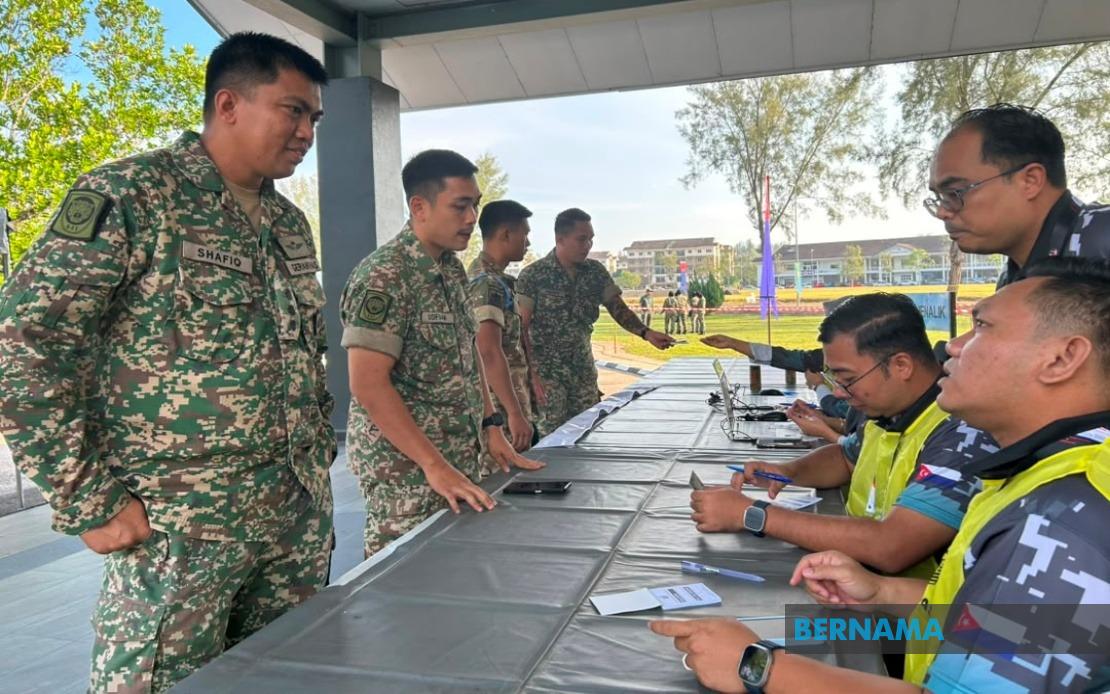
The 16th Johor state election moved into its early voting phase on July 7 under generally favourable weather conditions, as thousands of security personnel exercised their voting rights across the state. The commencement of polling at 64 dedicated centres marked the formal start of the electoral process, with Election Commission staff and security forces arriving from as early as 7:30 am to manage the orderly flow of voters. The clear morning skies that characterised most polling locations eased logistical arrangements, allowing the machinery of the election to operate without weather-related disruptions during these crucial initial hours.
A total of 24,751 early voters participated on the opening day, comprising two distinct cohorts of essential personnel. The Malaysian Armed Forces contingent, including spouses of military staff, numbered 12,041 individuals, while the Royal Malaysia Police and General Operations Force personnel along with their families accounted for the remaining 12,710 votes cast. This structured approach to early voting reflects standard electoral practice, permitting uniformed services and their families to participate without disrupting operational duties during the main polling day. The staggered opening and closing times of early polling centres—ranging from noon to 6 pm depending on location and voter roll size—provided flexibility in accommodating the varying schedules and deployment patterns across different security installations.
On-the-ground observations from several key polling locations painted a picture of administrative efficiency. Teams at facilities including the 5th Battalion GOF Camp in Simpang Renggam, the Johor Contingent Police Headquarters, and Mahkota Kluang Camp all reported that voting proceeded without notable complications. Prior to the opening of each centre, Election Commission personnel had conducted thorough preparatory checks, ensuring that infrastructure, ballot materials, and administrative processes were aligned to facilitate smooth operations. This preparatory groundwork proved instrumental in maintaining orderly proceedings throughout the day.
However, the Malaysian Meteorological Department has cautioned authorities and voters about potentially disruptive weather patterns expected later in the afternoon and in subsequent days. Thunderstorm warnings across Johor represent a factor that could influence voter turnout and logistical arrangements, particularly as the election approaches its main polling day scheduled for Saturday. Such weather forecasts often prompt contingency planning by the Election Commission, though morning conditions on July 7 offered little indication of the meteorological challenges that might emerge as the electoral cycle progresses.
The scale of the overall electoral exercise underscores the magnitude of Johor's political importance within Malaysia's federal structure. Across all 1,140 polling centres operating statewide, a total of 2,727,926 registered voters are eligible to participate in determining the composition of the state assembly. These voters will be selecting representatives from among 172 candidates contesting 56 state assembly seats, a configuration that shapes both the legislative landscape and potential power dynamics within one of Malaysia's most economically significant states. The geographic distribution of polling centres reflects the diverse settlement patterns across Johor's urban and rural constituencies.
For Malaysian observers and analysts tracking electoral trends, the Johor contest carries implications extending beyond state-level governance. Electoral dynamics in Johor have historically influenced perceptions of national political momentum, given the state's substantial population and economic weight. Early voting turnout figures and the efficiency of polling operations provide preliminary indicators of voter engagement and the Election Commission's administrative capacity. The smooth commencement of proceedings on July 7 suggested that the electoral machinery was functioning according to established protocols, though the full picture of voter participation and sentiment would only emerge as balloting continued through Saturday.
The election assumes particular significance for coalition dynamics and party performance metrics. The field of 172 candidates contesting across 56 seats indicates a relatively competitive electoral environment, with multiple parties and independent aspirants vying for voter support. In a state where political realignments have occurred in recent electoral cycles, the 2024 contest serves as a barometer of shifting voter preferences and the relative strength of competing political camps. How different demographic groups participate—whether early voting patterns among security personnel provide any indication of broader electoral trends—will be scrutinised by political analysts seeking to forecast Saturday's results.
The logistics of managing early voting for security personnel, while administratively necessary, also reflect broader considerations about ensuring inclusive participation. By providing designated polling windows before the general election day, the system acknowledges the distinctive scheduling constraints faced by uniformed services. This arrangement, while standard practice, demonstrates the Election Commission's commitment to removing barriers to voting and maintaining the principle that eligible citizens should have genuine opportunity to exercise their franchise regardless of occupational circumstances.
As the countdown to Saturday's main polling day continues, the early voting process established on July 7 provided the foundation for what officials have framed as an orderly and professionally managed electoral exercise. The cooperation demonstrated by security personnel and administrators at multiple polling locations, combined with the Election Commission's preparatory work, suggests that institutional capacity to conduct the election exists at baseline levels. Yet the forecasted weather disruptions, the scale of the voter population, and the competitive nature of the contest all introduce variables that could influence ultimate outcomes. The next seventy-two hours would determine whether the favourable conditions and smooth administration witnessed on July 7 extended through to final vote counting.

