The race for control of Johor's state government entered its decisive phase on July 10 as all major political coalitions staged coordinated final campaign events before the official campaigning period expired at 11:59 pm that evening. With 172 candidates competing for 56 state legislative seats in the 16th Johor State Election, the day represented a critical moment for parties to consolidate voter support and address any lingering doubts among the electorate ahead of the following day's polling.
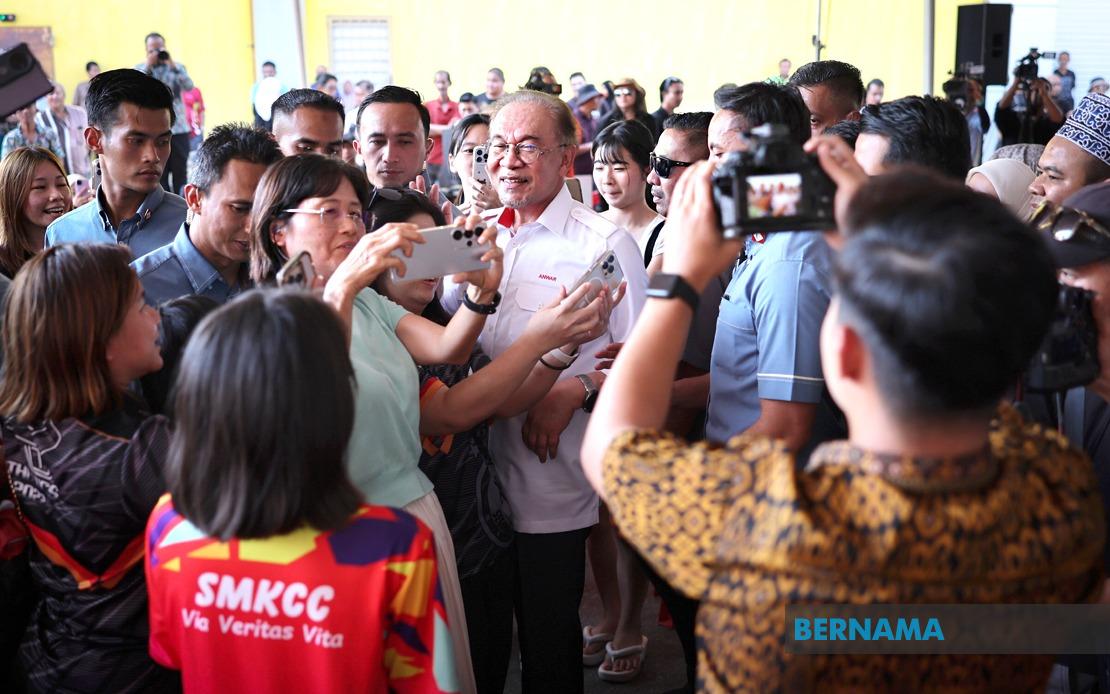
Pakatan Harapan, the ruling federal coalition, demonstrated significant organisational momentum through a carefully orchestrated campaign blitz led by Prime Minister Datuk Seri Anwar Ibrahim. The coalition chairman's itinerary encompassed five strategic constituencies across the state, beginning with an event in the Bukit Gambir state legislative assembly area before progressing through Bukit Batu and Layang-Layang. The strategic sequencing of these locations reflected PH's targeting of swing constituencies where support remained contested. The final day concluded with the 'Johor Ke Depan, Undi Harapan Grand Finale Programme' in Pasir Gudang, a choice of venue designed to reach working-class and urban voters in a major industrial and residential hub.
Anwar's approach on the final campaign day blended conventional political messaging with spiritual appeals, as he publicly prayed for favourable circumstances surrounding Pakatan Harapan's performance in the election. This dual strategy recognised the importance of both organisational effectiveness and the faith-based values that resonate with significant segments of the Johor electorate. For the Larkin state seat candidate, Suhaizan Kaiat, the closing hours of campaigning took on a more grassroots character. Accompanied by Parti Amanah Negara Vice President Datuk Seri Dr Dzulkefly Ahmad, Suhaizan conducted an informal walkabout through a shopping mall in Johor Bahru, seeking direct interactions with ordinary voters. This deliberately casual approach stood in contrast to the formal rallies being held elsewhere, reflecting an understanding that different voter demographics respond to distinct campaign styles.
Barisan Nasional, the traditional ruling coalition in Johor, adopted a notably different final-day strategy centred on spiritual and moral themes. Coalition chairman Datuk Seri Dr Ahmad Zahid Hamidi, who also serves as Deputy Prime Minister, participated in the 'BN Grand Supplication & Doa Selamat' event in Kulai district. This religious framing of the campaign conclusion appeared designed to appeal to voters' spiritual sensibilities and position Barisan Nasional as a morally grounded political force. Incumbent Johor Menteri Besar Datuk Onn Hafiz Ghazi, the BN candidate defending the Machap seat, took a strikingly contrarian approach by issuing a public apology through social media for any shortcomings during his administration. This humbling gesture suggested awareness that voter dissatisfaction had accumulated over his tenure and that direct acknowledgement of failures might rehabilitate his electoral prospects.
Bersatu, the Malay-centric party governing some federal and state jurisdictions, pitched its closing message toward voters' decision-making processes. Party president Tan Sri Muhyiddin Yassin acknowledged that the two-week campaign period had provided voters with sufficient information to make informed choices about which party should lead Johor's government. His framing implicitly conceded that voter preferences had likely crystallised by that late stage, and that the party's role had been to present its case comprehensively. The Bersama party, which has emerged as a more progressive political force with younger leadership, chose to feature prominent figures Datuk Seri Rafizi Ramli and Nik Nazmi Nik Ahmad in its finale event. Rafizi signalled his intention to synthesise campaign arguments, deconstruct competing claims, and provide comprehensive counterarguments to positions advanced by rival parties during the two-week campaign.
MUDA, Malaysia's youth-focused political movement, simultaneously held its 'Puteri Wangsa Grand Finale Lecture', with party president Amira Aisya Abd Aziz emphasising the transformative power held by Johor's voters. This messaging positioned the election as fundamentally about voter agency and empowerment, appealing particularly to younger and first-time voters who might feel disconnected from traditional political narratives. The diversity of campaign closing strategies across these parties illustrated how different political organisations calibrated their messaging to distinct voter segments and demographic cohorts.
Weather considerations added an unpredictable element to the electoral process. The Malaysian Meteorological Department forecasted clear conditions during morning hours but warned of potential rainfall or thunderstorms in afternoon periods. Such weather patterns could influence voter turnout, as precipitation might deter some voters from reaching polling stations, particularly among elderly and immobile constituencies who typically face greater logistical barriers during inclement conditions.
The scale of competition underscored the fragmentation of Malaysia's political landscape. With 172 candidates contesting just 56 seats, the average of approximately three candidates per seat reflected the multiplication of political parties and coalitions vying for voter support. This fragmentation differed markedly from earlier electoral cycles when two-party dominance limited voter options. The presence of multiple candidates in most constituencies meant that voter preferences were distributed across a wider spectrum of political options, potentially reducing any single party's ability to achieve comfortable majorities.
For Southeast Asian observers, the Johor state election represented a significant indicator of broader political trends across Malaysia. Johor has historically served as a bellwether for national political sentiment, and the results would provide crucial evidence about whether federal-level dissatisfaction with Pakatan Harapan's governance was translating into electoral losses at the state level. The election's outcome would also illuminate whether Barisan Nasional's apparent revival in certain constituencies reflected genuine voter rehabilitation of the historically dominant coalition or merely tactical voting patterns responding to local grievances. These dynamics carried implications for future federal elections and the broader trajectory of Malaysian democracy as it navigated competing demands for reform, stability, and inclusive governance.

