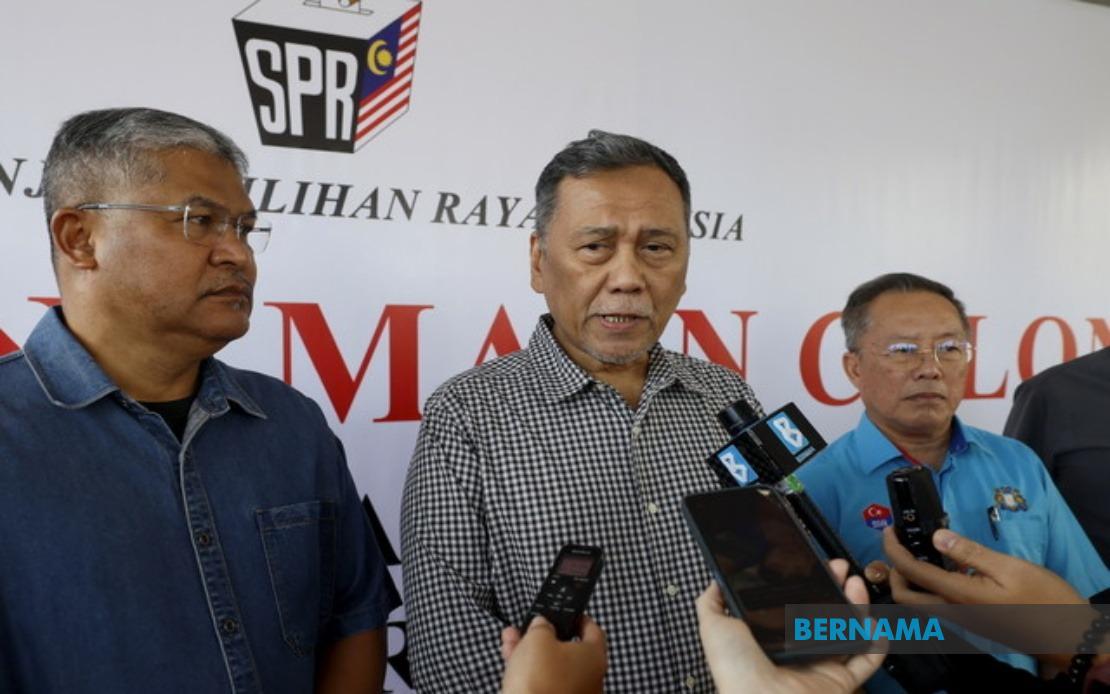
The Malaysian Election Commission has confirmed that 133 prospective candidates have formally committed to contesting the Johor state election by paying their required deposits, with 593 nomination forms distributed to interested hopefuls across the state. Election Commission chairman Datuk Seri Ramlan Harun indicated that the final tally of candidates was still climbing as the nomination process officially commenced, with the figures released on June 26 representing only those who had completed their paperwork up to that morning. This suggests that substantially more candidates were expected to register once nominations formally opened the following day, as political parties sought to finalize their candidate lists and ensure timely submission of required documentation.
The Election Commission's preparation for the Johor state election reflects an elaborate logistical undertaking spanning the entire state. Ramlan disclosed that 56 nomination centres had been established throughout Johor and that the commission had conducted two consecutive days of comprehensive trial runs to ensure smooth operations. His reassurance regarding readiness came after he personally inspected the nomination centre for the Maharani constituency at the Muar District Office, where officials demonstrated meticulous attention to procedural details. The advance preparation was particularly crucial given the scale of the electoral exercise, which would see nominations processed across multiple venues simultaneously, requiring strict adherence to established timelines and protocols to prevent bottlenecks or administrative errors.
Security and crowd management emerged as significant operational considerations for election officials overseeing the nomination process. Zainal Eran, the returning officer for Maharani, outlined a carefully choreographed system designed to maintain order while accommodating supporters of competing political parties. Under these arrangements, only the candidate, their proposer, and a single designated supporter would be permitted inside nomination centres, ensuring intimate proceedings that could be closely monitored. The remaining party supporters would be confined to designated outdoor areas, separated by physical barriers according to party affiliation—a measure intended to prevent confrontations or inflammatory incidents that could undermine the electoral atmosphere. This spatial segregation reflected lessons learned from previous elections and demonstrated the commission's determination to ensure that nomination day proceeded without violence or major disruptions.
The composition of fielded candidates reveals a competitive electoral landscape in which Johor's major political coalitions are fully mobilizing their resources. Pakatan Harapan announced plans to contest all 56 state seats, with the coalition distributed among three constituent parties: PKR fielding 20 candidates, Amanah 19, and DAP 17. This comprehensive slate demonstrated the opposition coalition's determination to maximize its presence across Johor's constituencies, even in traditionally hostile terrain. Barisan Nasional maintained its own full roster of 56 candidates, organized along communal lines with UMNO providing 36 candidates, MCA 16, and MIC four. This racial-based allocation reflected the coalition's long-standing organizational structure and its bid to maintain support among its traditional voter bases across Johor's diverse communities.
Perikatan Nasional's candidate strategy revealed a more fragmented approach compared to its established rivals, with multiple parties within the coalition contesting different numbers of seats. PAS committed to 11 seats, Bersatu 16, the Malaysian Indian People's Party five, and Pejuang one—a distribution that highlighted the coalition's internal complexity and divergent strategic priorities. This arrangement contrasted sharply with the more streamlined structures of Pakatan Harapan and Barisan Nasional, suggesting either different coalition dynamics or distinct organizational capabilities among Perikatan Nasional's constituent parties. The uneven distribution raised questions about how effectively the coalition could coordinate campaign messaging and avoid voter confusion across different party brands.
Several smaller and emerging political entities had secured their spots on the Johor ballot, broadening the electoral competition beyond the three major coalitions. The Malaysian United Democratic Alliance declared it would field candidates in four constituencies, while Parti Sosialis Malaysia positioned itself in a single seat. Most notably, Parti Bersama Malaysia announced its electoral debut in Johor by contesting 15 state seats—a substantial commitment for a new entrant that suggested either considerable organizational confidence or a specific strategic bet on particular constituencies. These smaller players expanded the choice available to voters while potentially fragmenting the vote across constituencies where they competed, particularly benefiting larger parties if votes split among multiple challengers.
The constitutional and procedural framework governing the Johor election was firmly established ahead of nomination day. The Johor State Legislative Assembly had been dissolved on June 1, triggering the electoral cycle that would culminate in polling on July 11. The Election Commission had allocated June 27 as nomination day, July 7 for early voting, and July 11 as the primary polling date—a compressed timeline that reflected standard Malaysian election procedures and placed significant operational demands on electoral authorities and political parties alike. This schedule meant that candidates would have limited time to campaign following nomination, condensing what was already an intense political period into a remarkably brief window.
For Malaysian and Southeast Asian observers, the Johor state election held broader significance beyond the state's boundaries. Johor, as Malaysia's second-largest state by population and a crucial economic hub in the southern corridor, served as a political barometer for national trends and coalition strength. The outcome would provide insights into shifting voter preferences, the viability of coalition arrangements, and the performance of newer political entities. The state's diverse demographic composition—encompassing substantial Malay-Muslim, Chinese, and Indian populations—made it a microcosm of Malaysian electoral dynamics and an important indicator of which parties were gaining or losing ground among various communities.
The apparent momentum toward nomination reflected confidence across political parties that they possessed competitive candidates capable of mounting credible campaigns. The fact that major coalitions fielded complete slates across all 56 seats demonstrated their organizational capacity and financial resources, while the participation of smaller parties and new entrants signaled that Johor remained an arena of political opportunity and contestation. However, the gap between nomination forms sold (593) and confirmed candidates (133) also highlighted the challenges facing less-resourced parties or independent candidates in completing the procedural requirements and financial commitments necessary to formally enter the race, potentially resulting in certain constituencies facing limited competition despite the apparent abundance of potential candidates.
The Election Commission's emphasis on peaceful and orderly proceedings reflected broader concerns about electoral conduct and democratic norms in Malaysia. Ramlan explicitly cautioned political parties, candidates, and supporters to comply with regulations and refrain from provocative conduct, signaling the commission's expectation of professional behavior during a crucial democratic exercise. This cautionary tone underscored the importance that election officials placed on maintaining public confidence in the electoral process and preventing incidents that might undermine legitimacy or trigger administrative complications. For Malaysia's democratic system, the Johor election would serve as a significant test of institutional capacity, party discipline, and voter engagement during a period of heightened political competition and coalition realignment.

