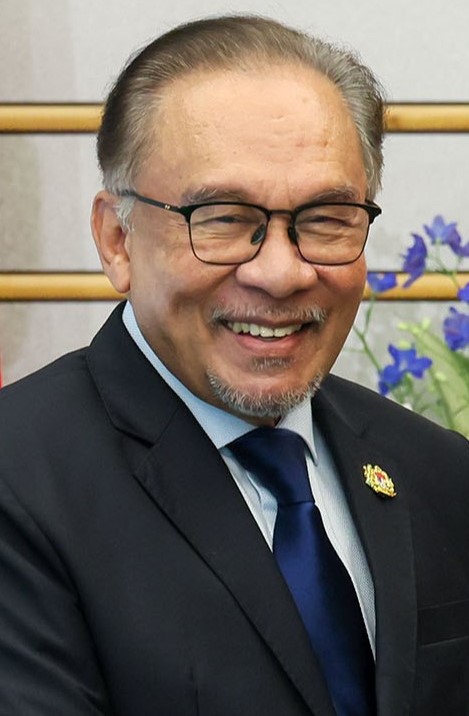
Pakatan Harapan has moved swiftly to rebut persistent claims that Johor has been sidelined by the Federal Government, countering the narrative with figures demonstrating substantial financial commitments to the state's development under the current administration led by Prime Minister Datuk Seri Anwar Ibrahim. Speaking from Tangkak, party representatives have emphasised that development allocations flowing to Johor have actually expanded compared to previous periods, signalling a commitment to regional growth across Malaysia's southern tier.
The coalition has marshalled evidence to show that Johor has accessed RM14.6 billion in federal funding designations, a figure intended to demonstrate the government's serious investment in the state's infrastructure, services, and economic development initiatives. This announcement directly challenges the perception among some quarters that Johor, historically a stronghold of opposition politics, has been deliberately overlooked in federal budgeting and development planning. The scale of these allocations underscores a strategic effort to build goodwill and tangible improvements across constituencies regardless of electoral allegiances.
The political significance of this statement extends beyond mere fiscal accounting. Johor occupies a pivotal position in Malaysian politics, both as the home state of the royal institution and as a major economic contributor to the federation. Any perception of federal neglect towards the state carries real political consequences, potentially affecting voter sentiment and the coalition's electoral prospects. By putting forward concrete numbers, Pakatan Harapan seeks to neutralise what it views as unfounded criticism while demonstrating administrative competence and inclusive governance.
For Malaysian observers, particularly those in Johor, the RM14.6 billion figure invites scrutiny regarding disbursement mechanisms, project implementation rates, and tangible outcomes on the ground. Development allocations on paper do not automatically translate into completed infrastructure, improved services, or enhanced economic opportunities. The critical question facing residents centres on whether these funds have been effectively deployed to address genuine local needs such as transport connectivity, water security, industrial development, and social services enhancement.
The Anwar administration has positioned itself as a government of inclusion and performance, attempting to move beyond the divisive politics that characterised previous years. Addressing Johor specifically signals recognition that trust-building exercises require concrete manifestations of policy intent. The state's economic importance—centred on manufacturing, petrochemicals, and port operations—makes it strategically vital to national development trajectories. Federal support for Johor therefore carries implications extending beyond provincial politics into broader patterns of economic management and regional stability.
Context matters considerably when evaluating these allocations. The southern region has faced particular economic pressures, including industrial restructuring, labour market transitions, and infrastructure gaps relative to more developed areas. Whether RM14.6 billion adequately addresses these structural challenges, and how the funds are sequenced across different development priorities, remains an open question. Johor's future competitiveness depends not simply on money directed towards the state but on strategic deployment of resources towards transformative projects with lasting multiplier effects.
Pakatan Harapan's defensive posture on this issue also reflects deeper anxieties about governing legitimacy. The coalition has worked to establish an alternative political narrative based on performance metrics and tangible service delivery rather than patronage networks or identity-based appeals. Regular articulation of development figures and budget allocations forms part of this broader strategic communications effort. By publicly itemising investments in Johor, the coalition reinforces its claim to represent a more transparent, data-driven approach to federal resource distribution.
The announcement emerges against a backdrop of intense competition for Johor's political allegiances. Both Pakatan Harapan and opposition coalition Perikatan Nasional maintain significant support bases in the state, creating a genuinely contested electoral landscape. Substantive claims about federal funding and development outcomes become weaponised in this environment, with each side highlighting evidence supporting its governance narrative. The RM14.6 billion figure thus functions simultaneously as factual assertion and political argument.
For Southeast Asian observers monitoring Malaysian political developments, this discourse illuminates broader questions about federal-state relations, resource distribution mechanisms, and post-electoral reconciliation. How governments treat regions that did not support them at the ballot represents a key indicator of democratic maturity and institutional strength. Malaysia's experience offers lessons relevant to neighbouring democracies grappling with similar tensions between political competition and equitable development distribution.
Moving forward, Johor's actual experience of federal investments will determine whether Pakatan Harapan's claims generate sustained political capital or become dismissed as campaign rhetoric. Project completion timelines, budget execution rates, and measurable improvements in living standards across different demographic groups will provide the ultimate validation or refutation of current allocations statements. The state represents, in many respects, a critical test case for whether contemporary Malaysian governance can transcend zero-sum political competition and deliver inclusive development outcomes.