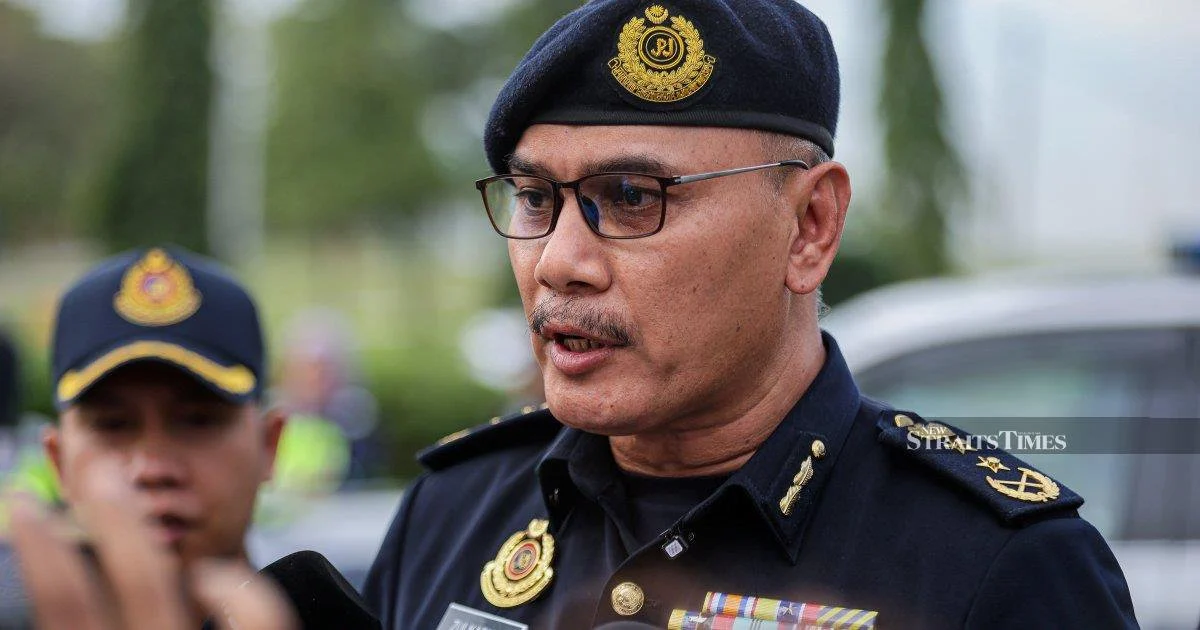
The Johor Road Transport Department has begun issuing formal investigation notices to riders found operating motorcycles without helmets during the state's recent election campaign period. This enforcement action reflects the department's commitment to maintaining road safety standards even as public attention shifts to political activities across the region.
The crackdown on helmetless riders underscores a persistent safety concern in Malaysian road transport. Despite decades of mandatory helmet legislation, non-compliance remains widespread, particularly among younger riders and in areas with lighter enforcement presence. The decision to pursue investigations during a high-profile campaign period suggests the RTD is treating safety violations as non-negotiable regardless of external circumstances or crowd sizes that typically characterise electoral activities.
Motorcycle safety violations carry significant consequences under Malaysian law. Riders operating without proper protective equipment face fines and potential licence demerit points that accumulate towards suspension. The investigation notice is typically the first formal step in this enforcement pipeline, requiring the rider to respond to allegations and potentially submit documentary evidence or attend a hearing at the RTD office. This bureaucratic process, while sometimes perceived as inconvenient, represents the department's effort to document patterns and modify behaviour through graduated consequences rather than immediate penalties.
The visibility of such enforcement during campaign season carries particular importance. Election periods often draw large crowds to public spaces, and the concentration of campaign-related motorcycle activity—ranging from candidate tours to supporter gatherings—creates both heightened accident risk and opportunity for regulatory bodies to demonstrate consistent application of rules. By targeting violations during this high-profile period, the RTD sends a message that safety compliance is universal and non-partisan, transcending the temporary political atmosphere that dominates during electoral contests.
Johor's road safety environment presents unique challenges. As Malaysia's second-largest state by population and a critical economic hub with substantial cross-border traffic to Singapore, Johor experiences traffic volumes that test enforcement capacity. Motorcycles, accounting for the majority of vehicles on state roads, represent the demographic group with highest accident and fatality rates. This disproportion explains why transport authorities consistently prioritise helmet compliance as a foundational safety measure, since head injuries constitute the leading cause of death in motorcycle accidents across the region.
The RTD's decision to pursue investigation notices rather than on-the-spot fines suggests a structured approach to enforcement. This methodology allows the department to maintain records of repeat offenders, identify geographic or temporal hotspots for violations, and build a database supporting future policy recommendations. For riders, the investigation process provides an opportunity to respond to allegations, though cooperation and prompt compliance remain the most effective path through the system. Ignoring investigation notices typically escalates consequences, potentially leading to compounded fines or enforcement actions against other documents held by the rider.
Campaign-period enforcement also reflects broader road safety initiatives in Malaysian states. Many transport departments have identified electoral and major event periods as windows for intensified compliance messaging, reasoning that the heightened public visibility during such occasions amplifies the educational effect of enforcement action. When citizens observe consequences for safety violations being applied consistently, even during festive or politically charged periods, it reinforces the norm that rules serve genuine protective purposes rather than revenue-raising functions.
For Malaysian riders broadly, the Johor action carries cautionary significance. While helmet-wearing rates have improved considerably since the 1990s due to sustained enforcement and public education, pockets of non-compliance persist, particularly among delivery workers operating under time pressure and recreational riders who view helmets as dispensable for short trips. The Johor RTD's campaign-period initiative demonstrates that visibility and accessibility do not exempt riders from compliance obligations, and that enforcement mechanisms remain active across all seasons and circumstances.
The investigation notice framework itself represents an evolution in traffic enforcement philosophy. Rather than purely punitive immediate fines, the structured investigation process allows riders to understand the seriousness of violations while providing avenues for administrative review. This approach has been adopted across several Malaysian states as enforcement bodies seek to balance public safety objectives with proportionate administrative processes that maintain community cooperation with regulatory initiatives.
State-level transport departments like Johor's RTD operate under federal guidelines established by the Ministry of Transport, yet retain discretion in enforcement intensity and timing. By implementing focused compliance campaigns during high-profile periods such as election season, state departments demonstrate autonomous commitment to safety standards. This decentralised enforcement model creates natural variation across states, with some implementing more rigorous programmes than others, though all remain bound by uniform legal penalties outlined in the Road Transport Act.
The broader implication of Johor's enforcement action extends beyond immediate compliance. As the region continues processing post-election activities and governance transitions, road safety initiatives offer an important counterbalance to the temporary chaos that electoral periods sometimes introduce to public spaces. By maintaining consistent enforcement of fundamental safety requirements, transport authorities reinforce the principle that governance and rule-application remain continuous, even as political power structures undergo democratic renewal.

