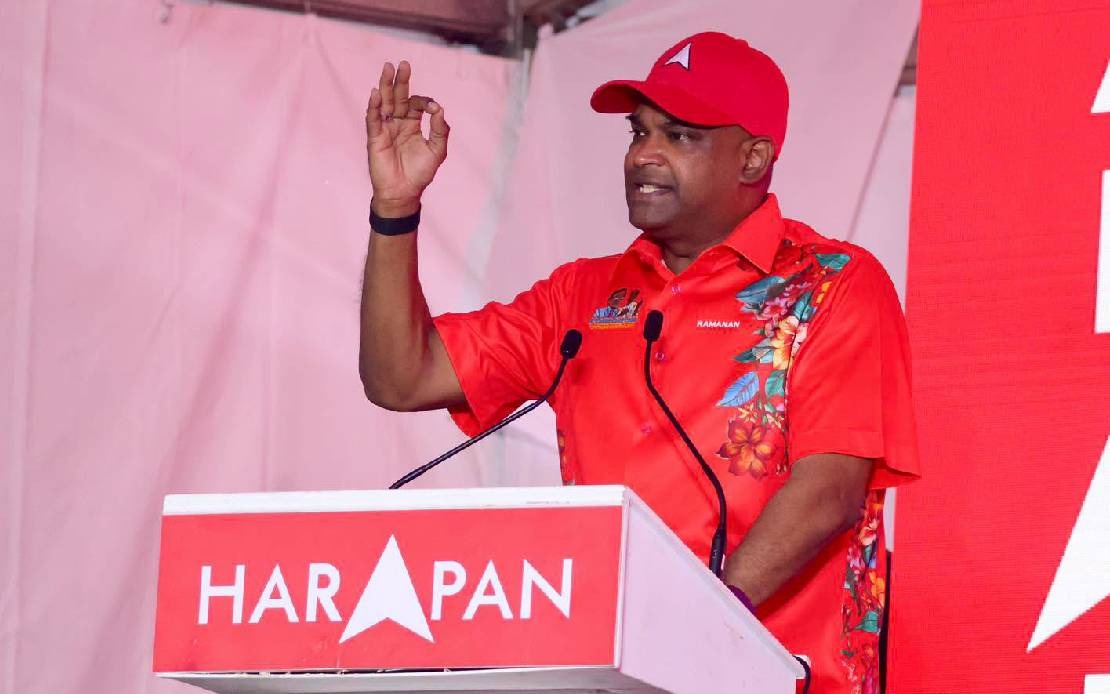
The Federal Government remains steadfastly committed to advancing Johor's development agenda, according to PKR Vice-President Datuk Seri R Ramanan, who addressed campaign supporters at a political roadshow in Simpang Renggam. Speaking at the Johor Ke Depan, Undi Harapan event, Ramanan emphasised that the state continues to feature prominently within the administration's strategic priorities, with substantial capital allocation directed towards transformative projects that tangibly improve living standards across Johor's diverse communities.
The party leader outlined a comprehensive framework of federal initiatives spanning multiple sectors, from large-scale infrastructure development to targeted welfare programmes. According to Ramanan, this multi-pronged approach reflects a deliberate policy design ensuring that prosperity from national economic growth reaches families throughout the state, regardless of geographic or socioeconomic location. The emphasis on equitable benefit distribution underscores a broader government narrative centred on inclusive development rather than concentration of resources in traditional economic corridors.
Ramanan's remarks gain particular significance given their timing during the campaign season for Johor's state election, scheduled for July 11. By articulating federal support in concrete terms—investments, infrastructure, and assistance programmes—the PKR leader sought to reinforce the Pakatan Harapan coalition's track record and justify continued voter confidence ahead of the poll. This messaging strategy reflects a calculated approach to linking federal capacity and resources with state-level governance, positioning administrative alignment between Kuala Lumpur and Johor Bahru as essential for accelerated implementation of development plans.
The roadshow itself brought together a cross-section of PH's electoral machinery in Johor. Alongside Ramanan, the event featured PKR Vice-President Datuk Seri Amirudin Shari, Amanah Secretary-General Faiz Fadzil, and three parliamentary candidates contesting state seats: Nur Hafiz Roslan for Machap, Abd Razak Ismail for Benut, and Guna Balakrishnan for Layang-Layang. This concentration of senior leadership suggested the coalition views the Johor contest as strategically critical, warranting investment of its top political capital and organisational resources at the grassroots engagement level.
For Malaysian observers, Johor's political significance extends beyond state boundaries. As the country's second-largest state by population and a historically important economic engine driving regional development, Johor's governance trajectory influences broader national policy implementation. A state election victory for Pakatan Harapan would consolidate the coalition's presence across several major Malaysian states and reinforce its claims to be the dominant political force shaping Malaysia's development trajectory. Conversely, a loss would complicate federal-state coordination on major initiatives and potentially create administrative friction on key projects.
The specific reference to administrative alignment carries practical implications. When federal and state governments operate under different political coalitions, resource allocation, project approval timelines, and implementation priorities often become contested terrain. Ramanan's appeal for voters to grant PH the state mandate implicitly acknowledges that federal-level development commitments work most efficiently when state administrations share common political objectives and ideological orientations. This represents a pragmatic recognition that political fragmentation across governmental levels can slow delivery of promised benefits to constituents.
The election itself reflects substantial electoral competition, with 172 candidates contesting across an undisclosed number of state seats. Early voting was scheduled for July 7, followed by the main polling day on July 11. This competitive environment means federal assurances about Johor's development priority must resonate with voters already hearing similar promises from opposition parties, who will highlight their own development blueprints and criticise PH's track record on earlier commitments. The effectiveness of Ramanan's messaging therefore depends partly on whether voters perceive tangible progress from previously announced federal initiatives.
Johor's development needs remain substantial. As a state transitioning from resource-dependent extractive industries toward knowledge-based and manufacturing sectors, Johor requires sustained federal investment in education, skills training, transportation infrastructure, and industrial park development. The state also faces demographic challenges including youth migration to Klang Valley and Kuala Lumpur, requiring retention strategies centred on local employment creation. Federal infrastructure projects, if properly targeted, can address some of these structural concerns, justifying Ramanan's emphasis on major investments as central to the government's Johor strategy.
The assistance programmes referenced by Ramanan extend beyond infrastructure to include welfare support, subsidies, and targeted aid for specific demographic groups. In a state with pockets of lower-income communities, particularly in northern districts and coastal areas, such programmes constitute visible evidence of federal commitment to residents' immediate well-being. This direct assistance approach supplements longer-term infrastructure development, creating a dual-track strategy where both immediate material support and future development opportunities reinforce the government's electoral narrative.
From a Southeast Asian perspective, Malaysia's internal state elections carry implications for regional political stability and economic coordination. Johor's geographic proximity to Singapore and its role as a major trade and logistics hub means that coherent, continuous governance and development planning benefit not only Johor residents but also regional supply chain efficiency and cross-border economic relationships. Political continuity and institutional stability in Johor therefore possess economic significance extending beyond state boundaries into the broader regional economy.
The Johor Ke Depan, Undi Harapan roadshow represents a calibrated effort to mobilise voter support through a combination of concrete development messaging and party leadership visibility. By appearing directly before constituents and articulating specific policy commitments, Ramanan and his colleagues attempted to translate federal-level pledges into tangible voter expectations. The success of this approach would become evident only after July 11 ballots were counted, but the exercise itself demonstrated PH's determination to retain political control in this strategically important state.

