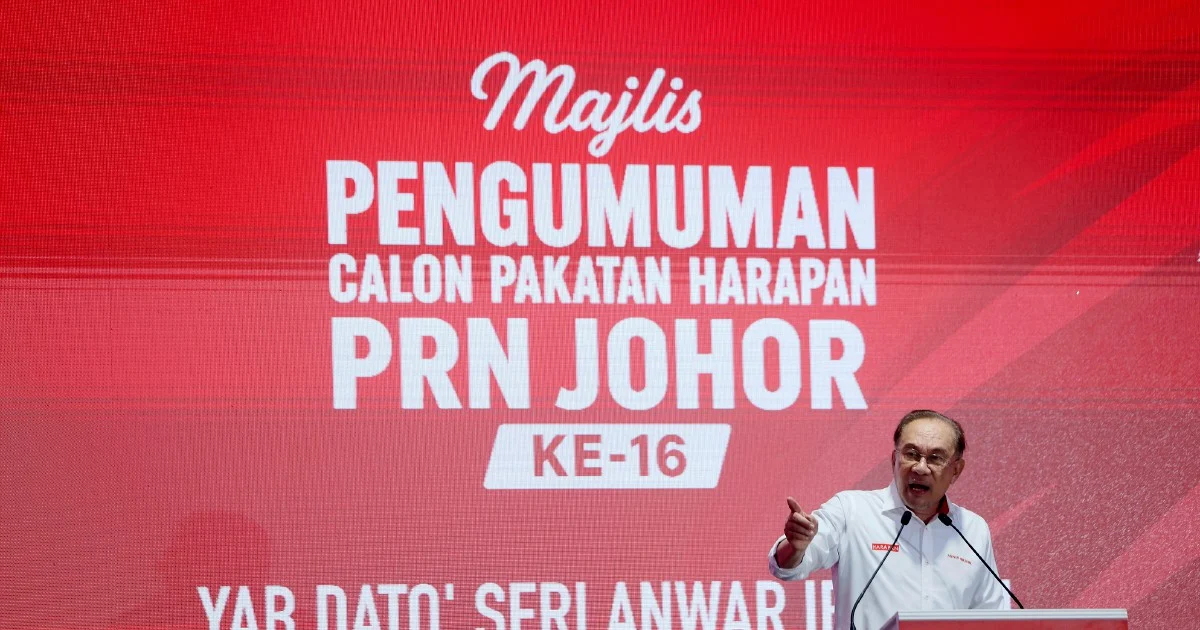
Prime Minister Datuk Seri Anwar Ibrahim has highlighted the significant fiscal support extended to Johor by the federal government, noting that allocations to the state have surpassed its revenue contributions by a substantial margin over the past three years. Speaking during an event in Tangkak, the Prime Minister disclosed that whilst Johor contributed RM14 billion to federal coffers during this period, it received RM16 billion in federal allocations, demonstrating a net transfer of RM2 billion to the state.
This revelation provides important context for ongoing discussions about fiscal federalism in Malaysia and how the federal government balances development priorities across different states. The relationship between revenue collection and expenditure distribution remains a contentious issue in Malaysian politics, particularly in states that view themselves as significant economic contributors. Anwar's statement appears designed to address perceptions that Johor has been neglected or underinvested in, presenting evidence of substantial federal support flowing into one of the nation's most economically dynamic regions.
Johor's position as a major economic engine makes this comparison particularly relevant to national discourse. The state generates considerable tax revenue through its manufacturing sector, port operations, and commercial activities, yet the federal government has chosen to channel more funds back into the state than it extracts. This pattern reflects a deliberate policy to ensure that revenue-generating states continue to receive adequate investment in infrastructure and services, preventing a situation where wealth concentration creates regional imbalances.
The timing of this statement carries political significance as well. Federal-state relations have become increasingly scrutinized in recent years, with various state governments questioning the fairness of revenue distribution mechanisms. By providing concrete figures, Anwar attempts to demonstrate the federal government's commitment to equitable development and transparent financial management, counter to criticisms from opposition quarters about fiscal inequity.
The RM2 billion net transfer to Johor reflects a broader philosophy of federal redistribution, where wealthier and more productive states effectively subsidize development in less economically advanced regions. This approach aims to reduce regional inequality and ensure that all Malaysian citizens have access to comparable public services and infrastructure, regardless of whether their state generates high tax revenues. However, such mechanisms often spark debate among stakeholders who question whether the distribution methodology truly serves national interests optimally.
Understanding the flow of federal funds becomes crucial for tracking government priorities and evaluating policy effectiveness. The breakdown between Johor's contribution and allocation provides voters and analysts with tangible evidence to assess whether their state receives fair treatment from the centre. These figures also serve as benchmarks for evaluating the federal government's success in its stated mission of ensuring equitable development across all Malaysian states.
The three-year period referenced in Anwar's statement encompasses a significant portion of the current administration's tenure, allowing for meaningful analysis of spending patterns and fiscal strategy. During this timeframe, Malaysia has navigated economic challenges, implemented various stimulus measures, and adjusted budget priorities according to evolving circumstances. Against this backdrop, the federal government's decision to channel more funds to Johor than it extracted suggests deliberate investment in maintaining economic momentum in a strategically important state.
Johor's economy encompasses diverse sectors including petroleum refining, petrochemicals, manufacturing, logistics, and tourism. These industries generate substantial tax revenues but also require continuous infrastructure investment to remain competitive. The federal allocations documented in Anwar's statement likely supported roads, ports, industrial parks, and other critical infrastructure that enables Johor's businesses to operate effectively. Such investments create indirect returns to the federal government through continued economic productivity and job creation.
The disclosure also carries implications for how Malaysia approaches fiscal consolidation and debt management. By allocating more to developed states than they contribute in taxes, the federal government accepts the responsibility of financing this gap through either taxation elsewhere or borrowing. This has long-term implications for fiscal sustainability and affects Malaysia's ability to maintain service quality and invest in future priorities. Transparency about these flows helps the public understand the trade-offs inherent in the government's fiscal choices.
Comparative analysis across other states would provide fuller context for assessing whether Johor's experience represents the norm or an exception. If most states receive allocations exceeding their contributions, the federal government operates on a significant redistribution model. Conversely, if only certain states experience net transfers while others contribute more than they receive, this reveals deliberate targeting of federal resources toward particular regions or development objectives. Such information would help stakeholders understand the underlying logic of federal spending patterns.
The Prime Minister's emphasis on this positive transfer also serves to reinforce confidence in federal governance among Johor's population and business community. By demonstrating tangible financial commitment, the government seeks to strengthen the social contract with the state and its residents. This approach acknowledges that fiscal contributions and allocations matter psychologically and politically to state populations, influencing their perceptions of whether the federal system serves their interests fairly.
Looking forward, these figures will likely shape discussions about the next federal budget and medium-term spending plans. States will reference similar data when advocating for their development priorities, using Johor's example to argue for equitable treatment. The federal government will need to maintain consistent messaging about fiscal allocation principles whilst responding to competing demands for resources across the country's thirteen states and three federal territories.

