%22%2F%3E%3C%2Fpattern%3E%3C%2Fdefs%3E%3Crect%20width%3D%22100%25%22%20height%3D%22100%25%22%20fill%3D%22url(%23phb6ycg)%22%2F%3E%3Crect%20width%3D%22100%25%22%20height%3D%22100%25%22%20fill%3D%22url(%23phb6ycp)%22%2F%3E%3Ctext%20x%3D%2250%25%22%20y%3D%2250%25%22%20text-anchor%3D%22middle%22%20dominant-baseline%3D%22central%22%20fill%3D%22rgba(255%2C255%2C255%2C0.95)%22%20font-family%3D%22Georgia%2C%20'Times%20New%20Roman'%2C%20serif%22%20font-weight%3D%22700%22%20font-size%3D%22272%22%20letter-spacing%3D%22-0.02em%22%3EJohor%3C%2Ftext%3E%3C%2Fsvg%3E)
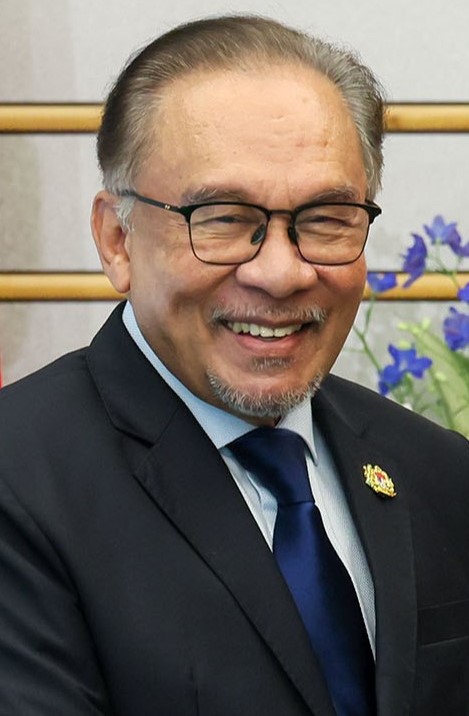
Prime Minister Datuk Seri Anwar Ibrahim presented financial data at a Pakatan Harapan campaign event in Tangkak, demonstrating what he characterised as the Federal government's substantial investment in Johor's development. Speaking at the state election candidate announcement ceremony, Anwar highlighted that between 2023 and 2025, Johor contributed approximately RM14 billion in tax revenue to federal coffers, while the government channelled RM16 billion back to the state through a combination of infrastructure projects, operational expenditure, and social assistance programmes.
The Prime Minister, who also holds the Finance Ministry portfolio, emphasised the importance of clarifying this fiscal relationship as Malaysia approaches the Johor State Election. By presenting a RM2 billion surplus in federal disbursements relative to state contributions, Anwar sought to underscore the current administration's commitment to ensuring equitable resource distribution and development prioritisation for Johor residents. This narrative becomes particularly significant in the context of election messaging, where demonstrating tangible federal commitment to a state's prosperity serves as a crucial political talking point.
When examining operational expenditure trends, the figures reveal a marked increase in annual allocations under the MADANI Government framework. Johor's operating budget rose from RM6 billion to RM7 billion annually during the previous administration to RM8.7 billion under the current government, representing an increase of roughly RM1.7 billion to RM2.7 billion per year. This expansion in operational funding translates into resources for civil service salaries, routine maintenance, basic government services, and administrative functions that directly impact daily governance and public service delivery across the state.
Development expenditure allocations have similarly experienced substantial growth. According to the Prime Minister's presentation, Johor's development budget climbed from RM2.3 billion in 2022 to RM4.8 billion in 2026, marking more than a doubling of capital investment over a four-year period. This acceleration in development spending suggests increased emphasis on long-term infrastructure, major projects, and transformative initiatives intended to enhance economic productivity and living standards. For context, this growth outpaces inflation significantly and indicates deliberate policy prioritisation rather than merely nominal increases.
The comparative positioning of Johor within Malaysia's broader fiscal allocation framework provides additional perspective. According to data Anwar presented, Johor ranks as the third-largest recipient of combined operational and development expenditure allocations nationwide, trailing only Sabah and Sarawak—two geographically larger and demographically distinct states with unique constitutional arrangements and historical fiscal agreements. This standing reflects Johor's economic significance as Malaysia's second-largest state by population and a major industrial and agricultural hub, justifying substantial federal investment.
Beyond mainstream development funding, Johor has also benefited prominently from social safety net programmes. The state was identified as the second-largest recipient of assistance under both the Sumbangan Tunai Rahmah (STR) and Sumbangan Asas Rahmah (SARA) schemes, trailing only Selangor. These cash assistance programmes, initiated by the MADANI Government to provide relief to lower-income households, represent direct wealth transfers that cushion economic pressures on vulnerable populations. The distribution of these funds reflects both demographic factors and policy design intended to ensure broader-based economic support.
The timing of Anwar's disclosure carries strategic significance within Malaysia's evolving political landscape. Johor has traditionally been a stronghold for the Barisan Nasional coalition, and recent election cycles have witnessed intensifying competition between ruling Pakatan Harapan and opposition alliances. By quantifying federal investment in concrete numerical terms, the government aims to reframe the narrative around fiscal competence and development delivery, addressing potential voter concerns about whether current federal leadership adequately prioritises their state's interests and economic advancement.
For Malaysian readers and regional observers, these figures illuminate the mechanics of federal-state fiscal relations within Malaysia's federal system. The concentration of development resources in select states reflects a combination of demographic scale, economic contribution, and political considerations. The data also suggests that the current administration has consciously elevated allocations to economically significant peninsular states while maintaining constitutional obligations to Sabah and Sarawak.
The comparative analysis between previous and current administrations provides a measurable baseline for evaluating government performance claims. The increases documented—RM1.7 billion to RM2.7 billion annually in operating expenditure and RM2.5 billion in development expenditure since 2022—represent material shifts in resource availability that theoretically enable expanded public service capacity and infrastructure development. Whether these allocations translate into tangible improvements in service quality, infrastructure functionality, and economic outcomes remains a separate empirical question subject to independent assessment.
Southeast Asian context suggests that transparent fiscal disclosures of this nature remain relatively uncommon in regional governance, making Malaysia's willingness to publish detailed comparative financial data noteworthy. The detailed breakdown by category—operational versus developmental spending, social assistance targeting—reflects international best practices in government accountability and financial transparency, elements increasingly demanded by educated electorates across the region.
Looking forward, the sustainability of elevated allocation levels depends on broader macroeconomic conditions and federal revenue trajectories. Should economic growth moderate or revenue collection face headwinds, maintaining these funding commitments may prove challenging. Conversely, if economic performance strengthens, the precedent of increasing allocations could establish expectations for continued expansion, creating potential fiscal pressures on future administrations.