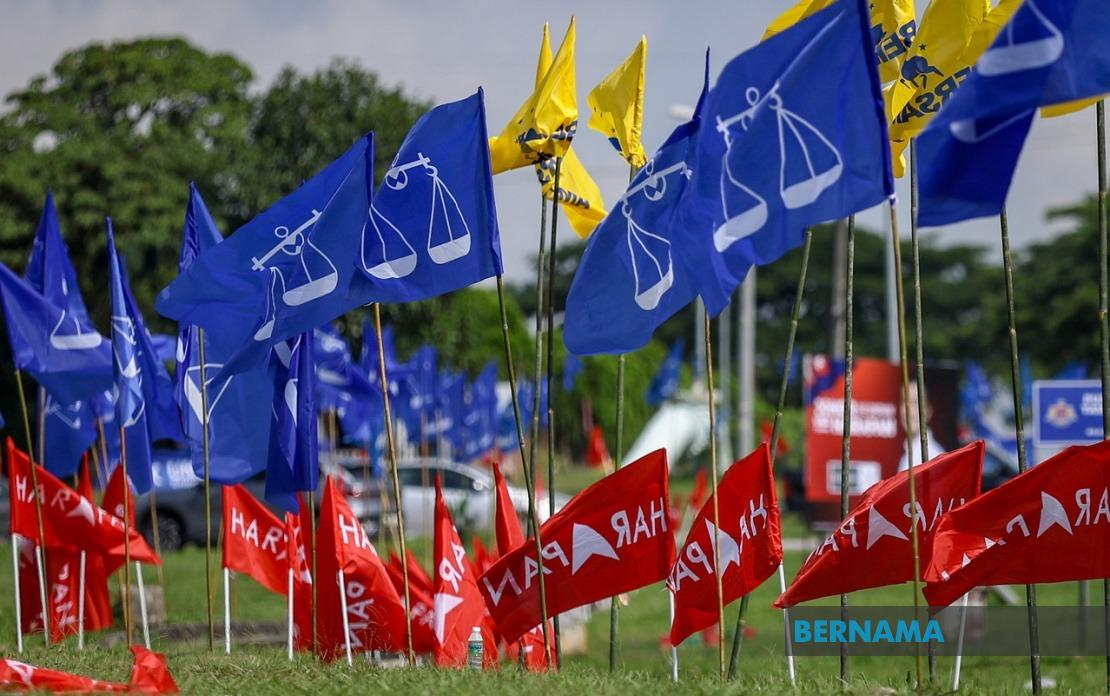
Pakatan Harapan's newly unveiled manifesto for the 16th Johor state election represents a credible platform for contesting Barisan Nasional's long-standing narrative of administrative competence and institutional stability. Launched in Johor Bahru on July 3, the opposition coalition's detailed policy document, branded "Johor For All," draws substance from bread-and-butter governance commitments that resonate with persistent public concerns about employment quality, housing affordability, living standards, and institutional integrity.
Academic observers argue the manifesto's strength lies not merely in rhetorical ambition but in its grounding in demonstrable federal-level achievements. Universiti Teknologi Malaysia's Assoc Prof Dr Mazlan Ali emphasises that PH's four foundational pillars—decent employment, accessible housing, improved living standards, and ethical governance—address the core anxieties facing ordinary Johoreans. These themes transcend partisan rhetoric to engage with material realities that shape voter preferences across demographic divides.
The manifesto's credibility derives partly from the Unity Government's macroeconomic stewardship at the national level. Recent data showing ringgit appreciation, strengthened foreign direct investment flows, and solid trade performance provide empirical scaffolding for PH's state-level promises. When opposition parties advance ambitious commitments, sceptical voters often discount such pledges as electoral fantasy. However, when a coalition can point to measurable national outcomes achieved over multiple quarters, the political calculus shifts. Mazlan observes that this track record distinguishes PH's Johor proposals from what voters typically dismiss as hollow campaign rhetoric.
The manifesto's numerical targets merit closer examination for what they reveal about PH's strategic intent. Commitments to establish a RM500 million youth fund, construct 80,000 affordable housing units, and generate 250,000 high-paying employment opportunities in emerging sectors represent quantifiable benchmarks against which future performance can be measured. While such figures might initially appear aspirational, they carry psychological weight for undecided voters—the crucial swing constituency in any state election. Fence-sitters typically evaluate not just individual candidates but the broader institutional capacity and governance philosophy of competing coalitions. Manifestos embedding specific numerical targets signal to this audience that a party has thought through implementation mechanics rather than simply offering vague aspirations.
Universiti Tun Hussein Onn Malaysia's Dr Nazreena Mohammed Yasin frames the manifesto as particularly strong on social and economic inclusivity, recognising both Johor's contemporary economic anxieties and forward-looking sectoral ambitions. The emphasis on healthcare protection and public wellness reflects post-pandemic consciousness among voters worldwide about the fragility of health infrastructure. Equally important is the manifesto's focus on high-value employment in digital economy and artificial intelligence sectors—industries where Malaysia competes regionally but where talent shortages remain acute. Such specificity suggests policy thinking beyond election-day sloganeering.
However, Nazreena introduces a critical caveat that shapes the actual electoral impact of even well-crafted manifestos. Voter conviction about delivery capacity matters as much as policy content itself. Barisan Nasional's incumbent status in Johor provides substantial structural advantage. The coalition has governed the state across multiple electoral cycles, maintaining institutional machinery and demonstrating continuous policy implementation capacity. For PH to overcome this incumbency advantage, the party must convince Johor voters that its proposals are not merely aspirational but operationally feasible—backed by transparent funding mechanisms, realistic implementation timelines, and genuine federal-state coordination architecture.
The manifesto's cross-border dimensions carry particular salience for Johor's economic geography and voter composition. The state hosts dense populations of workers traversing the Singapore border daily for employment. PH's proposal to reduce border waiting times by approximately fifty percent directly addresses a material daily grievance affecting tens of thousands. Similarly, commitments to strengthen public transport integration across the causeway acknowledge Johor's functional integration into a broader regional economic system. For young professionals and workers shuttling between Malaysia and Singapore, such proposals resonate more powerfully than abstract governance rhetoric.
The manifesto's healthcare commitments similarly reflect evolved voter priorities. The proposed protection framework suggests recognition of healthcare cost anxieties among middle and working-class Johoreans. While Barisan Nasional can cite decades of health infrastructure investment, PH positions universal healthcare protection as a more systematised entitlement rather than discretionary government provision. This framing appeals to younger voters and precariat workers lacking stable employer-sponsored insurance.
Barisan Nasional's counter-narrative of proven stability remains formidable, however. The incumbent coalition can marshal decades of development track record, established administrative routines, and institutional relationships spanning federal and state apparatuses. Johor has experienced sustained economic growth under BN governance, and many voters—particularly older cohorts—associate the coalition with orderly administration and predictable policymaking. Breaking through this incumbency psychology requires PH to demonstrate not merely policy sophistication but institutional credibility.
The youth employment and economic opportunity dimensions of the manifesto appear strategically calibrated to appeal precisely to younger voters less invested in BN's historical narrative. The RM500 million youth fund and emphasis on high-paying digital sector employment speak to generational concerns about career prospects and economic mobility. Young Johoreans entering the workforce face regional competition and changing employment structures; manifestos addressing these anxieties directly gain traction that abstract governance commitments cannot.
Voter evaluation of manifestos ultimately reflects broader questions about which coalition better understands contemporary Johor—a state experiencing demographic change, educational advancement, and shifting economic geography through regional integration. Barisan Nasional's challenge involves extending its stability narrative to encompass these contemporary dynamics. Pakatan Harapan's challenge involves translating manifesto commitments into voter conviction about delivery capacity. The July 11 election will partly reflect how persuasively each coalition addresses these competing imperatives.
With early voting scheduled for July 7 and election day set for July 11, the manifesto campaign enters its intensive phase. Analyst assessments suggest the "Johor For All" platform provides PH with substantive terrain for electoral competition rather than merely oppositional rhetoric. Whether this translates into voting behaviour modification depends substantially on the coming week's campaign intensity and voter reception of competing institutional claims about administrative competence and economic vision.

