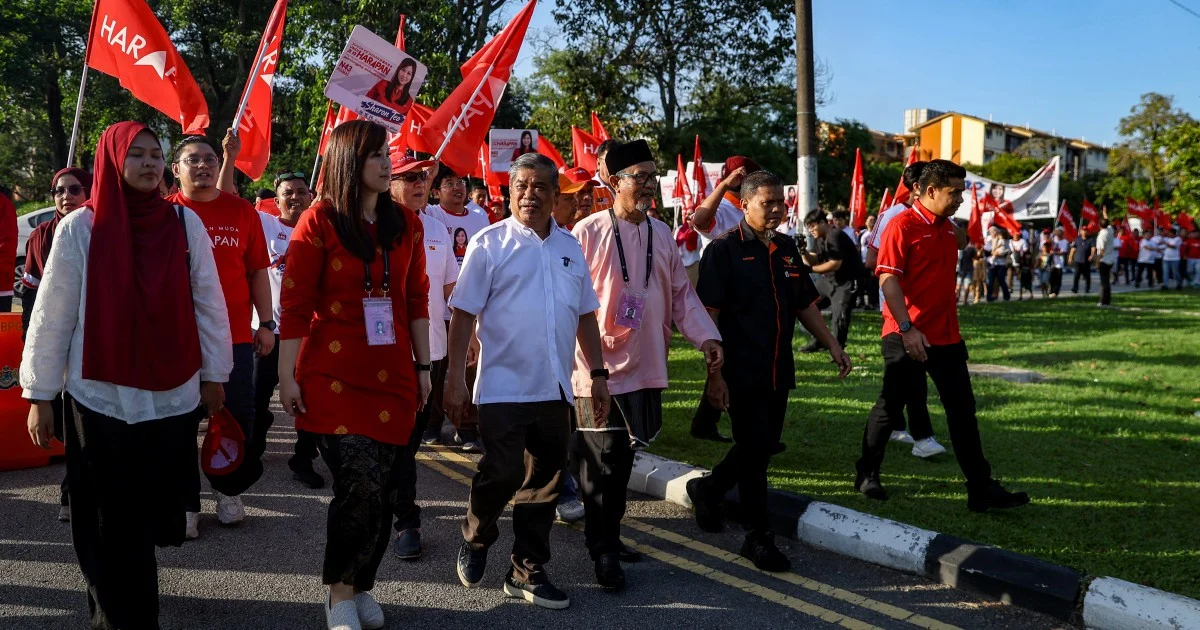
Sharon Teo's arrival at the Permas state constituency nomination centre in Pasir Gudang drew animated displays of support from Pakatan Harapan coalition backers, who filled the air with chants urging Johor voters to back the opposition alliance. The scene at Dewan Muafakat Taman Mawar reflected the coalition's determination to consolidate its presence in the southern state ahead of what appears to be a closely contested electoral showdown.
The Permas seat represents a significant battleground in Johor's electoral map, and Pakatan Harapan's decision to field Teo signals the coalition's intent to contest across multiple constituencies in the state. The visible turnout of supporters at the nomination event underscores the grassroots energy the opposition hopes to mobilise in the coming campaign period. Such displays, whether orchestrated or spontaneous, serve as barometers of campaign momentum and volunteer engagement.
For Malaysian observers tracking Johor politics, the state remains a complex electoral terrain. Historically a Barisan Nasional stronghold, Johor has seen shifting voting patterns in recent electoral cycles, particularly in urban and semi-urban areas. The 2018 national election saw pockets of opposition support emerge in urban Johor constituencies, though the state government remained under Barisan control. Pakatan Harapan's efforts to deepen its footprint here represent part of a broader strategy to expand beyond its traditional bases in Selangor, Penang, and Kuala Lumpur.
The Permas constituency, encompassing parts of Pasir Gudang, is a relatively mixed demographic area with significant Chinese and Indian communities alongside the Malay-Muslim majority. Such diverse constituencies historically favour opposition parties that emphasise multiracial coalitions and economic messaging over identity-focused appeals. Teo's candidacy reflects Pakatan Harapan's approach to fielding candidates from various ethnic backgrounds to appeal to these mixed electorates.
Packatan Harapan's messaging in Johor has typically centred on governance, anti-corruption, and economic opportunities. The coalition's supporters, as evidenced by the chants at Teo's nomination, are attempting to build a narrative that positions a Pakatan government as beneficial for the entire state rather than sectional interests. However, the coalition faces structural challenges: the first-past-the-post system means converting localised enthusiasm into sufficient seat counts remains difficult, and Barisan Nasional retains significant administrative machinery throughout Johor.
The nomination process itself is a carefully choreographed political event. Candidates must file their papers before the election commission, presenting identification, party endorsements, and statutory declarations. These occasions have become campaign launchpads where parties mobilise supporters to create visible shows of strength. The presence of animated crowds signals to party members that their candidate has backing and builds media narratives about campaign vibrancy.
For regional analysts, Johor elections carry weight beyond state politics. As Malaysia's third-largest state by population and second-largest by economic output, Johor's electoral direction influences national political calculations. A strong Pakatan Harapan showing would strengthen the coalition's credentials as a credible alternative government. Conversely, a Barisan Nasional victory would reinforce perceptions of coalition entrenchment in Malaysia's political structure.
The opposition coalition's ability to sustain campaign enthusiasm from nomination day through polling day will be crucial. Early momentum matters, but converting chants and rallies into actual votes requires consistent ground organisation, persuasive messaging that resonates with swing voters, and effective use of campaign resources. Johor voters, particularly in mixed constituencies, tend to evaluate candidates on local development records, personal credentials, and perceived ability to deliver goods and services.
Barisan Nasional will likely respond to Pakatan Harapan's organisational efforts with its own campaign machinery, leveraging incumbent advantages and administrative resources. The coming weeks should reveal whether the enthusiasm evident at Teo's nomination translates into sustained electoral momentum or represents a temporary show of force that fades as polling day approaches.

