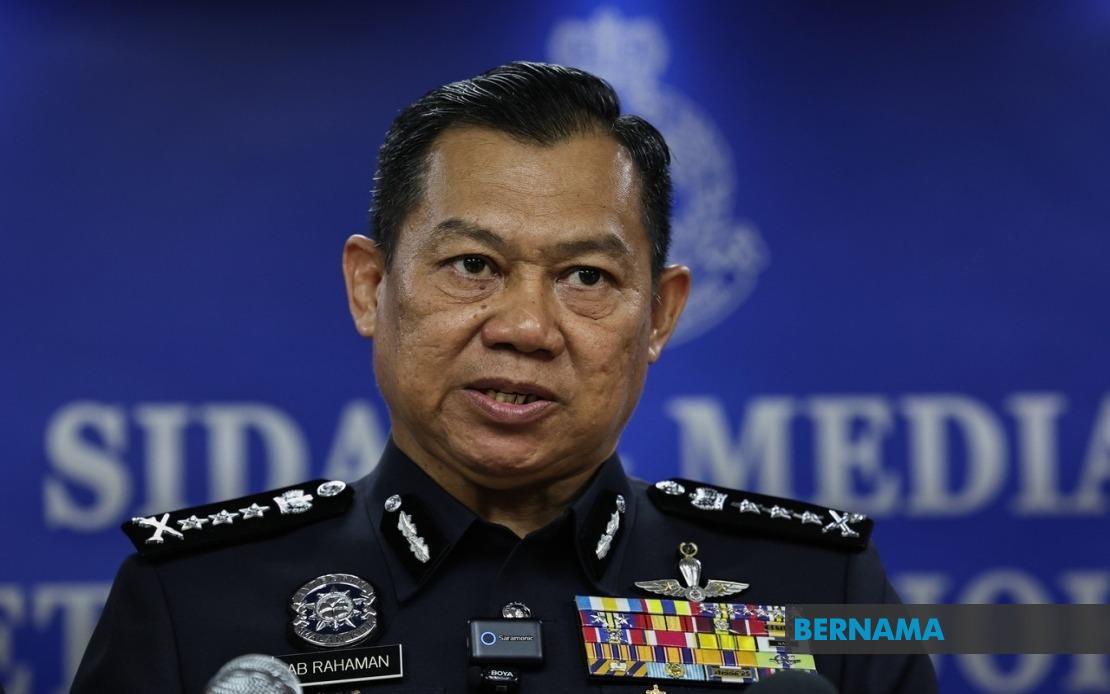
As the 16th Johor state election campaign reaches its peak, the state police force has successfully processed a substantial volume of activity permits, approving 4,053 applications out of 4,368 submissions received between June 27 and July 8. The high approval rate demonstrates the police's operational capacity to facilitate lawful political participation while maintaining electoral oversight. Johor police chief Datuk Ab Rahaman Arsad outlined the processing achievements in a statement, signalling that the security apparatus is meeting the demands placed upon it during an election period when political activity intensifies across constituencies.
The permit approval flow accelerated notably in the final two days of the reporting period, underscoring how campaign activities typically concentrate as polling approaches. Between July 7 and 8 alone, police fielded 884 applications and approved 838 of them, a success rate exceeding 94 percent. This rapid throughput suggests that most organisers are complying with procedural requirements on the first submission, rather than requiring multiple revisions. For candidates, party officials, and civil society organisations planning campaign events, the streamlined processing indicates that applications meeting regulatory standards can expect swift approval.
The police's primary mandate during elections extends beyond administrative efficiency to encompassing security and public order maintenance. Datuk Ab Rahaman emphasised that authorities have kept a watchful eye on all political activities to ensure compliance with electoral laws and that campaign conduct does not destabilise the security environment. This monitoring function is particularly significant in Johor, Malaysia's second-largest state, where large campaign gatherings and cross-party competition require careful coordination. The fact that the security situation has remained under control despite high campaign activity levels reflects both police preparedness and the general willingness of political actors to operate within legal boundaries.
However, the election period has not been entirely free from violations. Between July 7 and 8, police received 17 reports of alleged election-related offences and initiated four separate investigations. One investigation focused on alleged conduct under Section 4A(1) of the Election Offences Act 1954, which targets the promotion of ill will or hostility based on racial or religious grounds—an offence that carries particular weight in Malaysia's plural society. Such allegations during elections indicate that some actors may be testing boundaries or deliberately inciting community divisions, a serious concern given electoral tensions.
Additional investigations touched on defamation and improper use of digital communications platforms, spanning both the traditional Penal Code and modern telecommunications legislation. One investigation invoked Section 500 of the Penal Code alongside Section 233 of the Communications and Multimedia Act 1998, reflecting how campaign disputes increasingly migrate to online spaces. With social media playing an ever-larger role in Malaysian political discourse, the police focus on digital defamation reflects changing patterns in electoral misconduct. Two further investigations concerned property damage, suggesting that vandalism of campaign materials or election-related infrastructure occurred during the early campaign phase.
Cumulatively, the data reveals a modest but meaningful level of electoral misconduct. Over the 12-day reporting window from June 27 to July 8, police logged 73 reports and opened 22 investigation files related to election offences. While these numbers are small relative to the 4,053 approved permits—indicating that the vast majority of campaign activity proceeded lawfully—their existence demonstrates that electoral violations do occur and require police attention. The variety of offence categories suggests that misconduct spans multiple domains: rhetoric and inter-party hostility, digital communications, and physical damage to property.
For Malaysian voters and observers, the police's stated commitment to handle violations "firmly, fairly and with integrity, without compromise" carries significance beyond rhetorical reassurance. Equitable enforcement is essential to electoral legitimacy, particularly when political stakes are high and parties contest fiercely. The public declaration of enforcement principles helps set expectations that violations will not be overlooked or applied selectively based on which party is implicated. In a context where opposition parties have occasionally raised concerns about unequal treatment during elections, such transparency about enforcement principles serves a governance function.
The Johor election occurs against a backdrop of national political recalibration following the 2022 general election and subsequent shifts in coalition arrangements. The state has long been a stronghold for established parties, making its election outcomes significant for understanding voter sentiment and party performance. The scale of campaign activity reflected in the 4,053 approved permits indicates that all major contenders are mobilising resources and conducting intensive ground campaigns. This level of engagement suggests that political competition in Johor remains robust and that parties are investing substantially in persuading voters despite the formal election date having been set.
For Southeast Asian observers watching Malaysian elections, the police management of campaign permits offers insights into how a Westminster-influenced electoral system functions with significant Muslim-majority population considerations. The Johor police's balancing of campaign facilitation against security concerns mirrors challenges faced across the region as democracies attempt to protect electoral integrity while preserving space for political expression. The specific focus on offences relating to inter-communal hostility reflects Malaysia's particular constitutional commitment to managing religious and racial sensitivities in the electoral sphere.
As voting day approaches, the police's operational record during the permit phase will inform broader assessments of how security was maintained throughout the election. The approval rate of over 92 percent suggests that procedural obstacles did not prevent political participation by parties and organisations, a positive indicator for electoral inclusivity. Simultaneously, the initiation of 22 investigations demonstrates that authorities were not passive observers but active monitors of campaign conduct. Whether these investigations result in charges and convictions, and how consistent enforcement proves to be across party lines, will shape perceptions of electoral fairness during and after the Johor election.

