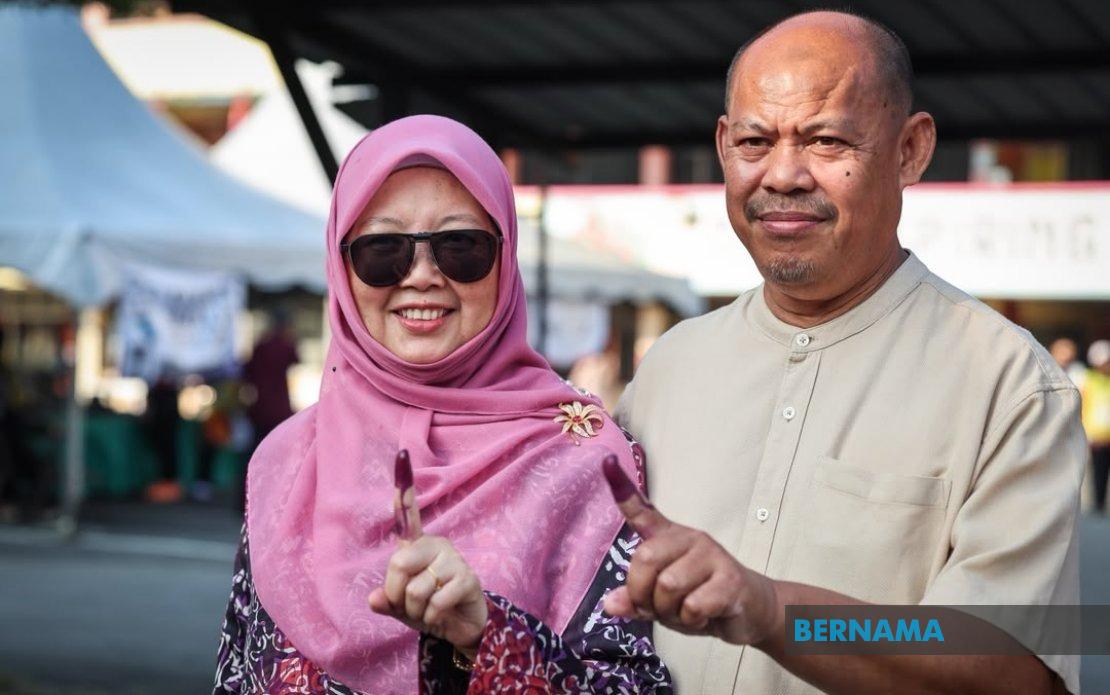
Political heavyweights across Malaysia's southern industrial heartland demonstrated their commitment to electoral participation on July 11, arriving at polling stations during the opening hours of Johor's 16th state election. The visible turnout of party leadership underscored the significance of the contest while simultaneously sending a message to ordinary voters about the importance of early participation in the democratic process.
Johor PKR chairman Datuk Seri Dr Zaliha Mustafa was among the earliest voters, casting her ballot at Sekolah Menengah Kebangsaan Bandar Baru Uda in Johor Bahru at 9 am. Her participation carried particular weight given her previous appointment as Minister in the Prime Minister's Department overseeing Federal Territories, positioning her as one of the highest-ranking figures to vote in the election. She arrived accompanied by her husband, Dr Ahmad Adzlan Musa, and both exercised their franchise in the Larkin constituency, traditionally a competitive battleground in state electoral contests.
Beyond her own vote, Dr Zaliha seized the opportunity to address the assembled media, articulating a strategic message aimed at maximizing voter participation. She specifically urged Johor residents to arrive at polling centres before the weather deteriorated, referencing meteorological forecasts predicting substantial rainfall from midday onwards throughout the afternoon. This appeal reflected a sophisticated understanding of how weather conditions can suppress electoral turnout, particularly in a state where afternoon downpours are commonplace during the monsoon transition period. The timing of her public exhortation suggested coordination among opposition parties to mobilize their support base before potentially unfavourable conditions took hold.
Demonstrating a similar commitment to early participation, Johor DAP chairman Teo Nie Ching cast her ballot approximately thirty minutes after Dr Zaliha, arriving at Sekolah Jenis Kebangsaan Cina Kulai Besar in the Kulai constituency at around 9:30 am. Her decision to vote in a Chinese vernacular school reflected the demographic composition of her constituency and signalled the DAP's continued emphasis on engaging with the Chinese-speaking community that forms a significant portion of Johor's electorate. The proximity of her voting location to industrial areas underscored the working-class orientation of DAP support in the state.
The parallel early voting by leaders from both PKR and DAP illustrated the degree of coordination within the opposition bloc, even as the two parties contested separate seats across the state. Such choreographed displays of civic participation serve multiple functions in electoral contests: they generate favourable media coverage, demonstrate organizational discipline to party members, and implicitly contrast their engagement with voter concerns against the presumed complacency of incumbent parties. The timing of their public appearances ensured media presence at polling stations during morning hours when news cycles are most active.
Johor's 16th state election represented a critical test of political dynamics in a state that has historically served as a barometer for broader national electoral trends. The state's industrial character, combined with its large working-class electorate and significant rural constituencies, makes it particularly significant for understanding support patterns across Malaysia's socioeconomic spectrum. Early voting by opposition leaders suggested confidence in their organizational capacity, though the actual results would ultimately determine whether their mobilization efforts translated into electoral gains.
The emphasis on early voting reflected tactical considerations beyond simple civic encouragement. Opposition parties operating in a state governed by the ruling coalition benefit from demonstrating momentum and energy during the initial phases of an election. Media images of party leaders confidently casting ballots at opening hours communicate narrative strength to undecided voters who observe such coverage. Additionally, the weather-related messaging provided a practical rationale for the public campaign that transcended naked political calculation, grounding the appeal in genuine logistical concerns about voting conditions.
For Malaysian voters more broadly, the Johor election served as a bellwether for shifting political preferences in a key state. Johor's geographical proximity to Singapore, its role as an economic corridor, and its diverse population spanning urban professionals, industrial workers, and agricultural communities mean that voting patterns there often predict national trends. The visible engagement of opposition leaders suggested they perceived genuine opportunities in the contest, a perception that would face ultimate judgment at the ballot box.
The strategic value of early voting appeals also lies in their cumulative effect on electoral participation. Voters who observe respected party figures participating in the democratic process experience subtle psychological encouragement to do likewise. This demonstration effect, multiplied across thousands of citizens observing media coverage of early voting by party leadership, can meaningfully shift overall turnout rates. In competitive electoral contests, such marginal increases in participation often prove decisive, particularly in constituencies with narrow historical margins.
Weather-related voting encouragement carried particular resonance in Johor, where monsoon-season downpours could indeed suppress turnout, especially among elderly voters and those lacking reliable transportation. The specificity of the meteorological forecasting—midday onwards through afternoon—provided practical guidance that voters could act upon, transforming what might otherwise appear as abstract civic exhortation into concrete, implementable advice. This attention to logistical realities distinguished the opposition's messaging from generic appeals to voting participation.
The broader significance of seeing multiple party leaders voting early in the Johor election extended beyond the state's borders. As Malaysia's most economically developed state outside the federal territories and its gateway to Singapore, Johor's electoral outcomes influence business confidence, foreign investment decisions, and the overall political atmosphere in Malaysia. Opposition parties demonstrating organizational capacity and voter engagement suggested they viewed the state as electorally competitive, challenging what might have been conventional wisdom about incumbent dominance in state-level contests.

