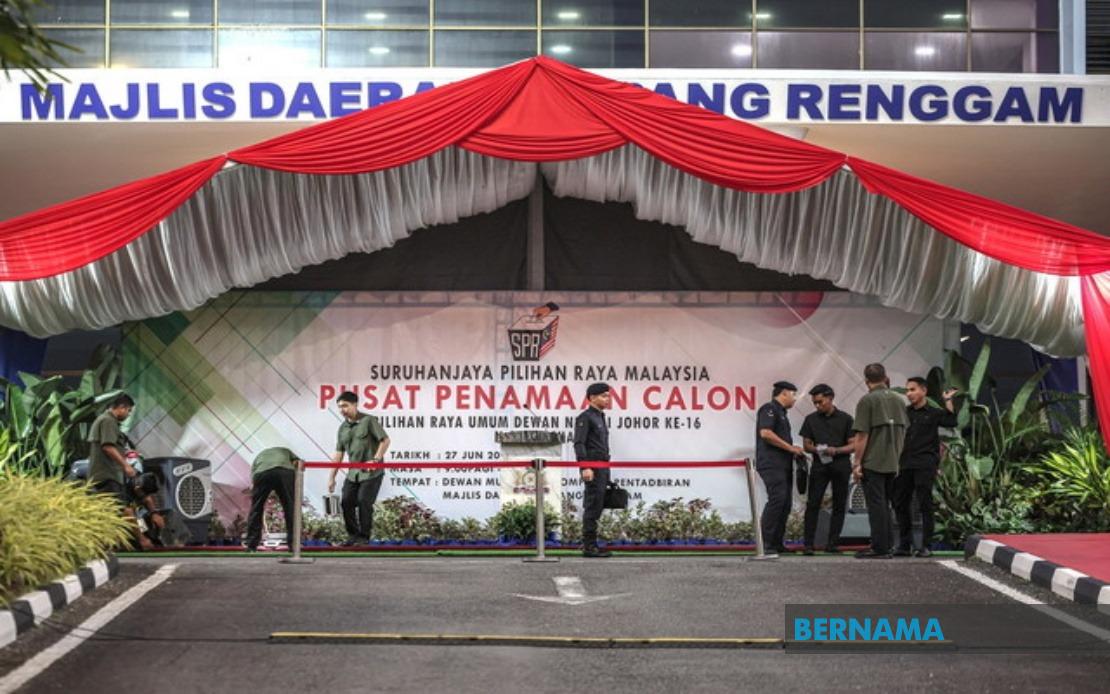
The machinery of Johor's electoral cycle shifted into gear this morning as all 56 nomination centres activated simultaneously at 9am, marking the formal commencement of the 16th Johor State Election. Across the southern state, candidates and their entourages descended on designated returning officer stations to lodge their nomination documents, setting in motion the legal requirements that will culminate in polling day on July 11. The compressed window for submissions—just 60 minutes until 10am—reflects the tightly choreographed nature of Malaysia's election procedures, where every hour matters in the race to secure candidacy.
The nomination process itself requires careful coordination among three parties: the prospective candidate, their proposer, and their seconder. Election Commission regulations permit flexibility in how documents reach the returning officer, allowing any one of these three individuals or any two of them to physically present the nomination papers. This pragmatic approach recognises the logistical challenges candidates face in assembling their support teams, particularly in rural or geographically dispersed constituencies where coordinating all parties simultaneously might prove difficult. Once submitted, these forms must pass verification before the official list of eligible candidates becomes public, confirming who has legally qualified to contest.
The competitive fervour was evident from dawn, with party supporters mobilising from as early as 6.30am to cluster around nomination centres. These gatherings serve multiple purposes beyond mere spectacle—they demonstrate grassroots energy to the media, provide photogenic moments for social media engagement, and signal to the incumbent authorities and rival parties the level of enthusiasm each faction can muster. In Johor, where political competition between Barisan Nasional-aligned parties, opposition coalitions, and independent candidates has intensified in recent electoral cycles, these morning shows of support offer a preliminary gauge of campaign momentum.
Weather presented a variable challenge across the state. The Malaysian Meteorological Department anticipated rainfall in Johor Bahru, Muar, Batu Pahat, Kota Tinggi, Pontian, Tangkak, and Kulai during the morning hours, potentially hampering transport for candidates and supporters travelling to nomination centres. Conversely, Segamat, Kluang, and Mersing were forecast to experience clear conditions. More broadly, afternoon thunderstorms loomed across most districts, including Johor Bahru, Segamat, Kluang, and Kota Tinggi. Such weather volatility could have influenced turnout at nomination venues, though the short submission window meant that delays from inclement conditions posed serious logistical risks for campaigns operating on tight schedules.
Security and order underpinned the entire operation. The Royal Malaysia Police, augmented by officers from the People's Volunteer Corps (RELA), deployed strategically around all 56 nomination centres to manage traffic flow, prevent disruptions, and ensure the integrity of the process. Given Malaysia's history of electoral tensions and occasional confrontations between rival political camps, such precautions are routine but essential. The presence of uniformed personnel serves as a sobering reminder to all participants that while electoral competition is fierce, it must remain orderly and lawful.
The electoral landscape encompasses a substantial constituency: 2,727,926 registered voters are entitled to cast ballots in this election. This total comprises 2,703,175 ordinary civilians, supplemented by 12,041 military personnel and their spouses, and 12,710 police personnel and their spouses. These figures underscore Johor's demographic weight within Malaysia's federal system—the state remains a crucial bellwether of national political sentiment and a battleground where control directly impacts the composition of the Johor state assembly and, by extension, the state government.
The electoral calendar now moves into its campaign phase. Following verification of nominated candidates, the Election Commission has formally designated a 14-day campaign period stretching until 11.59pm on July 10. This fortnight will witness rallies, door-to-door canvassing, media appearances, and intensive social media contests as candidates and parties vie for voter attention. For Malaysian political observers and Southeast Asian commentators tracking regional democratic trends, this campaign period offers insight into how contemporary electoral messaging resonates with urban and rural voters, what issues dominate local discourse, and which parties have successfully adapted their messaging to post-pandemic political realities.
Early voting has been scheduled for July 7, allowing designated groups—including military and police personnel, election officials, and others designated by the Election Commission—to cast ballots before the main polling day. This staged approach has become standard in Malaysian elections, reducing congestion at polling stations on the primary election day and accommodating those whose duties prevent participation during regular voting hours. The provision also reflects Malaysia's commitment to ensuring that security personnel, who often find themselves on duty during elections, can still exercise their franchise.
July 11 represents the culmination of this electoral process, when Johor's voters will determine the composition of their state government and, potentially, the trajectory of state-level policymaking for the next term. The stakes extend beyond Johor's borders: regional political analysts view state elections as testing grounds for federal coalition dynamics, indicators of shifting voter preferences, and laboratories for policy innovation. A result in Johor carries psychological and practical implications for Kuala Lumpur's political establishment, making this election far more than a local contest.
The nomination process today, while procedurally routine, carries genuine significance. Each candidate successfully nominated represents a claim to represent their constituency, a statement of intent from a political party or independent actor. The diversity of candidates—from major coalition partners to opposition blocs to local independents—will shape the character of subsequent campaigns and ultimately the choices available to Johor's electorate. As Malaysia navigates an increasingly competitive political environment where electoral outcomes remain less predictable than in prior decades, contests such as Johor's 16th state election command attention from those seeking to understand the nation's democratic trajectory and regional political trends.

