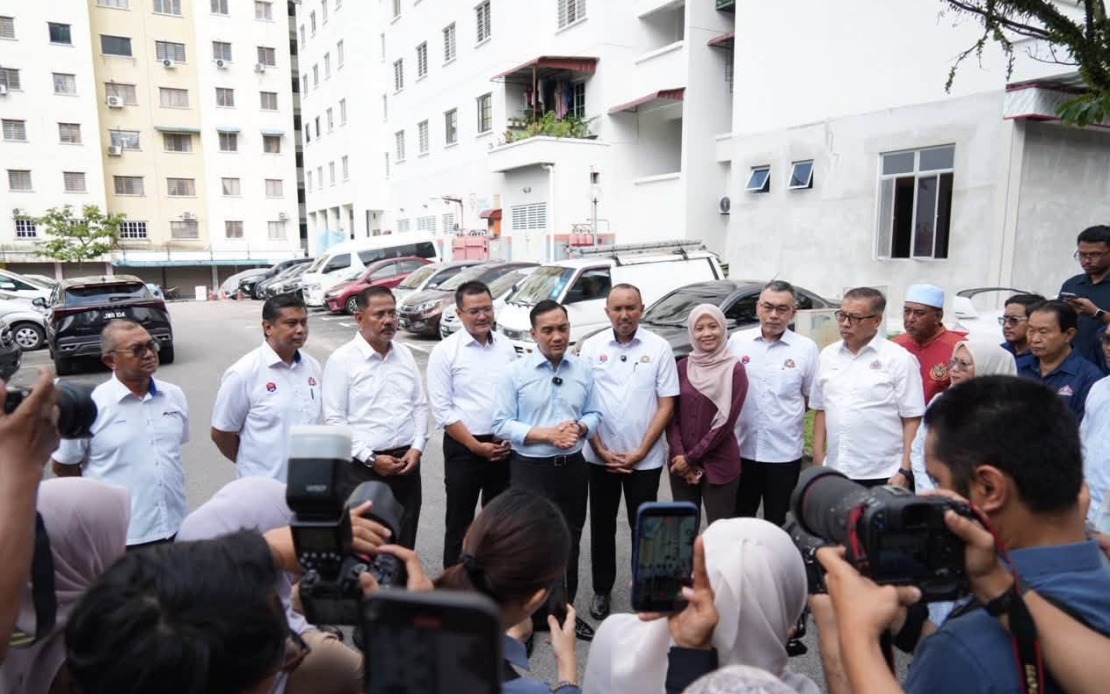
The Johor government has unveiled a substantial RM50 million initiative directed at revitalising the physical appearance and living conditions of affordable housing estates throughout the state. Recognising that housing quality significantly impacts resident well-being and community cohesion, the state has prioritised comprehensive repainting works spanning low-cost flats, privately owned low-medium-cost residential units, and public housing complexes at strategic locations statewide.
The scope of this undertaking is considerable. The programme encompasses 170 housing blocks comprising 11,693 individual residential units distributed across 26 locations throughout Johor. According to Datuk Mohd Jafni Md Shukor, chairman of the State Housing and Local Government Committee, the initiative will directly benefit approximately 46,772 residents. This scale reflects a meaningful commitment to address housing maintenance challenges that have accumulated in many of the state's older residential schemes, particularly in areas accommodating lower-income households who frequently lack individual resources for substantial property upkeep.
State officials emphasise that this renovation exercise extends beyond superficial aesthetic improvement. Mohd Jafni stressed during a site inspection at Desa Muafakat Apartments alongside Menteri Besar Datuk Onn Hafiz Ghazi that a well-maintained residential environment cultivates multiple benefits for occupants. Fresh paintwork and visible maintenance investments communicate to residents that state authorities take their welfare seriously, fostering greater attachment to their neighbourhoods and strengthening community identity. Such environmental improvements can also contribute to reduced social tensions and improved mental health outcomes, recognised by urban development specialists as genuine public health interventions within affordable housing contexts.
The implementation framework involves coordinated action across multiple governmental bodies and municipal authorities. The Johor State Housing Development Corporation (PKPJ) will coordinate main implementation activities alongside the Local Government Division of the Johor State Secretary's Office. Four local councils—the Johor Bahru City Council (MBJB), Iskandar Puteri City Council (MBIP), Pasir Gudang City Council (MBPG), and Kulai Municipal Council (MPKu)—will provide support and oversight within their respective jurisdictional areas. This multi-agency approach seeks to ensure consistent execution standards and localised responsiveness to individual housing scheme requirements.
Quality assurance represents a central preoccupation for state administrators overseeing the programme. Mohd Jafni explicitly instructed all implementing agencies and appointed contractors to maintain the highest standards regarding workmanship, safety, and site cleanliness throughout execution. Officials expressed determination to avoid situations where completed projects deteriorate rapidly or inadvertently generate new problems for residents—a concern reflecting frustration with previous maintenance initiatives that failed to deliver lasting improvements. All works must proceed according to specified schedules, technical specifications, and established quality benchmarks, with supervisory mechanisms in place to prevent shortcuts or cost-cutting that might compromise durability.
The Desa Muafakat Apartments inspection revealed the complexity of challenges confronting older residential complexes. Beyond routine repainting, the site exhibits slope subsidence concerns affecting parking areas and internal road damage within the housing complex. While the repainting initiative addresses immediate aesthetic deterioration affecting resident morale, these underlying structural and drainage issues require parallel attention. The simultaneous site visit to observe construction progress on the Tabika KEMAS Bangsa Johor facility at the same location indicates the state's broader ambition to enhance community infrastructure alongside housing stock renewal.
For Malaysian observers, this initiative illustrates evolving state approaches to managing aging public housing stock whilst maintaining affordability commitments. Many federal territories and states grapple with similar challenges as low-cost schemes established during earlier decades require substantial maintenance investment. Johor's strategy of allocating dedicated, ring-fenced funding specifically for cosmetic and structural renewal—rather than ad-hoc, under-resourced maintenance—represents pragmatic governance responding to accumulated deficits. The RM50 million commitment, while substantial in nominal terms, nevertheless reflects calculations that preventive maintenance and timely renewal ultimately prove more cost-effective than allowing deterioration to necessitate eventually more expensive interventions.
The programme's timing carries political significance within Johor's contemporary governance landscape. Demonstrable improvements to residents' immediate environment constitute tangible outcomes of state administration that voters recognise directly. Housing conditions persistently influence electoral sentiment, particularly among lower-income voters concentrated in such schemes. By prioritising visible improvements benefiting tens of thousands of households, the state government signals responsiveness to constituent concerns regarding quality of life and maintenance of public assets.
Similarly, this initiative carries implications for other Malaysian states managing comparable affordable housing portfolios. The Johor model potentially offers replicable lessons regarding procurement, contractor management, and multi-agency coordination for states contemplating similar programmes. Federal authorities overseeing national housing programmes may likewise extract relevant insights from documented execution processes and resident impact assessments as such initiatives progress.
Looking forward, the success of this repainting programme will substantially depend on sustained implementation discipline and post-completion maintenance protocols. Officials must ensure contracted works meet specified standards and that local councils subsequently maintain improvements through regular upkeep cycles. Additionally, addressing the underlying structural and infrastructural deficiencies identified during site inspections—slope subsidence, road damage—remains essential to prevent renewed deterioration undermining the aesthetic benefits of fresh paintwork. Comprehensive housing renewal requires integrated approaches encompassing cosmetic improvements, structural remediation, and sustained maintenance systems working in concert to genuinely upgrade resident circumstances.

