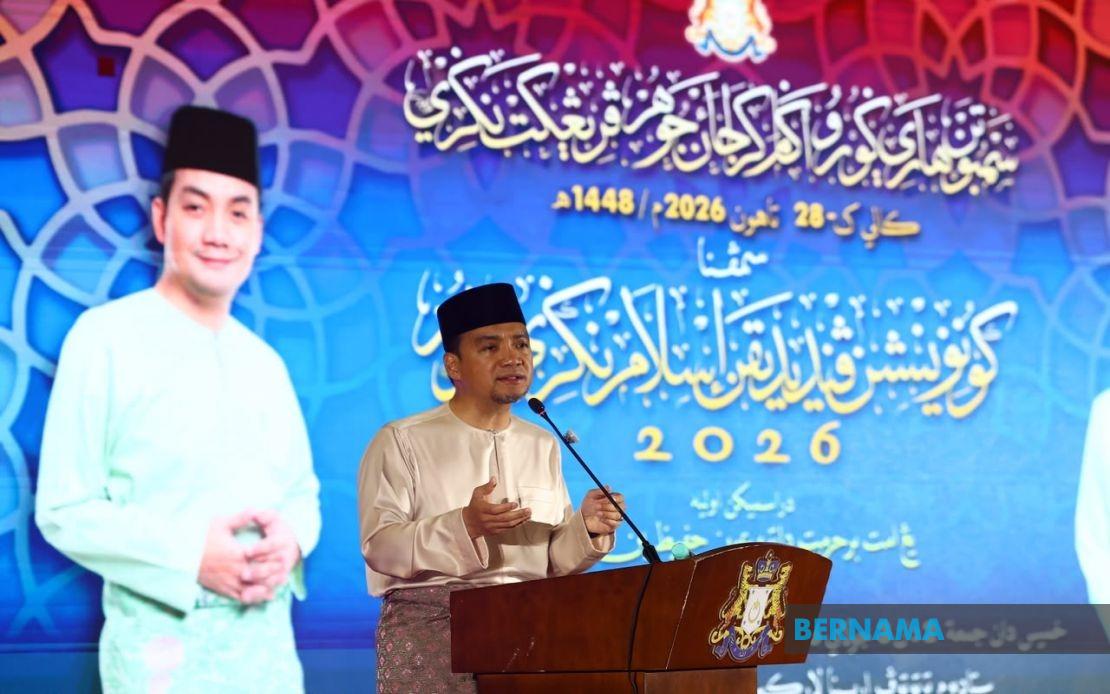
The Johor government is taking its comprehensive education overhaul into new territory by introducing religious schools into its flagship Sekolah Rintis Bangsa Johor (SRBJ) programme. Johor Menteri Besar Datuk Onn Hafiz Ghazi announced that the state will establish its first Sekolah Agama Rintis Bangsa Johor (SARBJ) this year, marking a significant expansion of an initiative originally conceived by the Regent of Johor, Tunku Mahkota Ismail. The announcement came during the 28th Johor Government Religious Teachers' Day celebration and the closing of the State Islamic Education Convention at Arena Larkin Indoor Stadium in Johor Bahru.
The SRBJ initiative represents a strategic attempt to modernise Johor's education landscape across all sectors. Since its inception, the programme has already established four pilot schools—two primary institutions and two secondary schools—that have begun implementing the new educational framework. These existing schools, namely Sekolah Menengah Kebangsaan Seri Kota Puteri 2 and Sekolah Kebangsaan Seri Kota Puteri 4 in Pasir Gudang, alongside SMK Tasek Utara and SK Tasek Utara in Johor Bahru, serve as laboratories for educational innovation within the state system.
The extension of the SRBJ model to religious education marks a deliberate choice by state leadership to ensure that Islamic schools benefit from the same transformation principles being applied elsewhere. State Islamic Religious Affairs Committee chairman Mohd Fared Mohd Khalid confirmed that the first SARBJ will be constructed in Kota Iskandar this year, creating a parallel track within the broader education reform agenda. This decision reflects the recognition that religious schools, which serve a substantial portion of Johor's student population, require modernisation alongside their mainstream counterparts to maintain educational quality and relevance.
At its core, the SRBJ initiative addresses several interconnected educational challenges facing Malaysian states. The programme emphasises digital learning integration, recognising that technological proficiency has become essential for students navigating a knowledge-based economy. Multilingual education forms another pillar, reflecting Malaysia's multicultural context and the practical necessity for citizens to communicate across ethnic and national boundaries. Character development and moral education are woven throughout the curriculum, addressing concerns about maintaining ethical standards alongside academic achievement. The framework also prioritises teacher empowerment, acknowledging that educational transformation ultimately depends on educators having the skills, resources, and professional support to implement new methodologies effectively.
Infrastructure investment represents a tangible component of the SRBJ approach. Beyond curriculum redesign and pedagogical methods, the state government is committing to the provision of high-quality educational facilities that meet contemporary standards. This comprehensive approach—combining technological infrastructure, human resource development, curriculum innovation, and values-based education—distinguishes the SRBJ from narrower educational interventions that might focus on a single dimension of school improvement.
For Malaysian education observers, the Johor model holds broader relevance as states nationwide grapple with how to improve learning outcomes and prepare students for an uncertain future. The deliberate inclusion of religious schools in this reform effort is particularly noteworthy, as it avoids creating a two-tier system where Islamic schools are treated as separate from the broader state education agenda. This integrated approach may offer lessons for other states seeking to enhance religious education while maintaining alignment with national educational standards and contemporary pedagogical best practices.
The expansion into early childhood education represents another dimension of the Johor government's ambitions. State officials have signalled plans to establish a pilot kindergarten under the SRBJ framework, suggesting that the reform initiative will eventually span the entire educational pipeline from early years through secondary education. This longitudinal approach acknowledges that educational foundations laid in childhood significantly influence later academic success and personal development.
The participation of Johor police chief Datuk Ab. Rahaman Arsad in the announcement ceremony underscores the state's view of education reform as a matter touching on broader social stability and development concerns. Law enforcement perspectives on education reflect understanding that schools function as key institutions for youth socialisation and crime prevention, complementing policing efforts in maintaining public order.
Implementing this expanded vision will present practical challenges. Establishing SARBJ while maintaining pedagogical consistency with the four existing pilot schools requires careful planning and resource allocation. The state education bureaucracy must develop operational frameworks that accommodate the distinctive character of religious schools—which have different governance structures, curriculum requirements, and stakeholder expectations—while implementing the SRBJ principles. Training teachers to deliver the integrated model across religious and secular subjects demands significant professional development investment.
For Malaysian policymakers observing Johor's initiative, several questions emerge regarding scalability and sustainability. Whether the SRBJ model can be replicated across multiple states, whether its benefits persist as schools scale beyond pilot phases, and how effectively religious schools can incorporate digital learning without compromising their foundational religious mission represent ongoing considerations. The outcomes in Kota Iskandar's SARBJ will provide valuable evidence about whether comprehensive education reform can succeed across institutional boundaries within Malaysia's decentralised education governance structure.

