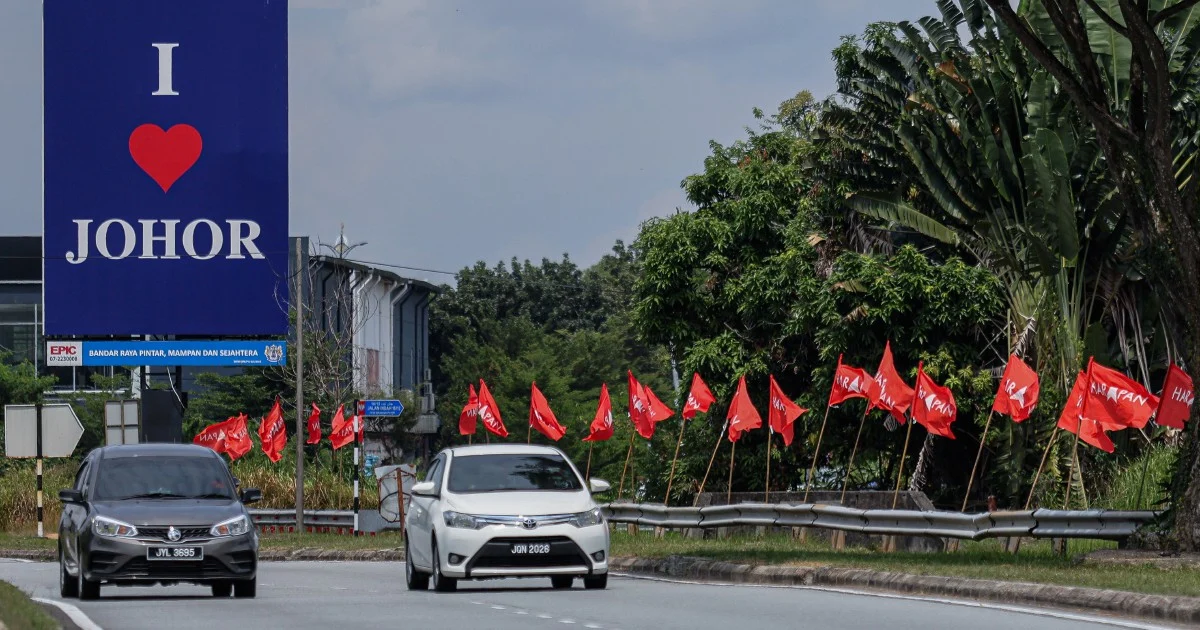
The Johor state election represents a critical juncture for voters to assess which political coalition possesses the depth, capability and coherence to steer the state towards prosperity, according to a prominent PKR youth leader speaking in Johor Baru. Rather than allowing the race for the menteri besar position to dominate the electoral narrative, the party activist contends that voters should be evaluating the broader institutional strength and forward-looking policy frameworks that each alliance brings to the contest.
This framing reflects an increasingly common sentiment among political strategists across Malaysia that reducing complex state-level contests to personality-driven races risks obscuring fundamental governance questions. The menteri besar, while symbolically important, represents just one element within an entire administrative apparatus that would oversee budgets, infrastructure projects, education, healthcare delivery and dozens of other portfolios affecting millions of people daily. When elections crystallise around individual candidates rather than institutional capacity, voters may inadvertently overlook the teams and systems that will actually implement policies.
For Johor specifically, the stakes involve stewarding one of Malaysia's most economically significant states. Home to major manufacturing hubs, the Port of Tanjung Pelepas, and strategically positioned along the Singapore-Malaysia corridor, Johor's development trajectory influences not only its two million residents but also broader regional commerce and employment patterns. A menteri besar without competent colleagues managing economic development, industrial relations, urban planning or infrastructure cannot alone translate strategic vision into tangible outcomes.
The PKR youth leader's intervention suggests recognition that while charismatic leadership captures voter attention, sustained economic progress requires coalitions to demonstrate several critical capacities simultaneously. These encompass the ability to craft credible five-year development roadmaps, assemble cabinet-level talent with relevant sectoral expertise, manage multi-party coalition dynamics, and execute initiatives despite inevitable budget constraints and federal-state coordination challenges. Evaluating coalitions on these dimensions demands more sophisticated assessment than personality-based comparisons.
Both major coalitions contesting Johor elections have positioned themselves as agents of transformation, yet their demonstrated track records reveal divergent strengths and weaknesses in institutional management. One coalition can point to experience managing large state administrations, while the other emphasises renewed commitment to certain constituencies. However, the actual capacity to deliver—measured through implementation track records, budget discipline, infrastructure completion rates and measurable improvements in education or healthcare metrics—offers more durable criteria for judgment.
The economic imperative particularly suits Johor's circumstances. As global supply chains recalibrate following pandemic disruptions and as investors navigate evolving geopolitical competition, Johor must position itself competitively to attract manufacturing investment, expand its services sector, and develop higher-value industries beyond commodity processing. This demands not inspirational speeches but detailed sectoral strategies, investment promotion mechanisms, skills development partnerships with educational institutions, and regulatory frameworks that balance business competitiveness with worker protections and environmental sustainability.
Public sector coordination also merits greater voter attention. Johor's menteri besar must work effectively with federal agencies responsible for infrastructure funding, customs management for port operations, and immigration policy affecting cross-border labour. They must navigate relationships with the federal Ministry of Finance, which controls revenue distribution formulas, and coordinate with other states on water and environmental resources. Coalition partners may include parties controlling federal ministries, creating opportunities for preferential resource allocation or creating conflicts of interest. Voters rarely examine these structural relationships until dysfunction becomes visible.
Social development dimensions equally demand substantive coalition-level evaluation. Healthcare delivery requires not just political commitment but technical capacity to manage hospital networks, recruit and retain medical professionals, and implement public health initiatives. Education quality depends on school administration, teacher training partnerships, and curriculum implementation—challenging to achieve through menteri besar leadership alone. Housing affordability, poverty alleviation, and community social services all require coordinated action across multiple government levels and party structures.
The PKR youth leader's argument also implicitly critiques media coverage patterns that frequently personalise complex governance questions. Election coverage that obsessively tracks individual candidate movements, personality assessments, and speculation about leadership motivations may satisfy entertainment value but displaces substantive discussion of policy platforms, coalition stability, and administrative capability. Malaysian voters, like their counterparts globally, sometimes struggle to access information comparing coalitions on measurable governance dimensions.
Looking forward, the Johor election results will likely shape perceptions about which coalitions voters believe possess superior institutional capacity. A coalition that articulates clear, costed, implementable development strategies and showcases credible team depth across multiple sectors may resonate more durably than campaigns centring on individual candidate charisma. For a state facing genuine economic diversification challenges and demographic pressures, this substantive focus serves voter interests better than personality-driven contests.
The broader implication extends across Malaysian electoral politics. As subsequent state elections unfold and federal elections approach, strategic questions about institutional capacity, coalition coherence and demonstrable governance track records deserve prominence alongside traditional personality-focused coverage. Johor's election thus becomes a potential testing ground for whether Malaysian voters will demand and reward more substantive electoral discourse focused on state capacity and development outcomes.

