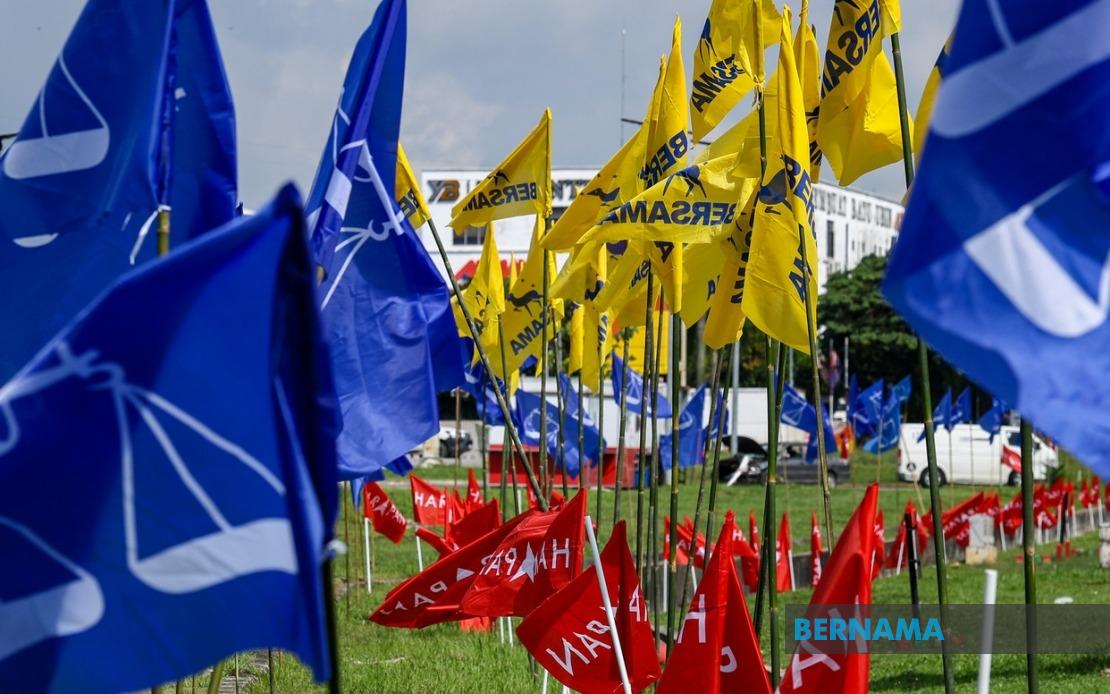
As Johor moves toward its 16th state election this Saturday, political analysts and academics are sounding a cautionary note about the tone and substance of campaigning, advocating for a mature approach centred on governance and policy delivery rather than partisan attacks. With 172 candidates competing for 56 state seats, the coming days will test whether Johor's political culture can maintain its traditional emphasis on civility while allowing genuine democratic competition to flourish.
Prof Datuk Dr Awang Azman Awang Pawi, a sociopolitical analyst at Universiti Malaya and fellow of the Malaysia National Civics Academy, argues that the state election represents an important opportunity for parties to demonstrate their vision through substantive debate. Rather than engaging in broad-brush denunciations of opponents, he contends that campaigns should centre on tangible issues affecting voters' daily lives and on the competing economic and social blueprints that each party can offer. This approach, he suggests, allows democratic competition to function as intended—enabling voters to make informed choices based on demonstrated competence and forward-looking proposals.
The core tension Awang Azman identifies reflects a broader challenge in Malaysian politics: how to maintain robust electoral competition at the state level while preserving the cross-party relationships necessary for governing at the federal centre. He emphasises that overly aggressive campaigns that demonise coalition partners in Putrajaya or rely on narrow state sentiment risk not merely confusing voters but also poisoning the well for post-election cooperation. This concern is not abstract; in Malaysia's complex political landscape, where coalition governments require cooperation across multiple parties, the relationships formed during elections directly affect whether governments can function effectively afterwards.
Acknowledging the legitimacy of political competition, Awang Azman outlines what he sees as constructive boundary-setting. Parties should vigorously contrast their records on economic development, investment attraction, urban and rural engagement, and their ability to address cost-of-living pressures, employment challenges, and housing shortages. However, they should scrupulously avoid personal attacks and avoid framing competition in terms of race, religion, or the fundamental legitimacy of political opponents. This distinction—between attacking policies and attacking people—defines the difference between healthy democratic debate and corrosive hostility.
An equally instructive angle is Awang Azman's observation that Johor specifically warrants policy discussions tailored to its regional position and development priorities. The state's border economy, the anticipated Johor-Singapore Special Economic Zone (JS-SEZ), the Rapid Transit System (RTS) Link connecting to Singapore, technical education and skills training, affordable housing crises, and urban congestion represent substantive arenas where competing parties can articulate competing visions. This focus on place-specific governance challenges offers voters a clearer lens through which to assess candidates and programmes.
Political analyst Dr Norman Sapar echoes these themes, framing political maturity not as the loudness of attacks but as the capacity to manage disagreement without jeopardising national interests. His observation carries particular weight in the Malaysian context, where coalition governments routinely require competing parties to govern together after elections. He cautions that campaigns should not become vehicles for questioning federal-level cooperation or manufacturing controversies designed primarily to score points at the state level while damaging relationships at the national level.
Norman's assessment of the Johor campaign to date is cautiously optimistic. He notes that, while candidates and parties have naturally sought credit for achievements and raised genuine policy differences, the tone has remained within bounds of controlled competition. Johor leaders, he observes, have tended toward subtle criticism rather than open confrontation—a pattern he characterises as reflecting the state's underlying political culture of courtesy and decorum. This restraint, if maintained, could model an approach that other states and the nation might emulate.
The emphasis both analysts place on voter sophistication is particularly noteworthy. Rather than assuming that electorates are prone to being swayed by the most inflammatory rhetoric, both Awang Azman and Norman argue that contemporary Malaysian voters increasingly distinguish between state-level competition and the imperative of federal stability. This maturity on the voters' part creates space for parties to campaign vigorously without assuming that such competition automatically translates into damaged national governance. Parties that offer concrete solutions and demonstrate administrative competence tend to resonate more strongly than those relying primarily on opponent-bashing.
The implications of this advice extend beyond Johor. As Malaysia approaches other state and federal elections, the question of how to balance democratic competition with political civility grows more urgent. The country has experienced periods of intense partisan polarisation that arguably weakened governance capacity and public trust in institutions. A model in which Johor parties demonstrate that robust electoral competition is compatible with respect for opponents and attention to policy substance could offer a template for Malaysian politics more broadly.
For voters in Johor, the analysts' counsel amounts to a suggestion that they reward campaigns focused on ideas, records, and solutions while being wary of those that devolve into personality clashes or appeals to narrow sectional sentiment. This approach elevates the quality of democratic deliberation while respecting the institution of coalition government that characterises Malaysia's political system. The election itself will reveal whether Johor's political culture and electorate live up to these ideals.

