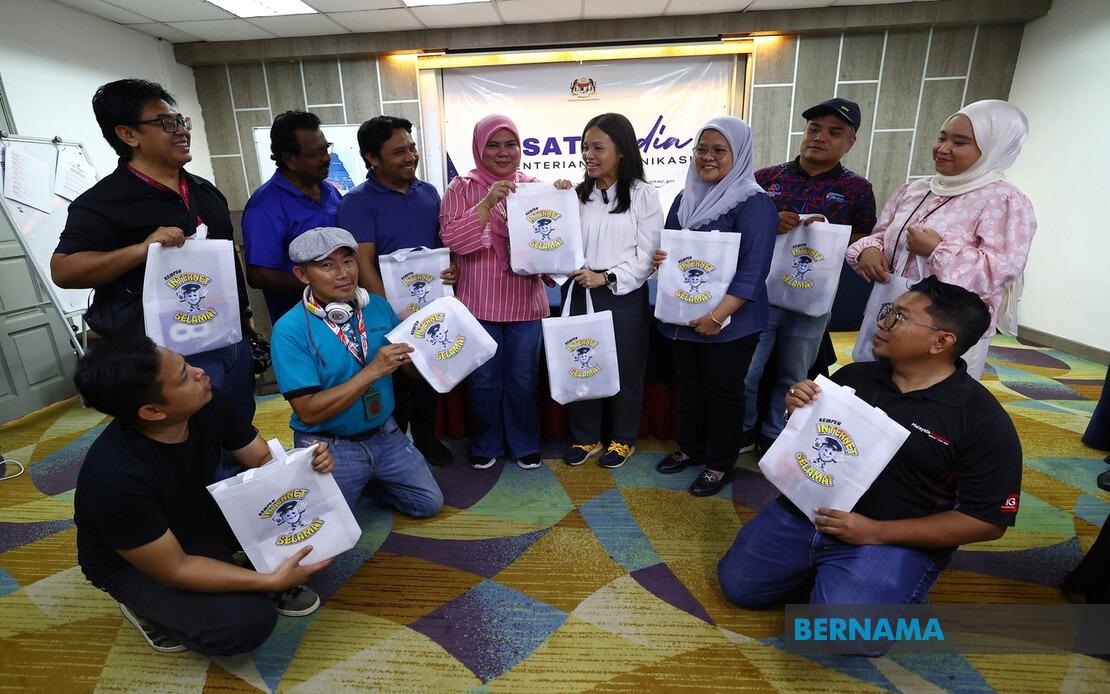
The Malaysian Communications Ministry, working alongside the Information Department (JaPen), has rolled out significant infrastructure to support media operations during Johor's 16th state election campaign. The initiative reflects the government's recognition that comprehensive communications support is essential for enabling fair and efficient election coverage across the state. Deputy Communications Minister Teo Nie Ching announced the deployment during a visit to the main media centre, underscoring the ministry's commitment to ensuring journalists have adequate resources to report on proceedings leading up to polling day on July 11.
Two primary facilities anchor the media infrastructure—one based at Hotel Seri Malaysia in Johor Bahru and another at NADI Kampung Sawah Awok in Muar. Both centres operate on an extended daily schedule from 9 am to 9 pm, commencing from June 26 through election day, providing media personnel with a continuous operational window during the critical campaign period. This geographical distribution recognises Johor's size and the need for accessible facilities across different regions of the state, reducing logistical burdens on journalists working in outlying areas.
Internet connectivity forms the backbone of modern election coverage, and the ministry has prioritised this accordingly. All facilities guarantee minimum internet speeds of 100 Mbps, a specification Teo emphasised would eliminate technical obstacles when transmitting multimedia content. This bandwidth commitment proves particularly important for news organisations operating under tight deadlines, where delays in uploading photographs or video footage can compromise news cycle competitiveness. The guarantee reflects an understanding that slow or unreliable connections effectively handicap media operations during time-sensitive election periods.
Beyond connectivity, the media centres offer comprehensive equipment provisions. Journalists gain access to laptops, desktop computers, photocopiers, and printers—a full suite enabling independent reporting without reliance on personal devices or external resources. For regional and international news bureaus operating on lean staffing models, these facilities substantially reduce overhead and logistical complexity. The provision acknowledges that not all media organisations possess the capital resources to maintain independent office infrastructure in secondary cities, and public provisioning helps level the operational playing field.
Telecommunications quality during elections extends beyond the media centres themselves. The Malaysian Communications and Multimedia Commission (MCMC) has committed to actively monitoring telecommunications service providers throughout the campaign period, ensuring that network performance remains robust across Johor. This proactive regulatory approach addresses a significant vulnerability in election coverage—degraded mobile and data networks can hamper reporters working in field conditions, and systematic monitoring helps identify and remedy bottlenecks before they compromise news gathering operations.
Public participation in network monitoring represents an innovative dimension of the MCMC strategy. The commission has promoted its Nexus application, which enables citizens to report real-time internet signal strength and coverage patterns from specific locations. This crowdsourced approach transforms ordinary users into a distributed monitoring network, generating technical data that helps identify coverage gaps. Teo carefully clarified that personal information remains protected, with only technical parameters like location coordinates and signal measurements shared with service providers for infrastructure optimisation—an important reassurance given growing public sensitivity around data privacy in Malaysia.
Election campaigns inevitably generate heated political discourse, and the ministry has sought to channel this into constructive directions while guarding against harmful content. Teo reminded all political parties and their supporters to maintain campaign standards that avoid raising sensitive matters related to race, religion, and royalty—the so-called 3R considerations that Malaysian law and electoral conduct frameworks establish as off-limits. This reminder carries particular weight in Johor, a state with diverse religious and ethnic communities where inflammatory rhetoric could rapidly escalate tensions beyond the political arena.
Social media content moderation emerges as a critical battleground in contemporary elections, and the MCMC has positioned itself as an active agent in this space. The commission plans continued collaboration with law enforcement agencies to identify and remove social media posts containing elements of extreme provocation or incitement. This partnership between communications regulators and police reflects recognition that digital platforms enable rapid spread of inflammatory content, and that timely removal requires coordinated technical and enforcement capabilities.
Factual accuracy in election coverage depends partly on institutional structures supporting verification. Teo commended the Malaysian Media Council for establishing a dedicated fact-checking platform, acknowledging that professional media institutions are investing in verification infrastructure. She further encouraged the public to adopt fact-checking as routine practice before sharing information through social networks. This emphasis on public responsibility complements institutional fact-checking efforts, creating a multi-layered approach where professionals perform verification work while citizens increasingly act as filters on information circulation.
The election timeline structures the media preparation schedule around key dates. Early voting occurs on July 7, providing a preliminary test of election day operations while offering journalists their first major coverage opportunity. The official polling day follows four days later on July 11, giving media organisations a brief window to refine processes and address any technical or logistical shortcomings identified during early voting. This staggered schedule provides buffer time for problem-solving, though it also extends the concentrated news cycle that characterises election periods.
Johor's 16th state election represents a significant political event with implications extending beyond the state itself. The provision of comprehensive media infrastructure reflects understanding that elections depend on informed public engagement, which in turn requires functional news ecosystems. By equipping journalists with adequate facilities and ensuring telecommunications reliability, the Communications Ministry has created conditions where media organisations can focus on news gathering and reporting rather than struggling with technical constraints. Whether these facilities will translate into genuinely improved coverage quality depends partly on media organisations themselves and their editorial priorities during the campaign period.

