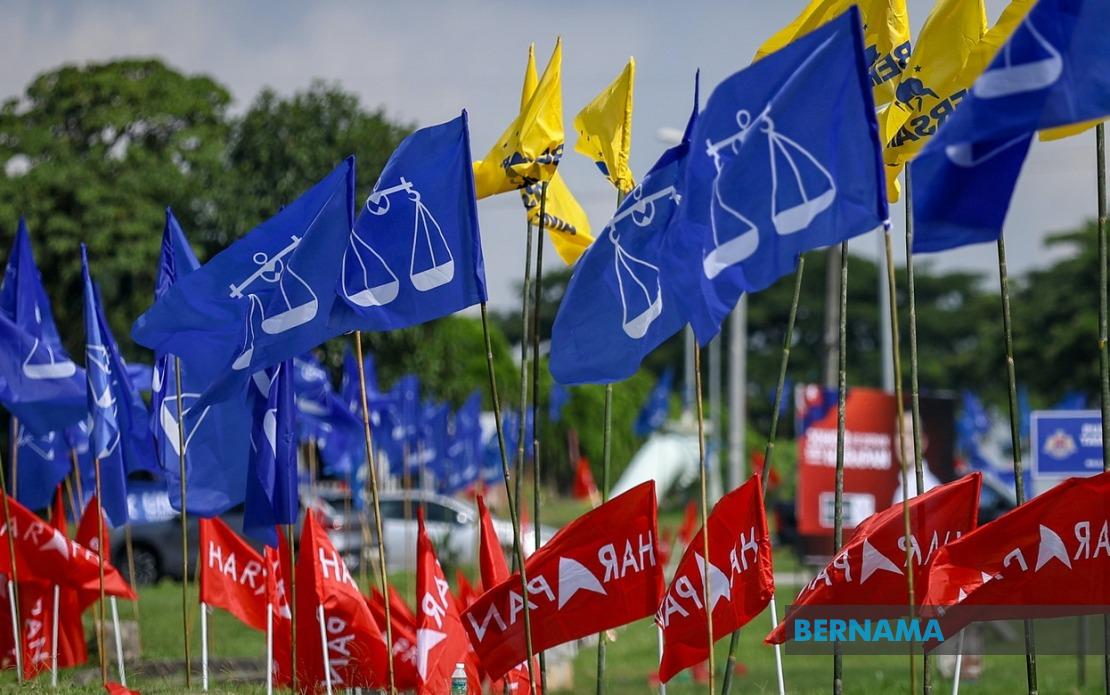
A pivotal election forum in Johor will move forward as planned this week even though the state's chief executive will be absent, reflecting the intensifying campaign scramble ahead of the 16th Johor State Election. The Johor State Election Dialogue, scheduled for Tuesday, July 7 at 8 pm, will be held at the RTM Auditorium under the Johor Broadcasting Department despite Menteri Besar Datuk Onn Hafiz Ghazi being unable to clear his schedule for the event. His office confirmed the absence without elaborating on the nature of his other commitments that day.
The dialogue represents a significant platform for political messaging in the lead-up to the state election, jointly orchestrated by public broadcaster RTM, news channel Astro AWANI, and Sinar Harian newspaper. The venue has been prepared to accommodate around 200 participants drawn from various government departments, statutory agencies, and grassroots MADANI Communities throughout Johor. This scale of participation underscores the organisers' intention to engage a broad cross-section of the state's civil society and administrative machinery in the electoral discourse.
Among the confirmed attendees is Communications Minister Datuk Fahmi Fadzil, whose participation signals federal government engagement with the Johor campaign narrative. The opposition presence will be represented by Dr Maszlee Malik, the Pakatan Harapan candidate contesting the Puteri Wangsa state constituency. The dialogue framework is designed to offer both figures equivalent opportunity to articulate their respective vision statements, policy platforms, and strategic priorities while addressing matters of concern to the Johor electorate.
The absence of Menteri Besar Onn Hafiz raises questions about the political dynamics at play. As the incumbent chief executive and leading figure in the Barisan Nasional campaign for Johor, his participation would have been expected to underscore the government's commitment to public engagement during this critical electoral moment. The timing of his unavailability, coming just days before voters head to the polls, suggests competing demands on his calendar—whether campaign activities, administrative duties, or other state business.
The one-hour scheduled dialogue is framed as providing an equitable platform for both speakers to present their blueprints for addressing voter concerns and articulating their vision for Johor's development. This format reflects Malaysia's evolving approach to electoral discourse, where broadcast media platforms increasingly host structured conversations between competing candidates. Such forums allow voters direct access to policy positions and leadership styles without the filtering of traditional campaign narratives.
The 16th Johor State Election will be contested by 172 candidates competing for 56 state assembly seats, making it a substantial undertaking for the electoral machinery. Voting is scheduled for Wednesday, July 11, with early polling allocated for the dialogue date itself. This compressed timeline means candidates are operating under considerable time pressure to reach voters and solidify support, particularly through high-visibility public appearances and media engagement.
The ministerial-level participation from the federal government in the form of Fahmi Fadzil's attendance indicates Putrajaya's investment in the Johor outcome. Communications ministries traditionally play coordinating roles in government messaging during election periods, and Fadzil's presence at this dialogue signals the federal administration's view that Johor represents strategically important electoral territory. His participation may also reflect efforts to present a unified front across different levels of government.
For the opposition, Dr Maszlee Malik's candidacy in Puteri Wangsa represents Pakatan Harapan's strategy to contest suburban and relatively urbanised constituencies where the coalition has shown competitive strength in recent elections. His participation in the dialogue provides an opportunity to distinguish himself from the incumbent and articulate an alternative vision for state governance. The Puteri Wangsa seat has historically been closely contested, making it emblematic of the broader competitive landscape Johor presents for both coalitions.
The involvement of MADANI Communities in the dialogue audience reflects the government's community engagement framework, with MADANI (Memperkasakan Rakyat) serving as the organising concept for grassroots mobilisation. These communities represent the administrative reach through which government policies and development initiatives are channelled to the public, and their representation at the dialogue suggests an effort to connect electoral messaging with grassroots implementation structures.
The choice of RTM as a primary organiser carries symbolic weight, as the national broadcaster is perceived as maintaining closer proximity to government narratives. Astro AWANI's involvement introduces a commercially operated news platform into the mix, while Sinar Harian brings a vernacular Malay-language newspaper perspective. This tri-partite arrangement suggests an attempt to achieve broad media coverage and reach diverse audience segments across the state and beyond.
From a broader Southeast Asian perspective, Johor's electoral contests represent important barometers for Malaysian political trajectory. As Malaysia's southernmost state and the location of its second-largest city, Johor carries symbolic weight in national politics. The engagement of federal-level figures like Communications Minister Fahmi Fadzil underscores how state-level elections increasingly become focal points for testing federal coalition cohesion and opposition momentum.
The dialogue's scheduled duration of one hour suggests a tightly structured format unlikely to allow extended policy elaboration or deep-dive exploration of complex issues. This time constraint reflects the broader media ecosystem's approach to political discourse, where extended debate has given way to shorter, punchier exchanges designed for broadcast consumption and social media circulation. Both Dr Maszlee and whichever representative ultimately appears for the government coalition will need to distil their positions into concise, memorable messaging.
The Johor election unfolds against a backdrop of Malaysia's evolving political realignment, where coalition configurations have become increasingly fluid and electoral competition has intensified at state level. The dialogue represents one institutional mechanism through which this competition plays out, transforming television studios and auditoriums into spaces where competing visions for regional governance are articulated and assessed by both immediate audiences and the broader viewing public.

