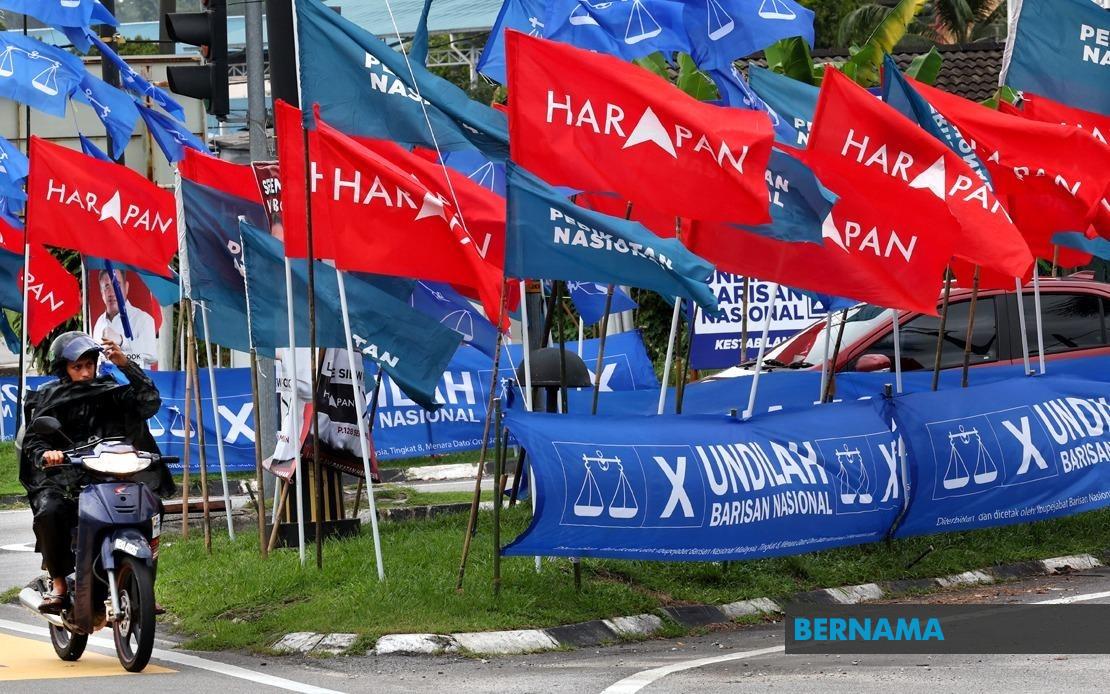
The Johor state election campaign has entered its decisive final phase, with less than 48 hours remaining before the official campaigning period concludes at midnight on Friday. With polling day set for Saturday, the 172 candidates contesting the 56 state seats have intensified their ground operations, deploying a full array of campaign tactics ranging from large public rallies to intimate grassroots engagements in a last-ditch effort to capture undecided voters and shore up support among their respective bases.
The urgency is palpable across all three major political blocs. Despite already reaching the 13th day of the election campaign, there is no discernible slowdown in activity. Instead, candidates and party machinery have accelerated their efforts, recognising that the final hours of a campaign often determine voter turnout and enthusiasm on polling day itself. The intensity of operations across constituencies suggests that political strategists believe momentum and visibility in these closing moments remain critical factors in determining outcomes.
Pakatan Harapan has positioned itself to leverage the star power of national leadership, with Prime Minister Datuk Seri Anwar Ibrahim scheduled to address rallies at three key locations during the final evening of campaigning. Among these, the Puteri Wangsa constituency represents a particularly significant battleground, with PH candidate Maszlee Malik actively mobilising supporters through social media channels. His appeal to voters emphasised the symbolic importance of attendance at the coalition's "Grand Finale Harapan Johor Selatan" rally, effectively framing the event as a defining moment for supporters to demonstrate their commitment to the coalition's vision.
The campaign has also highlighted the determination of individual candidates to maintain momentum despite personal challenges. Dr A. Ruban, PH's candidate for Paloh, notably returned to campaigning after a brief medical break, underscoring the physical and mental demands placed on contestants during election periods. Such personal commitments by candidates often resonate with voters who view persistence as evidence of dedication to constituency concerns. Johor PKR chairperson Datuk Seri Dr Zaliha Mustafa's participation in a motorcyclists' convoy supporting candidate Mohd Afif Abd Hamid in Kemelah similarly demonstrates how party hierarchies mobilise to provide visibility and morale support to candidates in their final push.
Barisan Nasional has equally escalated its campaign machinery, with coalition chairman Datuk Seri Dr Ahmad Zahid Hamidi conducting final visits to Endau and Kempas constituencies to energise party workers and candidates. Johor Menteri Besar Datuk Onn Hafiz Ghazi, contesting as BN's candidate for Machap, has leveraged his incumbent advantage by continuously campaigning across his constituency whilst simultaneously broadcasting appeals via social media platforms. In Larkin, BN candidate Mohd Hairi Mad Shah has maintained a systematic engagement programme through his "Ziarah Kasih" initiative, employing a personalised approach to constituency work that emphasises direct dialogue with residents about developmental priorities.
Perikatan Nasional has similarly structured its closing campaign phase around high-visibility rallies designed to mobilise its support base and generate media coverage. A mega rally scheduled in Endau featuring PN chairman Datuk Seri Ir Dr Ahmad Samsuri Mokhtar and PAS president Tan Sri Abdul Hadi Awang exemplifies how the coalition deploys senior figures to underline its seriousness as a contender in the Johor political landscape. Smaller coalition parties competing in the election, such as Parti Bersama Malaysia, have adopted alternative strategies emphasising grassroots accessibility. The "Bersama Tour Truck" initiative and small-group community dialogues employed by candidates Sahrudin Omar and Norsinah Abu represent attempts to differentiate through personalised engagement rather than competing on the scale of rival coalitions.
Individual candidates across all parties have articulated their commitment to maximising voter contact in the remaining campaign window. Perikatan Nasional's Kahang candidate Mazlan Bujang explicitly acknowledged the finite nature of campaigning time, framing each voter interaction as an opportunity rather than a mere procedural exercise. This sentiment reflects a broader understanding within political circles that election outcomes in Malaysia frequently hinge on marginal movements in voter sentiment, making last-minute engagement efforts potentially consequential.
The scale of this election is substantial, with 172 candidates seeking to represent 56 constituencies, creating multiple simultaneous campaigns across diverse geographical areas and voter demographics. This dispersion of political activity across Johor's breadth ensures that the final campaign days involve sustained operations in both urban and rural areas, requiring candidates to balance media-focused activities with personalised constituency work. The mix of campaign modalities—from large ceramahs and televised rallies to door-to-door visits and small community meetings—reflects an understanding that different voter segments respond to different mobilisation approaches.
For Malaysian political observers, the Johor election represents a significant barometer of electoral sentiment in one of the country's most politically significant states. The campaign intensity evident in these final hours suggests that all major coalitions view the result as consequential for their respective national political positions. The mobilisation of national leaders, the personal sacrifices made by candidates, and the diverse campaign strategies employed across all three major blocs collectively indicate that this election is being treated as a high-stakes contest with implications extending beyond Johor's boundaries into the broader dynamics of Malaysian politics.

