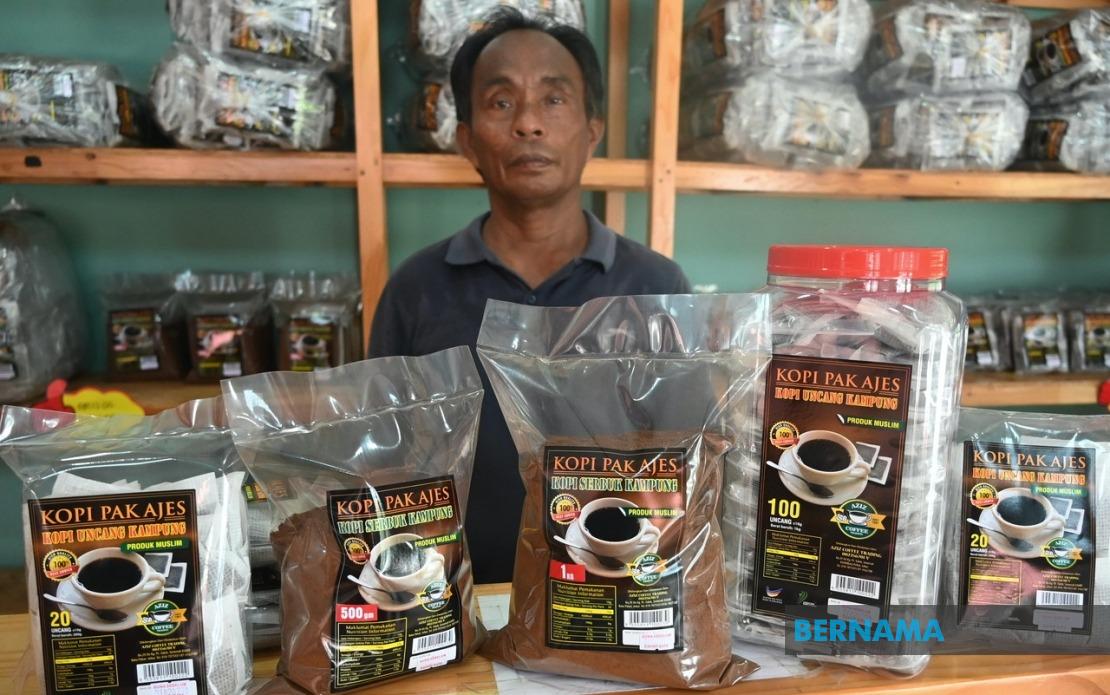
The intensity of election season has proven unexpectedly profitable for small-scale entrepreneurs in Johor, with one coffee producer in Kampung Parit Sidek experiencing a remarkable surge in orders as campaigning machinery mobilizes across the state. Aziz Mohd, known locally as Pak Ajes, has found his three-decade-old coffee business suddenly inundated with demand from political operatives traversing multiple constituencies ahead of the 16th Johor state election scheduled for polling day this coming Saturday.
At 65 years old, Pak Ajes runs Aziz Coffee Trading from his base in Semerah, where he has become a go-to supplier for campaign workers and election teams across several state constituencies including Semerah, Sungai Balang and Bukit Naning. The windfall has forced him and his son to ramp up production capacity significantly, a development that underscores how electoral activity stimulates economic activity at grassroots levels, particularly among informal and family-run enterprises that might otherwise operate beneath the radar of larger commercial cycles. Rather than viewing this as temporary relief, Pak Ajes has positioned the election period as validation for his long-term growth strategy.
The logistical demands of meeting heightened consumption during the campaign have tested his supply chain flexibility. Sourcing coffee beans from regions as distant as Rengit and Kluang demonstrates how localized businesses must adapt quickly when demand accelerates unpredictably. This adaptive capacity reflects the resilience often required of small entrepreneurs in Malaysia who operate with limited capital and must respond to market fluctuations with ingenuity rather than inventory cushions. His willingness to reach beyond traditional supplier networks reveals both the constraints and opportunities facing rural-based food producers.
Pak Ajes's entrepreneurial journey began far more humbly than his current operation suggests. Starting with quail farming for egg production and mushroom cultivation around 1991, he initially processed surplus coffee beans from a neighbouring village for personal consumption and to supply beverage stall operators. This organic entry into coffee production reflects a common Malaysian business trajectory where entrepreneurs identify unmet local demand and build operations incrementally. His first venture into coffee powder sales began with just 100-gram packets created with approximately RM200 in seed capital derived from quail and mushroom sales—a figure that starkly illustrates how limited initial resources need not constrain ambition.
The operational sophistication required for coffee production represents a significant step beyond basic agricultural activity. Processing demands meticulous attention across multiple stages, from separating beans from stems and husks through to sun-drying for approximately 15 days, followed by roasting, grinding and careful packaging. The technical requirements extend beyond production mechanics; Pak Ajes emphasizes that packaging demands particular vigilance because coffee powder can easily spill and degrades when exposed to air, causing hardening and clumping that compromises product quality. These production realities constrain scalability and demand consistency, limiting how rapidly small operators can expand without compromising integrity.
Current monthly production reaches over five tonnes of coffee powder, a substantial volume for a family operation that supplies multiple coffee shops throughout Muar and Batu Pahat. This capacity positions Pak Ajes within a competitive market segment where consistency and quality become critical differentiators. The relatively modest scale compared to industrial competitors grants him flexibility and direct customer relationships that larger producers cannot replicate, yet simultaneously constrains his ability to fulfill large-scale orders or penetrate distant markets without significant capital investment.
Recognizing the limitations of wholesale coffee powder distribution, Pak Ajes launched Kupi Nang Ajes Cafe in 2022 in front of his residence, a direct-to-consumer strategy developed in partnership with his son Muhammad Fitri, aged 22. The café represents vertical integration, allowing the business to capture retail margins while maintaining quality control through direct customer interaction. Offering affordable menu items including Americano and latte, the outlet serves both as a revenue stream and as a brand platform for the family enterprise. This intergenerational involvement suggests sustainability; the younger generation's participation implies the business transcends a single entrepreneur's working years.
Expansion ambitions extend well beyond the Batu Pahat area, with Pak Ajes articulating plans to establish a second outlet in high-traffic zones within either Batu Pahat town or Muar. More ambitiously, he envisions branches across multiple Malaysian states, a projection reflecting confidence in both market demand and operational replicability. Such aspirations would require securing additional capital, navigating franchise or expansion partnerships, and developing standardized operations capable of maintaining quality across geographically dispersed locations. The transition from family operation to multi-unit enterprise represents a significant organizational challenge for businesses of this profile.
Governmental support has materially assisted his development trajectory. The Department of Agriculture contributed equipment including coffee grinders and bagging machines, while providing formal instruction on packaging and product labelling. This institutional support illustrates how public sector agencies facilitate small enterprise development through targeted asset provision and technical training. Such interventions reduce capital barriers for producers and help formalize operations, potentially enabling access to regulated distribution channels and larger commercial clients. For rural entrepreneurs, such support can prove transformational, accelerating development timelines that might otherwise span decades.
The 16th Johor state election features 172 candidates contesting 56 state seats across multiple constituencies, creating sustained campaign activity that ripples through local economies. While the election provides temporary demand stimulus, it also tests business capacity and reveals market responsiveness. For enterprises like Pak Ajes's operation, such periods offer both revenue acceleration and operational stress-testing that can inform future expansion strategies. The broader economic lesson concerns how political activity, despite controversy surrounding electoral processes, generates measurable economic activity at community level, supporting incomes for small producers and reinforcing supply networks.
Looking beyond the immediate electoral cycle, Pak Ajes's experience illustrates the untapped potential within Malaysia's informal economy. Businesses operating at village scale often demonstrate remarkable efficiency and product quality yet struggle with capital access, market visibility, and operational scaling. The convergence of intergenerational succession, governmental technical support, and demonstrated market demand creates conditions for legitimate business expansion. Whether his aspirations for statewide branches materialize will depend on his ability to secure capital, develop management capabilities beyond family operations, and navigate regulatory environments as operations scale. The election windfall, temporary though it may prove, has provided both revenue and validation that his product and business model command genuine market appeal.

