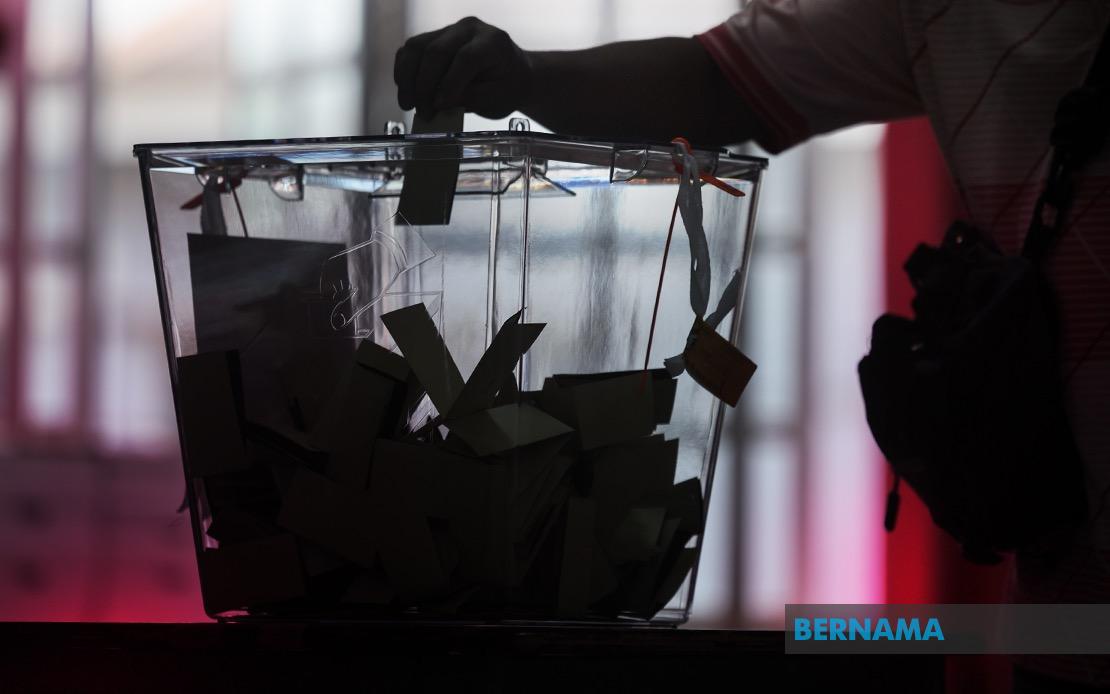
The 16th Johor state election scheduled for this Saturday will likely prove consequential for Pakatan Harapan's electoral fortunes in the southern state, with political observers suggesting that voter participation rates may serve as the decisive variable. Associate Professor Dr Mazlan Ali, a political analyst and director of the Faculty of Social Sciences and Humanities at Universiti Teknologi Malaysia's Kuala Lumpur Campus, argues that above-average turnout stands to advantage the PH coalition substantially, particularly across urban and semi-urban seats where outstation voters, young professionals, and undecided electors constitute significant voting blocs.
The foundation of Dr Mazlan's analysis rests on recent economic and political developments at the national level. Federal stability achieved through PH's governance, combined with measurable improvements in economic conditions and targeted government welfare schemes—including subsidies on petrol and diesel—create powerful incentives for PH-leaning voters to prioritize election participation. These voters, reasoning that their current standard of living depends on continued PH administration, face a compelling motivation to travel home from elsewhere in Malaysia and cast ballots, thereby converting theoretical support into concrete electoral outcomes.
The 2022 Johor state election provides instructive contrast to this emerging scenario. That contest witnessed turnout lingering just above 50 percent, a depressed figure substantially attributable to pandemic-related disruptions that discouraged outstation voters from returning. Under those constrained circumstances, Barisan Nasional captured 40 seats, leveraging its traditional advantages of deep-rooted local networks and a substantial base of geographically stable, core supporters distributed throughout Johor's constituencies. The coalition's stronghold in the state proved decisive when competing against a coalition fielding supporters many of whom resided elsewhere and faced practical obstacles to participation.
Yet the trajectory shifted markedly when Malaysia held its 15th General Election later that same year. Pandemic restrictions had eased considerably by that point, and voter enthusiasm surged accordingly. The GE15 witnessed turnout reaching approximately 75 percent statewide, a dramatic 25-percentage-point increase within months. This elevated participation fundamentally altered the competitive landscape. Pakatan Harapan subsequently secured 14 parliamentary seats across Johor, demonstrating the coalition's capacity to mobilize support when outstation voters could participate freely.
The numerical transformation accompanying this turnout shift warrants particular attention. Pakatan Harapan's vote share exploded from roughly 350,000 votes in the 2022 state election to approximately 830,000 votes during GE15—more than doubling within a twelve-month window. This explosive growth reflected not new party loyalists but rather the activation of existing sympathizers whose circumstances now permitted genuine participation. When extrapolated to the state assembly level, where constituencies are geographically smaller and potentially more responsive to localized dynamics, the analyst suggests rational grounds exist for anticipating PH gains exceeding those secured in the previous state election.
The 2024 Johor contest unfolds under circumstances distinctly more favorable to elevated participation than those prevailing in 2022. Pandemic-era restrictions belong to history. Social patterns indicate that outstation voters demonstrate increasing inclination toward returning home for electoral participation. Psychological and economic confidence appears restored. These structural conditions create a fundamentally different playing field from the depressed-turnout environment that had advantaged Barisan Nasional two years prior.
Dr Mazlan identifies urban and semi-urban constituencies as the critical terrain where Tuesday's outcome shall be determined. Voters concentrated in these areas characteristically prove more attentive to contemporary governance issues, economic management, policy substance, and appeals grounded in social equity and fairness. They exhibit greater responsiveness to performance-based assessments of incumbent administrations and demonstrate sophisticated engagement with political narratives beyond ethnic or religious identification frameworks. This voter profile aligns significantly with Pakatan Harapan's core supporter base.
The demographic and psychographic composition of PH's typical supporter base differs markedly from that of other political formations. Outstation voters—professionals and youth who have migrated for employment or education—dominate PH's support coalition, alongside fence-sitting voters who remain persuadable and educated populations with high digital engagement. These constituencies gravitate toward PH's messaging architecture emphasizing justice, fairness, and inclusive governance frameworks. Critically, they diverge fundamentally from voters primarily motivated by communal or religious sentiment, which constitute Barisan Nasional's traditional mobilization vocabulary.
The migration patterns of such voters create a distinctive electoral dynamic. When outstation PH supporters can feasibly return home—as appears increasingly probable in 2024—they reliably translate their political preferences into actual votes, thereby shifting support distributions in their residential constituencies. This phenomenon transforms what might appear, based on local canvassing, as competitive or Barisan-leaning seats into territories where PH can plausibly prevail. Urban and semi-urban constituencies, where such mobile voters concentrate, become particularly susceptible to this swing effect.
Dr Mazlan characterizes the mobilization of outstation voters as potentially determinative, capable of decisively shifting support patterns across multiple key constituencies simultaneously. Should these voters return in substantial numbers—a prospect growing more likely as pandemic anxieties fade and economic confidence stabilizes—the cumulative impact across numerous seats could produce a state-level outcome markedly diverging from what local support alone would suggest. The critical variable thus becomes not which voters prefer which party, but rather which party's supporters can most effectively activate across geographic distance and logistical constraints.
Yet this analysis simultaneously reveals Pakatan Harapan's fundamental vulnerability in the campaign's final phase. The coalition's strategy must transcend persuasion to focus intensively on activation. Ensuring that committed supporters geographically dispersed throughout Malaysia actually undertake the effort to return and participate represents the paramount organizational challenge. Supporters who have relocated to Selangor, Kuala Lumpur, Penang, or other states whilst maintaining voter registration in Johor must receive systematic encouragement, logistical support, and motivational messaging that privileges voting participation above competing demands on their time and resources.
For Malaysian observers and regional political analysts, the Johor election outcome will provide revealing diagnostic information regarding the stability of Pakatan Harapan's federal coalition, the persistence of voter enthusiasm that propelled the coalition to federal power in 2022, and the party system's organizational capacity to mobilize supporters across Malaysia's now-dispersed geography. Should turnout surge and PH substantially increase its seat count, it would suggest that the coalition retains genuine political momentum and that its federal governance performance resonates sufficiently to drive voter participation. Conversely, a repeat of 2022's depressed turnout and Barisan Nasional gains would signal concerning reversion to pre-GE15 patterns and raise questions regarding PH's ability to sustain mobilization beyond the federal level.

