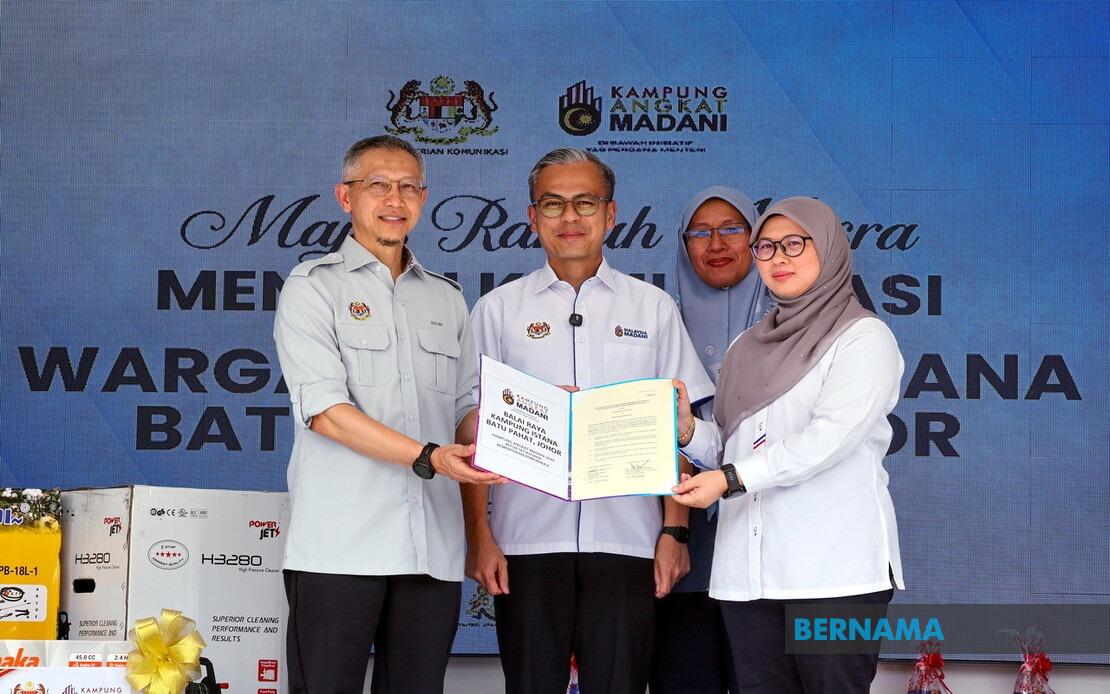
The 16th Johor State Election represents a pivotal moment for voters to select leadership genuinely committed to advancing the state's future, not a platform to voice support for particular personalities, according to Pakatan Harapan Communications Director Datuk Fahmi Fadzil. Speaking during a community engagement in Batu Pahat, Fahmi pushed back against a narrative that has gained traction in pre-election discourse, dismissing claims that a Barisan Nasional victory would constitute public endorsement of a former prime minister's path to rehabilitation.
The controversy erupted after Datuk Nazifuddin Mohd Najib suggested that a BN triumph in the July 11 election would demonstrate popular backing for his father, Datuk Seri Najib Razak, to receive a pardon. Fahmi characterised such linkages as troubling and counterproductive, arguing they distract from substantive questions about governance, economic opportunity, and service delivery that should dominate electoral discourse. He expressed concern that framing state elections around individual personalities rather than collective aspirations represents a fundamental misreading of democratic principles and voter priorities.
Fahmi's intervention reflects growing tension within Malaysia's political establishment over how electoral contests should be framed and interpreted. The Communications Minister stressed that voters do not base their decisions on allegiance to specific figures but rather evaluate which coalition and candidate can deliver tangible improvements to daily life. This framing carries particular weight in Johor, historically a BN stronghold where Fahmi's comments suggest Pakatan Harapan detects cracks in traditional party loyalties and an opening to reshape the political landscape through appeals centred on performance and vision rather than personality cults.
A significant thrust of Fahmi's remarks addressed what political analysts have long termed the "fixed deposit" phenomenon, particularly regarding non-Malay voter support for the Democratic Action Party. He argued that no political organisation should ever assume public backing is permanent or inevitable, warning that such complacency invites electoral punishment. The challenge extends beyond DAP to Johor UMNO, which has historically enjoyed commanding support in the state. Fahmi suggested that even ostensibly secure voter coalitions are increasingly volatile and subject to reassessment when voters perceive concerning political developments.
The Communications Minister cited defections and endorsements from figures previously aligned with opposition parties as evidence of Pakatan Harapan's broadening appeal in Johor. He specifically highlighted Datuk Dr Mohd Puad Zarkashi, the former Rengit assemblyman with deep UMNO connections, who recently backed a PH candidate despite longstanding party affiliation. Such movements, Fahmi argued, signal that established political certainties no longer hold. The defection of individual politicians and activists who have invested years in BN structures carries symbolic weight beyond their numerical significance, potentially influencing how other party members and fence-sitters evaluate their political allegiances.
Fahmi also referenced support extended by Bersatu members to PH candidates in contests such as Sri Medan, suggesting that coalition-building extends beyond formal party structures into informal networks of political actors and interest groups. These grassroots endorsements, he implied, indicate genuine enthusiasm for Pakatan Harapan's leadership and policy direction rather than calculated manoeuvring by party elites. He positioned such developments as manifestations of confidence in Prime Minister Anwar Ibrahim's stewardship, particularly regarding economic recovery initiatives that Fahmi claimed were yielding tangible benefits across Johor's industrial and agricultural sectors.
The broader political context illuminates why Fahmi felt compelled to address the referendum narrative so directly. In Malaysia's increasingly personalised politics, elections frequently become proxies for voter sentiment toward prominent individual leaders. The attempt to link a Johor BN victory to support for Najib Razak—who remains a polarising figure in Malaysian politics—essentially invites voters to interpret their ballot as a statement on rehabilitation or vindication of a controversial former prime minister. Fahmi recognised this framing threatens to overshadow Pakatan Harapan's substantive campaign messaging around governance improvements and economic opportunity.
The election itself will determine control of 56 state seats across Johor, with 172 candidates competing across both major coalitions and independents. Polling scheduled for July 11 follows early voting opportunities on July 7, providing multiple pathways for voter participation. The contest carries implications extending well beyond Johor's borders, offering potential indicators of voter sentiment across Malaysia's broader political spectrum and testing whether established patterns of state-level dominance remain durable or whether tectonic shifts in voter alignment are reshaping Malaysia's electoral geography.
Fahmi's intervention also reflects pragmatic acknowledgment that controlling narrative proves as important as mobilising voters in contemporary electoral politics. By publicly rejecting the referendum framing, he attempted to steer campaign discourse toward substantive terrain where Pakatan Harapan could highlight government achievements and policy platforms. Conversely, BN strategies have often benefited from elections becoming personalised contests where charismatic leaders or popular figures drive turnout and sentiment. The Communications Minister's statement represents an effort to constrain BN's ability to leverage such dynamics while simultaneously appealing to voters' desire for politics focused on practical outcomes rather than individual rehabilitation narratives.
Ultimately, Fahmi's comments encapsulate a larger debate about the appropriate function of electoral contests in democratic systems. Should state elections serve as referendums on national figures, or should they centre on local governance and regional development? The answer likely varies among voters, though Fahmi's framing appeals to those increasingly fatigued by politics dominated by personality-driven narratives and seeking candidates and parties evaluated on policy substance and administrative competence. Whether this messaging resonates decisively with Johor voters will become apparent when results are declared following the July 11 polling day.

