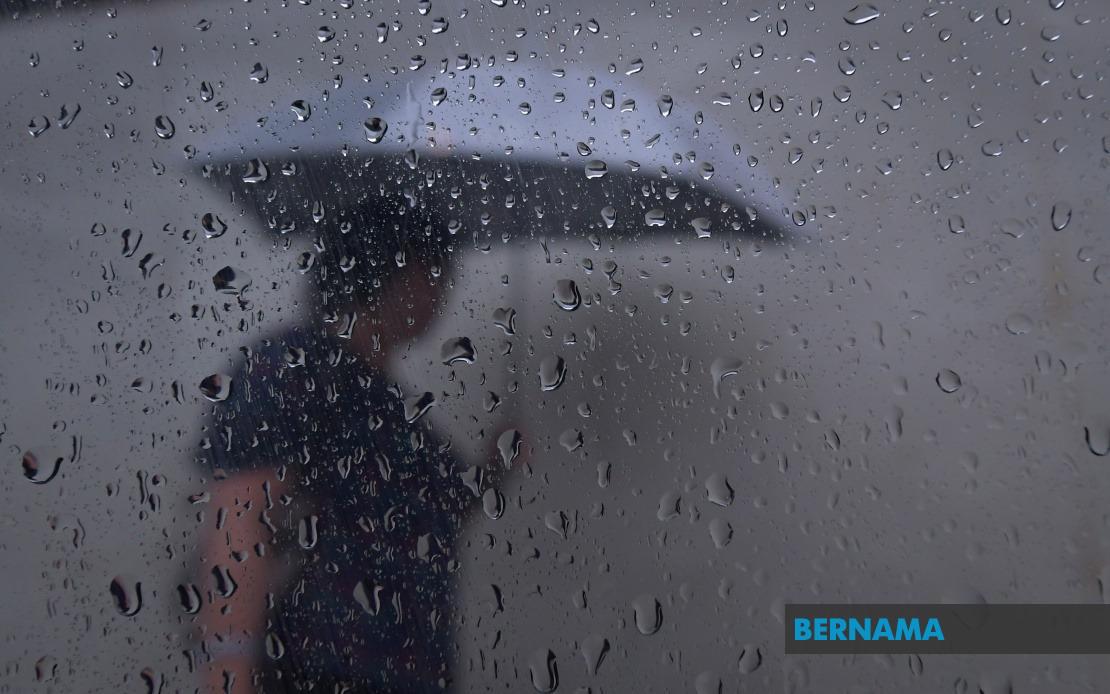
The Johor Meteorological Department has cautioned voters participating in early polling for the state's 16th election to prepare for wet conditions as four districts face morning precipitation, prompting officials to encourage balloting during daylight hours to avoid disruptions.
According to MetMalaysia director Azlai Ta'at, Batu Pahat, Muar, Pontian, and Tangkak will experience showers during the morning hours when 64 early voting stations across Johor commence operations at 8 am. The remaining districts—Johor Bahru, Segamat, Kluang, Kota Tinggi, Mersing, and Kulai—are expected to enjoy fine, sunny conditions in the early part of the day, creating a patchwork of weather patterns that could complicate voter movements in certain constituencies.
The forecast takes a sharp turn for the worse as afternoon approaches, with Azlai warning that thunderstorms are anticipated to sweep across all districts in the state by the afternoon hours. This developing system poses operational challenges for election officials managing the staggered closing times of early voting centres, which vary between noon and 6 pm depending on voter registration numbers and station locations. The timing creates a window of opportunity for voters to complete their ballots before conditions deteriorate, though those in affected districts will need to navigate rain-slicked roads and reduced visibility.
The advisory reflects a conscious effort by electoral authorities to maximise participation while managing logistical constraints. Azlai explicitly recommended that voters complete their balloting earlier in the day rather than delaying until afternoon, a plea that underscores the potential for weather-related disruptions to the democratic process. In Malaysia's tropical climate, such forecasts are not uncommon during the southwest monsoon season, but their intersection with electoral activities requires careful coordination between weather services and election commissions.
Approximately 24,751 early voters are participating in this preliminary polling phase, a significant cohort that includes military and police personnel who require advance voting opportunities due to operational commitments. The contingent comprises 12,041 Malaysian Armed Forces personnel and their spouses, alongside 12,710 members of the Royal Malaysia Police and General Operations Force along with their families. This demographic represents a critical segment of the electorate, and ensuring their smooth participation despite weather challenges is a priority for Johor's election administration.
The broader context of the 16th Johor state election reveals the scale of this democratic exercise. Across the state, 2,727,926 registered voters will eventually participate in balloting at 1,140 polling centres spread throughout 56 state seats. A total of 172 candidates are contesting these positions, reflecting vigorous political competition in Malaysia's second-largest state by population. The main election day, scheduled for Saturday, will see the vast majority of the 2.7 million ordinary voters cast their ballots, making the weather forecast relevant not merely for early voters but as a harbinger of conditions that may affect overall turnout.
The staggered approach to early voting serves multiple functions within Malaysia's electoral framework. By allowing military and police personnel to vote before the general election date, the authorities acknowledge that these groups may face deployment or operational duties that prevent them from participating on the primary voting day. This mechanism, increasingly common across Southeast Asian democracies, enhances representational legitimacy by broadening the pool of voices in the final tally. However, it also creates weather-dependent vulnerabilities, as seen in this forecast.
For the state's election commission and Johor's weather monitoring agencies, the coordination between institutions demonstrates the intricate planning required for large-scale democratic events. MetMalaysia's public advisory serves not just as meteorological information but as a practical tool to manage voter expectations and behaviour. By signalling morning showers in specific districts and universal afternoon deterioration, the department enables voters to make informed decisions about timing their participation, thereby reducing last-minute congestion at voting stations.
The implications for Malaysian electoral integrity and voter confidence remain important. Weather-related barriers to voting—whether through rain, flooding, or other climatic factors—can inadvertently suppress participation in certain demographic groups, particularly the elderly, the disabled, and those in geographically remote areas. The early voting system partially mitigates this risk, though the current forecast suggests that timing one's participation becomes crucial. First-time voters and those unfamiliar with polling procedures may face additional challenges navigating wet conditions and crowded stations, potentially creating equity concerns that election observers and academic researchers track closely.
Johor's election administration has distributed the 64 early voting stations throughout the state to maximise accessibility, though the weather forecast unequally affects different regions. Districts experiencing morning showers face the highest risk of logistics disruption during peak morning hours when many early voters might have planned to participate. The staggered closing times, ranging from noon to 6 pm, mean that voters in some stations must contend with increasingly volatile afternoon weather if they delay their participation beyond mid-morning.
The political significance of Johor cannot be overstated within Malaysia's broader political landscape. As a traditionally dominant state in national politics and a bellwether for peninsular political trends, the 16th state election carries implications extending well beyond Johor's borders. High participation rates—whether in early or ordinary voting—strengthen the legitimacy of the eventual government formation, while weather-depressed turnout could influence party strategies and public narratives about voter engagement. The meteorological department's proactive communication thus serves both immediate operational and longer-term political purposes.
Looking ahead to the main election day on Saturday, voters should monitor additional weather updates and plan their polling participation accordingly. The early voting exercise serves as a test case for the election commission's coordination capabilities and reveals how Malaysia's institutional structures respond to environmental challenges during critical democratic moments. As climate patterns in Southeast Asia become increasingly unpredictable, such adaptations to electoral procedures may become more frequent considerations for regional democracies managing the intersection of environmental volatility and political participation.

