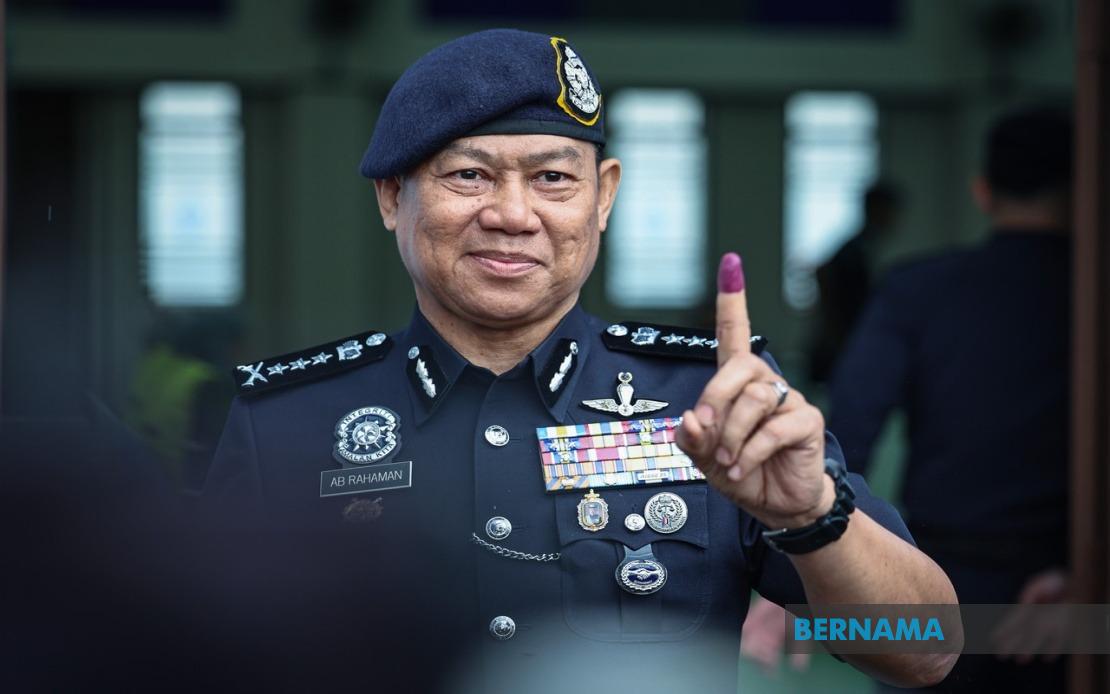
The 16th Johor state election moved into its early voting phase on July 7, with security personnel leading the way at polling stations across the state. By mid-morning, 4,257 police officers representing 36.3 per cent of those eligible had already submitted their ballots, signalling solid participation among uniformed personnel ahead of the main election scheduled for Saturday.
Johor police chief Datuk Ab Rahaman Arsad reported that the early voting process was unfolding without complications, with voting operations at all 53 designated centres proceeding according to plan. The early voting framework, which also extends to Malaysian Armed Forces members, represents a logistical accommodation that allows security and defence personnel to fulfil their civic duties before Saturday's main polling day, when more than 2.7 million registered voters across the state are expected to participate.
While the police chief confirmed that the final turnout figures would only become clear once polling stations closed that afternoon, the 36.3 per cent participation rate among eligible police early voters suggested reasonable engagement with the process. Sixty-four polling centres opened simultaneously at 8 am to accommodate approximately 20,600 registered early voters, with the centres scheduled to close in stages between noon and 6 pm depending on their geographic location and voter rolls.
The absence of reported incidents or complaints underscores the generally orderly nature of Malaysia's electoral machinery, even during the early voting phase. Datuk Ab Rahaman noted that no integrity concerns or procedural irregularities had surfaced that might compromise the credibility of the voting process. This operational smoothness reflects both the experience of election officials and the discipline maintained by security personnel participating in the exercise.
Beyond the early voting logistics, the Johor police chief drew attention to the campaign period's challenges, which have been dominated by relatively minor infractions. The most common police reports filed during the campaign have involved vandalism targeting campaign materials, particularly party flags and political billboards. Such incidents, while requiring investigation and documentation, typically represent low-level disruptions rather than systematic concerns about electoral conduct or intimidation.
However, one issue from the campaign period has attracted wider attention and generated significant police investigation activity. A police report was lodged against Datuk Dr Mohd Puad Zarkashi, the former Johor State Assembly Speaker, concerning allegations that the Johor Palace had interfered in the state legislative assembly's dissolution. Police confirmed receiving 153 such reports nationwide as of mid-July, reflecting the controversy surrounding Mohd Puad's public statements on this matter. Investigations into these allegations remained ongoing, with authorities continuing to examine the claims and their potential legal implications.
The scale of the Johor election itself underscores the significance of this state-level contest. A total of 172 candidates are competing for 56 state assembly seats, creating a densely contested electoral landscape. The number of candidates per seat variation across constituencies indicates differing levels of competition in different areas, with some seats drawing multiple contenders and others featuring more straightforward races.
For Malaysian electoral observers and international analysts tracking Southeast Asian democratic processes, the Johor election carries particular relevance. As one of Malaysia's most developed and populous states, and given its proximity to Singapore and its role as an economic powerhouse within the federation, Johor's political dynamics influence broader national conversations about governance, representation, and policy direction. The state's elections often foreshadow shifts in voter sentiment that subsequently manifest at federal level.
The early voting arrangement itself reflects evolving considerations within Malaysia's electoral framework, specifically the practical necessity of accommodating security personnel who maintain order during elections and cannot vote on the main polling day due to operational commitments. This accommodation, established through established electoral procedures, demonstrates how democratic systems adapt institutional mechanisms to reconcile competing demands: the obligation to provide equal voting access while recognising the operational constraints of security and defence personnel.
For voters in Johor, the main election on Saturday will determine the composition of the state assembly for the next term, with implications spanning state budget allocation, infrastructure development, and policy priorities across education, healthcare, and economic development. The sizeable voter registration figure of over 2.7 million reflects the state's demographic weight and economic significance within Malaysia's federal structure.
As the campaign period concluded and voting operations commenced, the orderly conduct of early voting procedures and the reasonable participation rates among eligible police voters suggested that election day itself was likely to proceed smoothly, barring unforeseen developments. The commitment of electoral officials and security personnel to maintaining procedural integrity appeared evident, even as investigations continued into specific campaign-period allegations requiring police attention.

