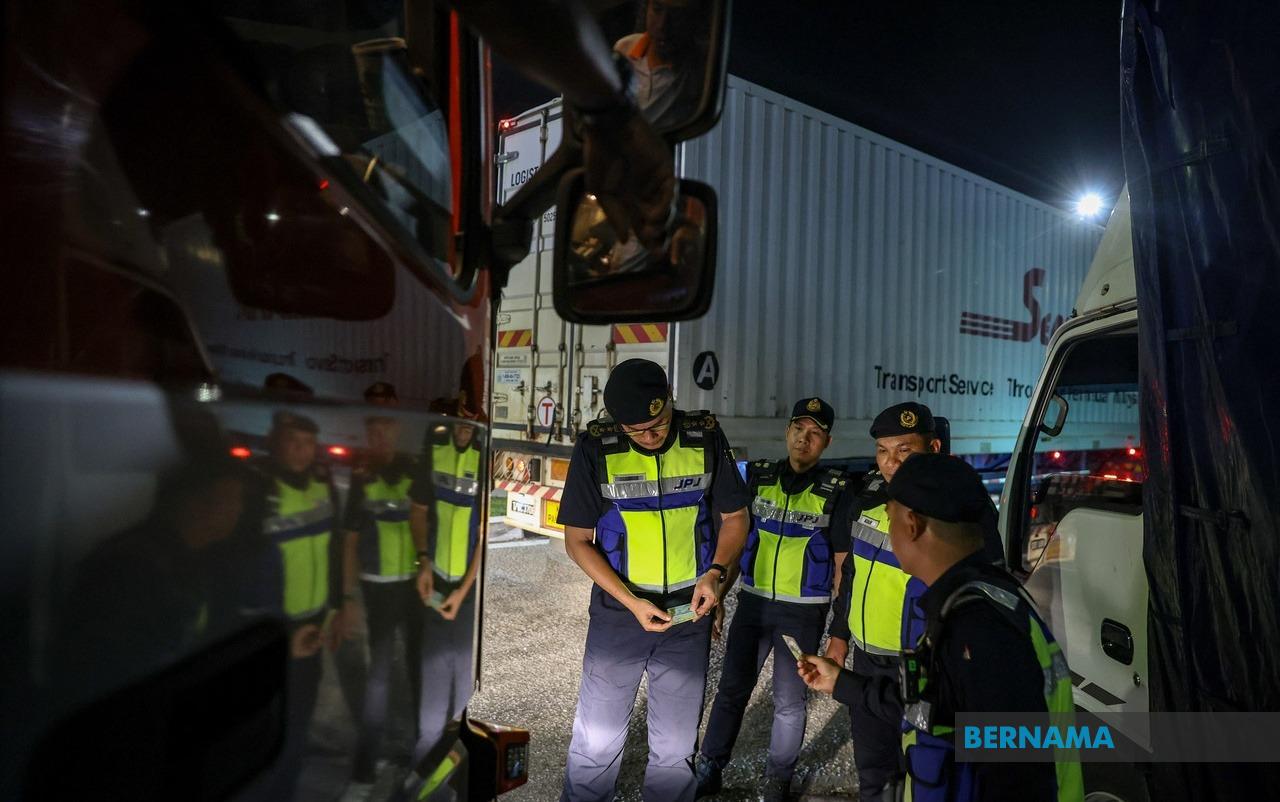
Authorities in Johor have uncovered a concerning drug problem among professional drivers, with 16 operators of commercial and public transport vehicles returning positive drug tests during a coordinated enforcement campaign that ran through early July. The Johor Road Transport Department (JPJ) spearheaded the crackdown in partnership with the Royal Malaysia Police, the National Anti-Drug Agency and highway operator PLUS Malaysia Berhad, deploying officers across multiple high-traffic zones throughout the state to intercept and test drivers at critical junctures in the transport network.
According to Johor JPJ director Zulkarnain Yasin, the operation screened 164 drivers in total, with results revealing the breadth of substance abuse affecting Malaysia's commercial transport sector. Of those testing positive, ten drivers showed traces of methamphetamine, while three tested positive for crystal methamphetamine commonly known as "ice". Two further drivers were found to have consumed ganja, and one tested positive for morphine. The findings underscore a troubling pattern of drug use among individuals responsible for operating heavy goods vehicles and buses that share Malaysia's highways with the general public.
The enforcement campaign utilised multiple strategic locations to maximise detection rates, setting up screening stations at highway rest and service areas, outside the JPJ Enforcement Station in Johor, and at major bus terminals. This multi-location approach allowed authorities to cast a wider net across different categories of commercial operators, from long-distance truck drivers to bus companies operating scheduled services. The Pagoh rest area southbound served as the operational hub where Zulkarnain made his statement to media, illustrating the scale of the enforcement effort undertaken.
The consequences for drivers who tested positive will be severe under existing transportation law. Zulkarnain made clear that the JPJ intends to suspend or revoke the vocational licences of all drivers who returned positive drug tests, invoking Section 56(4) of the Road Transport Act 1987. For professional drivers, such action effectively terminates their livelihoods, applying maximum pressure on the transport industry to implement stricter internal drug screening and workforce management. The threat of permanent licence revocation represents a significant deterrent beyond criminal penalties, addressing the reality that commercial driving is a regulated profession requiring fitness to practise.
Beyond the drug component, the operation revealed a far broader compliance crisis within Johor's transport sector. Authorities detected 707 cases of drivers operating without valid driving licences—a staggering figure that suggests systematic failure in enforcement or widespread disregard for basic legal requirements. Expired road tax documents accounted for 626 violations, whilst expired vehicle insurance policies numbered 574 cases, indicating that many commercial operators are running their vehicles without proper coverage, exposing themselves and innocent parties to enormous financial and legal liability in the event of accidents.
Vocational licensing breaches were equally prevalent, with 128 goods vehicle operators found to be operating without the required Goods Vehicle Licence. A further 30 drivers were caught with expired driving licences, and 14 operated vehicles with expired goods licences, suggesting either negligence in permit renewal or deliberate circumvention of regulatory requirements. Additionally, 113 instances of overloaded vehicles were detected, a critical safety violation that damages road infrastructure and increases accident risk, particularly on highways where speed and heavy loads combine dangerously.
The technical defects discovered during the operation painted an equally concerning picture of vehicle maintenance standards. The JPJ identified 39 cases of illegal vehicle modifications, 30 instances where tyres failed to meet specifications, and 928 other technical violations. These deficiencies go beyond mere paperwork issues; substandard tyres and modified vehicles create genuine roadway hazards, potentially contributing to the serious accidents that regularly claim lives on Malaysian highways. When combined with drug-impaired driving, such mechanical failures multiply the danger exponentially.
For Malaysian policymakers and transport industry stakeholders, the Johor operation demonstrates that road safety cannot be achieved through narrow enforcement focusing on single issues. The sheer volume and variety of violations suggests that commercial transport operators—whether individuals or companies—operate within an ecosystem of lax compliance and minimal consequences. The 164 drivers screened represent a fraction of Johor's thousands of professional operators, yet already systemic deficiencies emerged across multiple regulatory frameworks including the Road Transport Act 1987 and the Land Public Transport Act 2010.
The implications for road safety are sobering. Commercial vehicles account for a disproportionate share of fatal highway accidents in Malaysia, yet enforcement efforts remain piecemeal and reactive rather than comprehensive and preventive. The JPJ's initiative represents a step toward addressing this, but sustainable improvement would require extending such operations across all Malaysian states, establishing regular cycles of integrated enforcement, and coupling detection with meaningful penalties that deter future violations. Industry-led initiatives, including mandatory internal compliance systems and driver wellness programmes addressing substance abuse, would complement government enforcement.
Moreover, the presence of drug-impaired commercial drivers raises questions about hiring practices and workplace drug testing standards across Malaysia's transport sector. If 16 drivers test positive in a single state operation, the national prevalence could be substantially higher. Transport companies and cooperative societies must reassess recruitment screening, implement regular testing protocols, and provide support services for drivers struggling with addiction rather than simply dismissing them from employment.
The operation also highlights the effectiveness of inter-agency coordination, with JPJ, police, anti-drug authorities and private sector partners combining resources and expertise. Such collaborative enforcement models deserve expansion and institutionalisation, as fragmented agency efforts typically prove less efficient. Regular integrated operations across highway corridors, bus stations and freight terminals could normalise compliance expectations and create sustainable deterrent effects throughout the transport industry.
Zulkarnain's statement that further violations under various transport legislation were detected—including 51 expired PUSPAKOM inspection discs—suggests that many commercial operators view regulatory compliance as optional rather than mandatory. Until transport sector culture shifts to recognise that compliance protects not only legal interests but fundamentally saves lives, enforcement operations will continue uncovering similar patterns of systematic non-compliance across Malaysia's highways.

