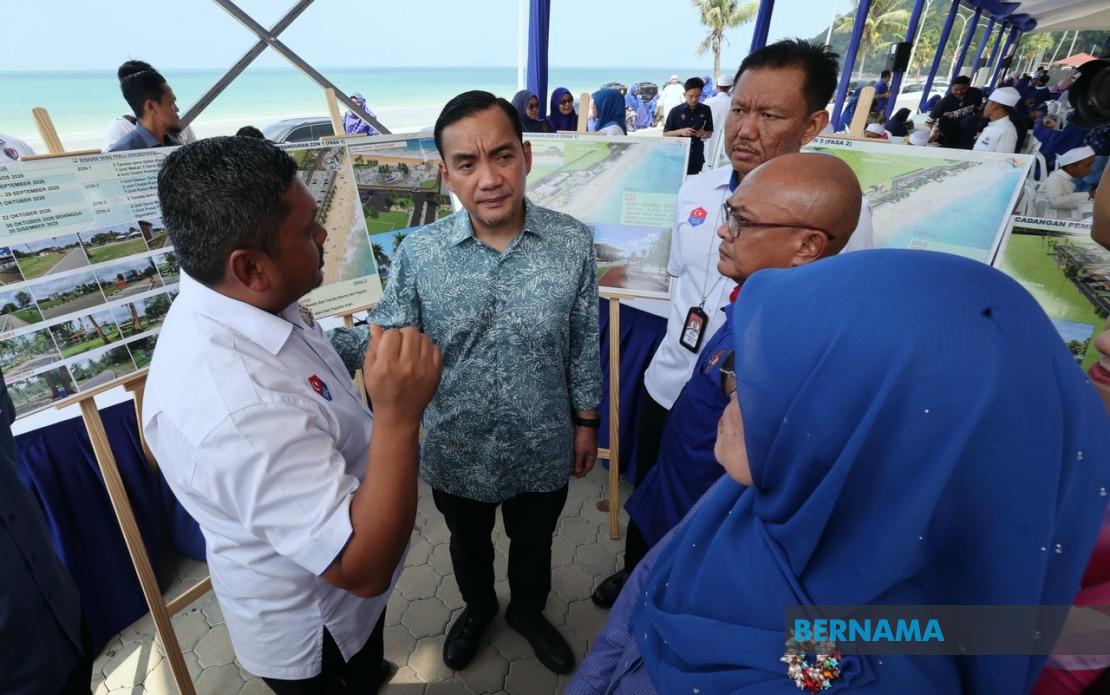
Johor's leadership has unveiled an ambitious RM1.5 million funding package aimed at accelerating development across the Mersing district, signalling the state government's commitment to distributing the fruits of economic progress beyond its urban centres. Menteri Besar Datuk Onn Hafiz Ghazi announced the comprehensive allocation during a gathering in Mersing, underlining that meaningful prosperity requires tangible improvements in communities often overlooked in broader development narratives.
The funding strategy reflects a deliberate pivot toward what Onn Hafiz frames as replicating Johor Bahru's development success across the state's less developed districts. This approach acknowledges a persistent challenge in Malaysian federalism: the concentration of investment in established commercial hubs at the expense of rural and semi-urban areas. By directing substantial resources to Mersing, the state government appears intent on narrowing regional disparities and ensuring that younger populations have compelling reasons to remain in their communities rather than migrating cityward.
Central to this initiative is the broader Johor Economic Transformation Plan, a strategic blueprint encompassing short, medium, and long-term objectives beyond mere infrastructure spending. The JETP positions itself as a vehicle for creating sustainable employment, particularly targeting youth whose departure from districts like Mersing represents a loss of human capital. Onn Hafiz's articulation of this challenge—that tourism infrastructure benefits few without corresponding job creation—resonates with Southeast Asian policymakers grappling with youth unemployment and rural exodus.
Healthcare receives priority attention, with RM500,000 dedicated to upgrading the haemodialysis unit at Mersing Hospital. This allocation carries profound implications for residents with chronic kidney disease, many of whom currently face lengthy commutes to larger medical facilities. Enhanced dialysis capacity locally reduces treatment burden and improves quality of life for vulnerable populations, exemplifying how targeted healthcare investment can yield measurable welfare improvements in peripheral areas.
The package encompasses diverse community-focused projects reflecting governance beyond narrow economic metrics. RM200,000 will modernise facilities at Kampung Sri Lalang Mosque, RM200,000 supports a new futsal court at Taman Sri Mersing, and another RM200,000 will rehabilitate the existing court in Felda Nitar. These allocations, while individually modest, address recreational deficits and social infrastructure gaps that affect daily quality of life. Sporting facilities particularly carry significance in smaller towns where youth have limited leisure alternatives.
Indigenous communities receive targeted support through RM100,000 allocations each for installing solar-powered streetlights in Kampung Peta and Kampung Tanjung Tuan, Orang Asli villages historically marginalised from development initiatives. This investment in reliable, sustainable lighting addresses both practical safety concerns and symbolic recognition of indigenous residents' equal entitlement to modern utilities. The renewable energy component aligns Mersing's development with environmental commitments, though implementation details remain critical.
Felda settlements feature prominently in the allocation strategy. RM100,000 will upgrade the Kami Anak Felda Malaysia building in Felda Tenggaroh Timur, while RM80,000 supports a sepak takraw court in Felda Tenggaroh 6. These investments acknowledge the distinctive position of Felda communities in Malaysian development history, combining acknowledgment of their past contributions with practical improvements to community facilities and recreational infrastructure.
Beyond immediate infrastructure spending, Onn Hafiz outlined strategic initiatives requiring further coordination and approval. A proposed petrol station serving Special Forces Group personnel at Camp Iskandar would generate commercial activity and potentially employment, with implementation delegated to local assemblyman Mohd Youzaimi Yusof and Mersing's District Officer. More ambitiously, plans to establish both a Religious Affairs Office and a Technical and Vocational Education and Training campus signal long-term commitment to institutional development, though timelines and funding sources remain unspecified.
The TVET campus proposal carries particular significance for the broader Southeast Asian context, where skills-based education increasingly determines economic competitiveness and youth employment prospects. Localising vocational training in Mersing could anchor young people through practical, market-oriented qualifications while building regional human capital. Such initiatives, however, require sustained commitment beyond initial announcements and coordination between state and federal educational authorities.
Endau assemblywoman Alwiyah Talib and Tenggaroh assemblyman Mohd Youzaimi Yusof's presence underscores the political machinery supporting these allocations, though the district's representation within broader state governance frameworks merits scrutiny. Whether Mersing receives equitable attention within Johor's overall development budget compared to other constituencies remains an open question for constituent accountability.
The sustainability of this development model hinges on implementation capacity and subsequent funding cycles. RM1.5 million, while substantial for a district of 80,000 residents, requires judicious deployment and efficient project execution. Establishing accountability mechanisms and ensuring projects reach intended beneficiaries will determine whether these allocations translate into meaningful improvements or become emblematic of unfulfilled development promises.
Mersing's development strategy illuminates broader tensions within Malaysian governance: balancing urban-centric growth with inclusive regional development, addressing youth employment through infrastructure versus skills investment, and reconciling state initiatives with federal-level resource distribution. The Johor government's framework, emphasising economic transformation paired with community welfare improvements, offers a template under observation not only within the state but across Southeast Asia's federal systems grappling with comparable developmental challenges.

