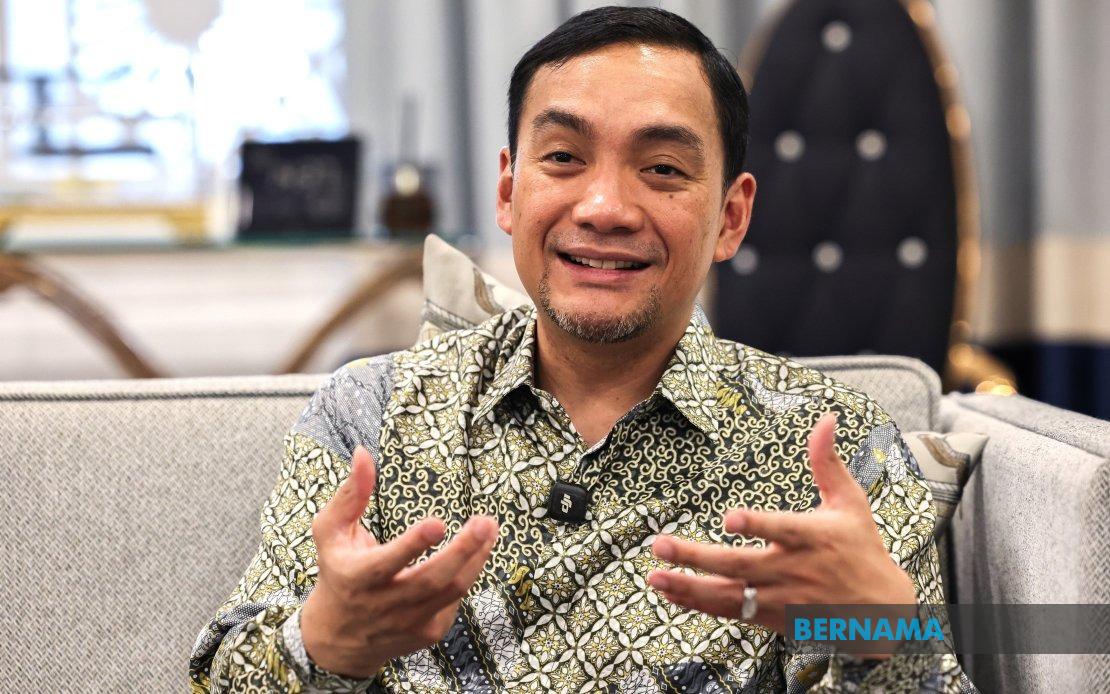
Johor Barisan Nasional has pledged to launch the Semarak Isya' programme across all state constituencies if granted the mandate in the forthcoming state election scheduled for July 11. The announcement comes as part of a comprehensive 63-point manifesto titled 'Maju Johor, Kestabilan Dikekalkan, Kemajuan Diteruskan', signalling the coalition's commitment to a development philosophy that extends beyond economic metrics and physical infrastructure. According to Johor BN chairman Datuk Onn Hafiz Ghazi, the initiative represents an evolution of the successful Semarak Subuh programme, building on momentum already established within Johor's Muslim communities.
The Semarak Isya' programme is fundamentally designed to reconceptualise the role of mosques and surau in contemporary Malaysian society. Rather than serving exclusively as venues for ritual worship, these spaces would operate as multifunctional community centres encompassing religious education, social welfare distribution, and civic engagement activities. Evening gatherings following isyak prayers would feature structured religious lectures, spiritually enriching content tailored to diverse audience segments, and complimentary meals provided to congregants. This positioning reflects an understanding that community institutions require sustainable programming to maintain regular participation and social cohesion.
Datuk Onn Hafiz articulated a broader ideological framework underpinning the initiative, emphasising that genuine development requires balanced advancement across multiple dimensions of society. Economic prosperity and infrastructural progress, while important, must be accompanied by the cultivation of ethical values, spiritual resilience, and interpersonal harmony within communities. The Machap assemblyman contended that previous iterations of community-building programmes had successfully drawn congregants into closer relationships with their local religious institutions, and Semarak Isya' would extend this trajectory by offering programming that resonates with contemporary family structures and youth demographics who complete work and educational commitments by evening hours.
The programme's proposed implementation methodology prioritises local customisation over uniform top-down deployment. By embedding the initiative at the state constituency level, administrators could develop activities responsive to specific demographic compositions, socioeconomic conditions, and cultural preferences within each locality. Programming options encompassing religious instruction, family-oriented activities, voluntary service coordination, welfare assistance schemes, and community development projects would be assembled according to locally identified priorities. This adaptive approach acknowledges that Johor's 56 state constituencies encompass diverse populations with varying needs and social dynamics.
The initiative particularly targets youth and family segments within Johor's population, demographics traditionally underrepresented in formal religious institutional activities. By scheduling programming after standard working and schooling hours, and cultivating an atmosphere characterised as welcoming rather than austere, organisers aim to reduce participation barriers. The emphasis on activities "closer to community life" suggests intentional differentiation from conventional didactic religious education, incorporating elements of leisure, social bonding, and practical skill-building alongside spiritual content. This reorientation acknowledges shifting patterns in how younger cohorts engage with religious communities in urbanising Southeast Asian contexts.
The timing of this announcement carries strategic electoral significance. With nomination day occurring on June 26 and polling scheduled for July 11, following the dissolution of the state assembly on June 1, the manifesto promises remain embedded within active campaign messaging. The Semarak Isya' pledge offers Johor BN a distinctive policy position distinguishing it from competing political entities, particularly among constituencies containing substantial Muslim populations where religious institutional vitality resonates as a substantive governance concern. The programme addresses communal priorities that transcend conventional left-right political divides, framing religious community strengthening as a shared developmental objective.
For Malaysian and regional observers, the Semarak Isya' initiative illustrates evolving approaches to religious governance and community engagement within Muslim-majority democracies navigating modernisation pressures. Rather than positioning religious institutions in opposition to secular state development or treating them purely as sites of ritual practice, the programme integrates them into broader social welfare and civic participation frameworks. This model potentially offers insights relevant to other Southeast Asian contexts where mosque and surau networks remain influential community anchors, including states with substantial Muslim populations such as Terengganu, Kelantan, and Selangor.
The manifesto positioning also reflects sophisticated understanding of governance legitimacy in contemporary Johor. A state with a GDP ranking among Malaysia's highest, significant manufacturing and petrochemical sectors, and substantial foreign investment requires political messaging extending beyond conventional economic indicators. Datuk Onn Hafiz's articulation that "true development is when the economy grows, the people prosper and relationships within society become closer" captures a holistic development paradigm increasingly articulated across Malaysian political discourse. This framing acknowledges that material prosperity unaccompanied by social cohesion and value-system robustness generates governance challenges including anomie, intergenerational disconnection, and weakened civic institutions.
Implementation challenges remain unaddressed in available campaign materials. Financing mechanisms for complimentary meals and programming across all state constituencies require clarification, as do training protocols for volunteer coordinators and institutional governance structures ensuring accountability. The definition of religious content appropriate for diverse family audiences, particularly in plural communities with non-Muslim residents, necessitates careful calibration. Previous successful community programmes in Malaysia have demonstrated that sustainability depends upon consistent resource allocation and adaptive management responding to implementation feedback, suggesting these practical dimensions warrant detailed policy specification.
The broader implications of the Semarak Isya' initiative extend to questions of state identity and social cohesion in Johor. The programme implicitly acknowledges that rapid economic development and urbanisation can generate spatial and temporal disconnections from traditional community anchors, particularly among younger demographic cohorts. By deliberately reconstructing mosque and surau spaces as integral to contemporary community life rather than residual from previous social configurations, the initiative signals recognition that institutional vitality requires intentional cultivation. This represents a notable departure from assumptions that religious institutions maintain automatic salience through inheritance and obligation.
Regional political analysts observing Johor's electoral dynamics note that community-oriented programmes focusing on welfare distribution and social integration carry demonstrable electoral resonance. The Semarak Isya' pledge therefore functions simultaneously as substantive policy proposal and strategic campaign messaging. Its success would depend substantially upon execution quality, consistent resource provision, and institutional responsiveness to local community feedback rather than bureaucratic predetermined programming. The July 11 election outcome will determine whether this manifesto commitment receives governmental resources and structural embedding within Johor's administrative apparatus.

