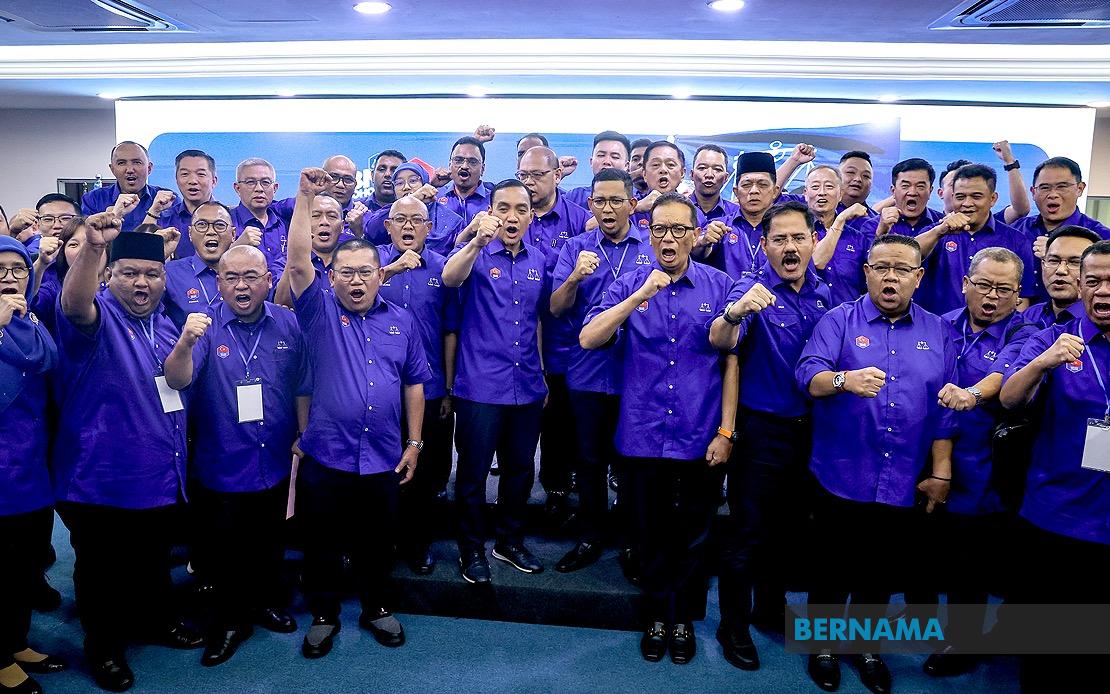
Johor Barisan Nasional has unveiled its complete roster of contenders for the forthcoming 16th state election, selecting a mix of tested legislators and fresh candidates to contest all 56 seats in the assembly. The coalition, comprising 37 UMNO representatives, 15 from MCA, and four from MIC, held its formal announcement ceremony in Johor Bahru, with Johor BN chairman Datuk Onn Hafiz Ghazi presiding over the proceedings. The selection process carried the explicit mandate and endorsement of BN's national chairman Datuk Seri Dr Ahmad Zahid Hamidi, underscoring the importance BN places on these contests and its determination to maintain its grip on Malaysia's southernmost state.
Onn Hafiz, who currently serves as Johor's chief minister, will contest the Machap constituency, which he successfully defended in the 2022 state election. His decision to seek another term signals confidence in his political standing within the state and his continued appeal to Machap voters. The BN chairman's personal contest carries particular significance as it represents the coalition's determination to retain the top executive position in Johor, a state that has served as a traditional BN stronghold in Malaysian politics. His candidacy also sets the tone for BN's overall campaign strategy, emphasizing continuity and stability in state governance.
Among the most prominent names featured in the candidate list is Datuk Seri Dr Adham Baba, former federal health minister, who will contest the Pasir Raja seat. Adham's return to electoral politics marks a significant moment for BN in Johor, as he previously represented the same constituency for two consecutive terms spanning from 2008 to 2018. His political career has been notably peripatetic, having served as Tenggara MP during two separate periods—from 2004 to 2008 and again from 2018 to 2022—before being appointed to ministerial office. His positioning in Pasir Raja reflects BN's strategy of deploying experienced and nationally-recognized figures to bolster its electoral prospects in key constituencies, particularly where the coalition faces competitive challenges.
The selection process has also necessitated difficult decisions regarding incumbent representation. In Benut, former Menteri Besar Datuk Seri Hasni Mohammad, despite holding the incumbent assemblyman's position, has not been renominated to contest this election cycle. Instead, BN has chosen to field Datuk Mohd Sumali Reduan, the UMNO working secretary, in this seat. This substitution illustrates the coalition's willingness to make tough personnel choices when assessing electoral viability and organizational positioning. The replacement of a former chief minister in one of the state's constituencies demonstrates that seniority and past achievement do not guarantee automatic renomination, and that BN's selection committee has adopted a performance-focused approach to candidate determination.
The retention rate for incumbent executives reflects BN's confidence in its 2022 winning formula. Of the ten former Johor executive councillors who participated in the previous state election, nine have been selected to defend their respective seats, indicating substantial organizational continuity. However, one notable exception exists: Khairin-Nisa Ismail @ Md On, who previously chaired the State Women, Family and Community Development Committee, has not been renominated for the Serom seat. This selective retention strategy suggests that while BN values institutional memory and established relationships built during the previous administration, it simultaneously seeks to introduce fresh perspectives where current political assessments warrant change.
The composition of the candidate slate across party lines reflects the established power-sharing arrangement within the BN coalition. UMNO's dominant position with 37 nominations underscores its role as the coalition's primary vehicle for capturing Johor state seats, a dynamic consistent with historical patterns of BN electoral contests in the state. MCA's allocation of 15 seats maintains its secondary but meaningful position within the coalition's electoral architecture, while MIC's four nominations represent its minority role in BN's broader Malaysian political structure. This distribution mirrors the coalition's broader national composition and indicates that no significant realignment within BN's internal power dynamics has occurred since the 2022 election.
In articulating the significance of nomination, Onn Hafiz addressed the gathered party leadership and candidate corps with measured messaging. He explicitly cautioned that candidate selection constitutes neither reward nor privilege, but rather represents a substantial trust and responsibility that demands fulfillment with unwavering integrity. This framing establishes clear expectations for behavioral standards and underscores BN's concern about maintaining public trust through ethical conduct. By emphasizing integrity as a non-negotiable component of candidacy, the BN leadership has signaled its awareness of public sentiment regarding political conduct and its determination to project an image of clean, principled governance.
The chairman further emphasized that all candidates must conduct their campaign activities with courtesy, respect, and prudent judgment, aligning their conduct with values that Johor's electorate cherishes. This directive reflects the coalition's strategic calculation that electoral success depends not merely on organizational machinery and resource deployment, but also on candidates who can credibly project moral authority and genuine commitment to constituent service. The emphasis on campaign decorum suggests BN's assessment that Johor voters, particularly in urban and semi-urban constituencies, increasingly prioritize respectful political discourse and substantive policy engagement over personality-driven politics or inflammatory rhetoric.
The comprehensive candidate announcement carries significant implications for the broader Malaysian political landscape. Johor's status as a populous state with substantial economic influence means that electoral outcomes in the coming state polls will reverberate nationally, potentially signaling shifting voter preferences or demographic realignments. BN's selection of experienced national figures like Adham Baba, combined with its retention of successful incumbent executives, suggests the coalition is preparing for a competitive campaign where victory cannot be assumed despite historical advantages. The particular composition of the 56-person slate—balancing experience with new blood, maintaining established leaders while introducing fresh perspectives—demonstrates a deliberate calculus aimed at addressing specific regional vulnerabilities while consolidating areas of traditional strength.
For Malaysian voters and political observers monitoring Johor's political trajectory, the candidate announcement represents an important milestone in understanding how the coalition plans to contest the coming election. The slate composition and the specific placement of prominent national figures in key constituencies will likely influence broader political calculations within UMNO and throughout the wider BN structure. Whether BN can successfully mobilize this candidate roster to retain Johor will depend not only on campaign execution but also on prevailing national sentiment regarding government performance, economic conditions, and the broader political narratives that dominate Malaysian public discourse during the campaign period.