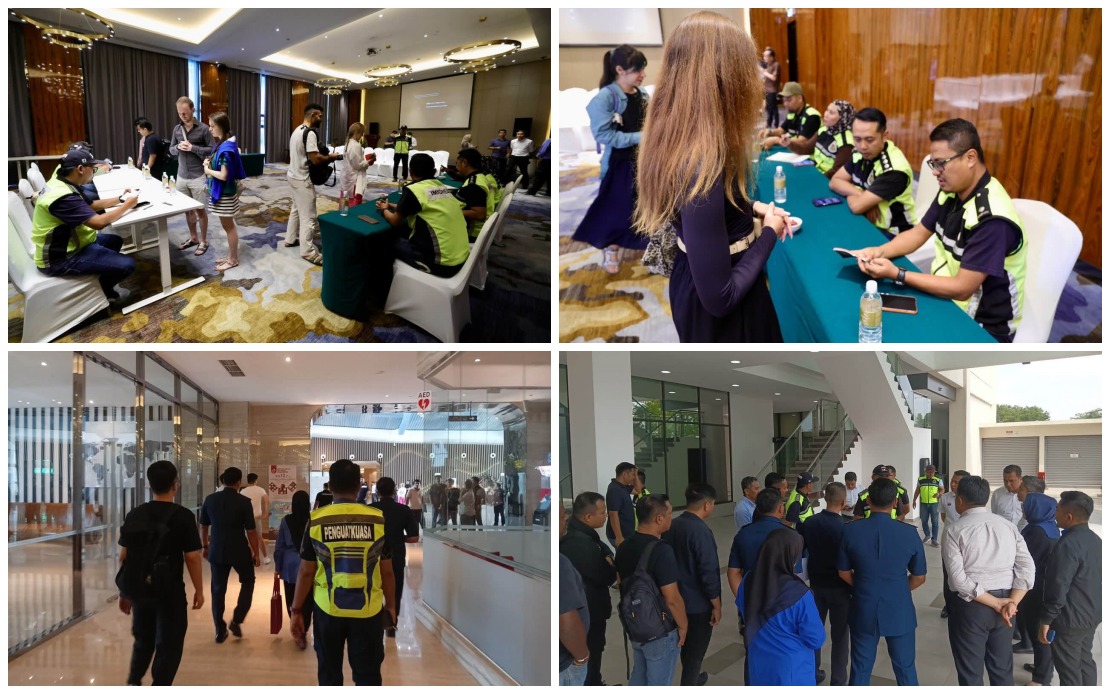
The Iskandar Puteri City Council (MBIP) has formally ceased the business operations of Network School in Forest City through the issuance of a Stop-Business Notice, following regulatory breaches uncovered during a thorough investigation by the local authority. Johor Menteri Besar Datuk Onn Hafiz Ghazi confirmed the enforcement action on July 17, emphasizing that the school company had violated multiple conditions governing its licensed premises and the scope of permitted commercial activities.
The investigation revealed a troubling pattern of regulatory non-compliance. Network School operated from two separate locations within Forest City, a major mixed-use development in Iskandar Puteri. Of these two premises, only one held a valid MBIP business licence authorizing office operations. The second location operated entirely without the requisite business licence despite being owned by a Malaysian citizen, creating an immediate regulatory violation that triggered the stop-business notice IP012N260714001.
Beyond the licensing gaps, authorities identified that the school had fundamentally misrepresented the purpose of its licensed premises. The company held business office licences for its locations, yet was conducting classroom instruction and educational activities within these spaces—a use category that diverges significantly from standard office operations. The school had also engaged in business promotion activities without obtaining proper approval, failing to submit detailed applications that would have outlined the change in use and allowed authorities to assess compliance with zoning and safety requirements.
The regulatory framework governing businesses in Iskandar Puteri operates under the Local Government Act 1976, which provides local councils with considerable enforcement authority. In addition to the stop-business notice, MBIP issued an Advertisement Licence Notice under Section 107(2), citing non-compliance in the display of signboards. These signs did not conform to the conditions stipulated in the original business permit and contravened the approved licensing parameters, representing a secondary violation compounding the primary breach.
Onn Hafiz stressed that Johor's state administration takes regulatory violations in the property and business sectors seriously, particularly within high-profile developments like Forest City. The Menteri Besar indicated that the enforcement action reflects MBIP's commitment to ensuring all commercial operations maintain strict compliance with licensing conditions and permitted use classifications. The council signalled its intention to escalate investigations into any additional breaches that fall within municipal jurisdiction, with proportionate legal action to follow if warranted.
The matter has become entangled with broader geopolitical concerns. Social media posts alleging the school's ties to an Israeli agenda for establishing a commercial foothold in Malaysia through investment-linked activities gained traction online, though these claims lacked official substantiation at the time of the council's announcement. Such allegations reflect deeper anxieties within Malaysian society regarding foreign commercial interests and potential ideological agendas embedded within business operations, particularly involving property developments that attract international investors and operators.
A critical element of the case involves the immigration status of foreign nationals reportedly associated with Network School's management and operations. Onn Hafiz clarified that scrutiny of these individuals falls entirely within the Home Ministry's remit, as questions about visa status, work permits, and eligibility to engage in commercial activities in Malaysia require federal oversight rather than state or municipal authority. The Johor government has formally requested that the ministry expedite its review and issue a definitive determination regarding both the personnel's regulatory status and the school's operational legality from an immigration perspective.
The closure of Network School represents a significant enforcement action within Iskandar Puteri's regulatory landscape. Forest City, developed by Chinese property company Country Garden, has faced previous controversies and scrutiny in Malaysian media and among government bodies regarding foreign ownership concentration and operational transparency. This incident underscores the ongoing tension between attracting international business investment and maintaining vigilant oversight of regulatory compliance within major developments.
For Malaysian education stakeholders, the enforcement action raises important questions about oversight of educational facilities operating outside the formal regulatory framework managed by the Ministry of Education. While Network School operated as a commercial business entity rather than a registered school, its educational function meant that students—potentially including Malaysian children—may have studied in an unlicensed, unaccountable facility. This gap highlights the risks that emerge when educational provision occurs through loosely-regulated commercial channels rather than through established institutional channels subject to ministry standards and inspections.
The incident also demonstrates the practical limitations local councils face when addressing complex violations involving foreign commercial entities and international personnel. Although MBIP successfully executed its enforcement authority to halt the operation, the involvement of foreign nationals and potential international business networks means that comprehensive resolution requires coordination across multiple government agencies operating at different jurisdictional levels. This layered regulatory environment, while providing checks and balances, can also create delays in achieving swift, comprehensive accountability when overseas operators breach local regulations.

