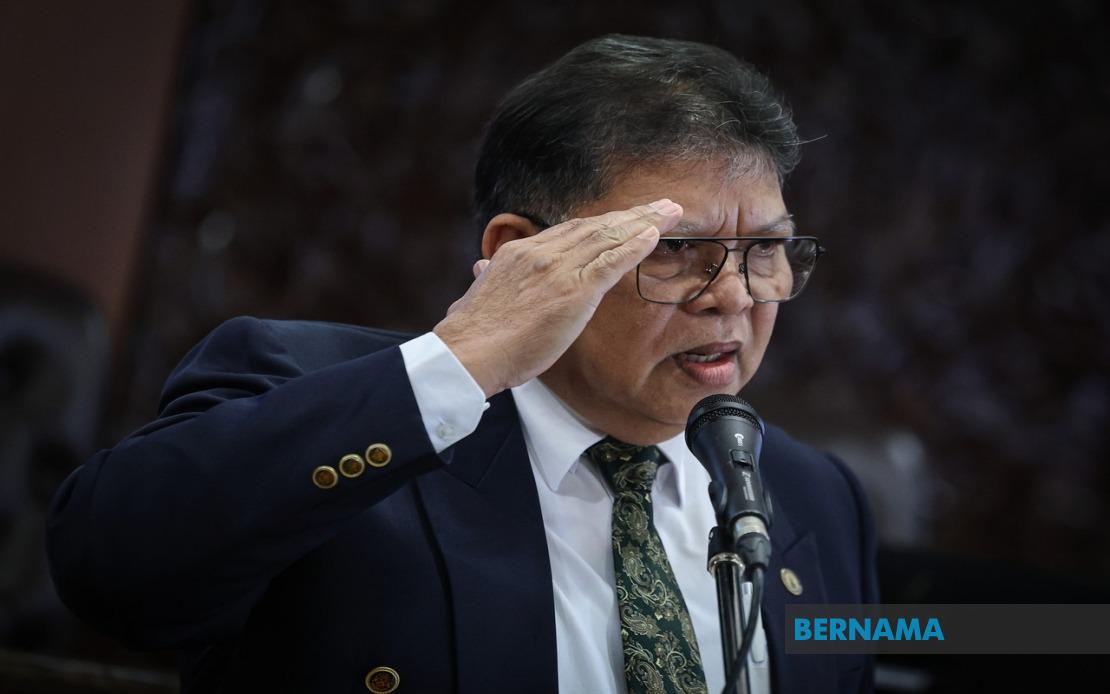
Tan Sri Johari Abdul, Speaker of the Dewan Rakyat, has advocated for a fundamental restructuring of Malaysia's electoral system through the introduction of proportional representation, framing the proposal as essential to maintaining minority political voice as the country's demographic landscape undergoes significant transformation. Speaking at the Harmony Symposium held at Parliament on June 26, Johari articulated concerns about the long-term viability of traditional constituency-based representation in an increasingly imbalanced population distribution.
The Speaker's intervention represents a significant intervention in an ongoing national conversation about inclusivity and democratic representation. Johari emphasised that proportional representation would foster a new generation of political leaders genuinely reflective of Malaysia's multicultural composition and capable of navigating an increasingly complex society. His remarks suggest recognition within Parliament's leadership that contemporary electoral structures may inadequately accommodate demographic realities in the decades ahead.
Central to Johari's case are demographic projections indicating that Bumiputera Malays will represent approximately 77 per cent of Malaysia's population by 2050. Under the current first-past-the-post system, this concentration would inevitably create electoral terrain where minority groups lack sufficient population density to constitute parliamentary majorities in traditional constituencies, rendering their political agency marginal and their parliamentary representation dependent on the coalition preferences of larger communities. Johari articulated this concern bluntly, questioning where minority communities would fit within such a reconfigured political landscape and whether their legislative voices would effectively disappear.
The Speaker positioned his proposal within a forward-looking framework emphasising temporal perspective. Rather than engaging with immediate political controversies, Johari encouraged deliberation focused on challenges extending across five to one hundred year horizons. This temporal reorientation attempts to insulate the proportional representation discussion from short-term partisan advantage calculations, instead anchoring the debate in institutional sustainability and long-term democratic health. His framing suggests that current electoral arrangements may function adequately in present circumstances but contain structural vulnerabilities manifesting through extended timeframes.
Johari's emphasis on Malaysia's exceptional ethnic diversity—encompassing 77 distinct ethnic groups—underscores the complexity inherent in designing inclusive democratic institutions. The Speaker identified the fundamental national challenge not as managing majority-minority relations superficially, but as cultivating mutual understanding between communities regarding their respective roles in constructing shared citizenship. This formulation implies that institutional design mechanisms like proportional representation function as vehicles for developing deeper community comprehension rather than merely allocating parliamentary seats.
The Harmony Symposium itself provided institutional legitimacy for these discussions, bringing questions of racial and religious harmony directly into parliamentary spaces. Syahredzan Johan, chairman of the Malaysia Cross-Party Parliamentary Group on Racial and Religious Harmony, emphasised the symposium's purpose in generating policy recommendations and practical mechanisms for parliamentary and ministerial implementation. This positioning suggests movement toward institutionalising harmony discourse beyond academic or civil society spheres into governmental decision-making structures.
Proportional representation systems fundamentally alter the incentive structures confronting political parties and individual legislators. Unlike constituency-based competition that encourages representatives to prioritise geographically concentrated voter blocs, proportional systems typically reward parties cultivating broader, more diverse electoral coalitions. Malaysian parties might consequently develop stronger incentives to incorporate minority community representatives into leadership structures and policy development processes, creating internal democratic mechanisms reflecting the nation's diversity rather than relying solely on external electoral pressures.
The proposal's political economy remains complex, however. Current electoral arrangements substantially benefit parties with concentrated support in particular regions—a dynamic that proportional representation would necessarily disrupt. Implementing such fundamental electoral reform would require extraordinary political consensus, as parties advantaged by existing systems must voluntarily relinquish structural advantages. Johari's intervention, despite his institutional prominence, represents advocacy rather than assured implementation, highlighting the gap between intellectual conviction and political feasibility.
For Malaysia's evolving Southeast Asian context, the proportional representation debate connects to broader regional questions about managing ethnic and religious pluralism through democratic institutions. Countries throughout the region continue experimenting with different mechanisms—from Malaysia's federal devolution to Indonesia's decentralisation—attempting to accommodate diverse populations within functional democratic frameworks. Johari's proposal contributes to this regional conversation, testing whether alternative representation systems might better serve multicommunal societies than traditional Westminster models.
The cross-party parliamentary group's broader agenda of building inclusive Malaysia through legal and policy reform indicates recognition that demographic change and institutional adequacy demand proactive rather than reactive responses. By forging cooperation between Parliament, government, civil society, and educational institutions, these initiatives attempt to construct ecosystem-wide commitment to inclusion rather than isolated governmental action. Educational institutions particularly may cultivate constituencies of younger Malaysians educated in deliberative practices valuing genuine minority inclusion rather than procedural tokenism.
Johari's temporal argument—dismissing historical grievances in favour of future-oriented planning—strategically reframes conversations that frequently become mired in historical disputes about constitutional bargains and communal arrangements established at independence. This forward-looking perspective potentially creates psychological and political space for reimagining institutions without reopening settled historical questions. However, questions about representation and minority protection inevitably implicate historical foundations of the Malaysian state, complicating efforts to transcend these foundations entirely.
The Speaker's emphasis on proportional representation as mechanism for preparing the nation for demographic futures reflects deepening recognition that static institutional arrangements prove increasingly inadequate as population composition transforms. While implementing such comprehensive electoral reform remains politically uncertain, Johari's articulation from Parliament's highest position signals that serious institutional conversation about representation systems has entered mainstream political discourse, potentially establishing conditions for incremental experimentation or eventual systemic change.

