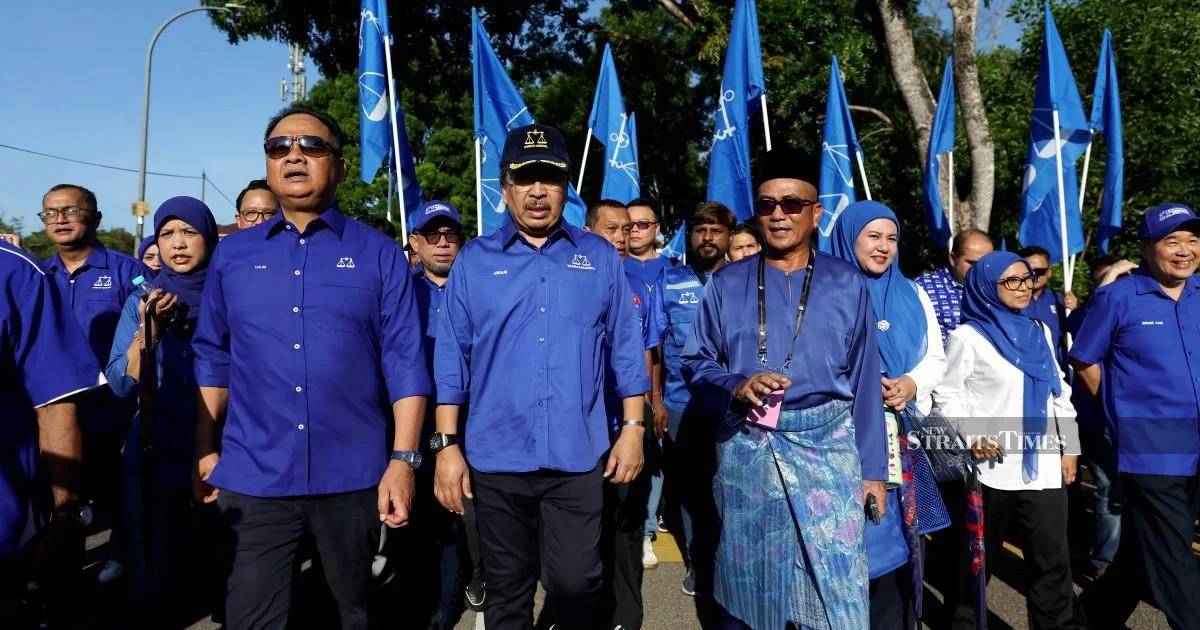
Umno vice-president Datuk Seri Johari Abdul Ghani has intensified the Barisan Nasional campaign push in Johor by personally visiting the Taman Pelangi Indah community hall to rally support for the coalition's candidate contesting the Tiram seat. The high-profile appearance underscores the significance party strategists attach to the constituency as the broader state election campaign gains momentum across the southern peninsula.
The presence of senior party figures during crucial phases of electoral campaigns reflects the internal dynamics of Malaysian politics, where established coalitions depend heavily on demonstrated unity and visible commitment from their leadership ranks. Johari's intervention signals that Barisan Nasional views the Tiram contest as sufficiently competitive to warrant direct engagement from central party machinery, suggesting the coalition cannot take the seat for granted despite its historical dominance in Johor state politics.
Johor remains strategically vital to any governing coalition's parliamentary arithmetic in Malaysia. State elections here often serve as barometers for broader national sentiment, with voters using these contests to signal approval or dissatisfaction with federal leadership. The Tiram seat's particular positioning within the Johor electoral map makes it a focus point for assessing whether Barisan Nasional can retain its traditional strongholds or faces erosion from competing political forces seeking to expand their footprint in the state.
Community halls like the Taman Pelangi Indah venue have become essential touchstones in Malaysian electoral politics, providing intimate spaces where party leaders can connect directly with voters in residential areas. These grassroots engagement sessions allow candidates and senior figures to address local concerns and demonstrate that their party remains attentive to neighbourhood-level issues, from infrastructure maintenance to economic opportunities affecting ordinary residents.
Johari's track record as a senior Umno administrator positions him as a figure capable of mobilising party machinery and reinforcing messaging discipline within the broader coalition framework. His campaign appearance carries implicit messaging about the importance the party places on Tiram, essentially signalling to both supporters and undecided voters that Barisan Nasional is deploying substantial organisational resources to secure victory in this particular contest.
The timing of senior leadership visits during state election campaigns follows established patterns in Malaysian political practice. Party strategists typically concentrate high-profile figures in marginal constituencies where electoral outcomes remain genuinely uncertain, while using lower-profile party officials in seats considered safely held. The deployment of a vice-president to Tiram thus provides observers with insight into how internal polling and constituency assessments rank this particular contest within the broader electoral landscape.
Barisan Nasional's campaign approach in Johor must navigate the complex reality of contemporary Malaysian politics, where voter preferences have become increasingly volatile compared to previous electoral eras. The coalition faces competition from multiple directions—from Opposition-aligned parties seeking to consolidate anti-government sentiment, from faction-based movements within the broader centre-right political space, and from localist concerns that transcend traditional coalition identities.
The Tiram constituency campaign encapsulates broader themes defining the 2024 electoral cycle in Malaysia's states. Voters increasingly demand substantive engagement with policy platforms rather than relying solely on party machinery effectiveness or personality-driven politics. Barisan Nasional's traditional advantage in organisational depth and institutional reach faces pressure from movements able to mobilise support through social media engagement and direct populist appeals addressing cost-of-living anxieties affecting Malaysian households.
Johor's economic position as a major manufacturing and logistics hub means that state-level election outcomes carry implications extending beyond provincial boundaries. Policies affecting industrial development, port operations, and cross-border trade with Singapore influence economic conditions that ripple across the broader Southeast Asian region. Therefore, which coalition controls Johor state government carries significance for regional economic stakeholders monitoring Malaysia's political trajectory.
For Umno specifically, maintaining electoral competitiveness in Johor represents a core organisational imperative. The party's legitimacy within Barisan Nasional rests partly on its capacity to deliver votes in traditional heartland constituencies. Visible commitment to competitive contests like Tiram, demonstrated through deployment of senior leadership figures, reinforces party discipline and signals to grassroots organisers that their efforts matter to the party's central hierarchy.
The community hall engagement model employed here reflects how modern Malaysian electoral campaigns blend traditional grassroots mobilisation with hierarchical party structures. Local residents gain opportunities to address senior figures directly, while those figures reinforce their party's campaign narratives and assess genuine voter sentiment beyond what polling data indicates. These interactions provide valuable intelligence for campaign strategists adjusting tactics as polling day approaches.
As Johor's state election campaign continues developing, the pattern of where senior Barisan Nasional figures concentrate their efforts will provide revealing indicators about which constituencies party leadership considers genuinely competitive versus those written off as either secure or likely losses. Such deployments essentially create a detailed electoral map reflecting internal party assumptions about political terrain, offering observers sophisticated insight into campaign confidence and strategic priorities underlying the coalition's public messaging.

