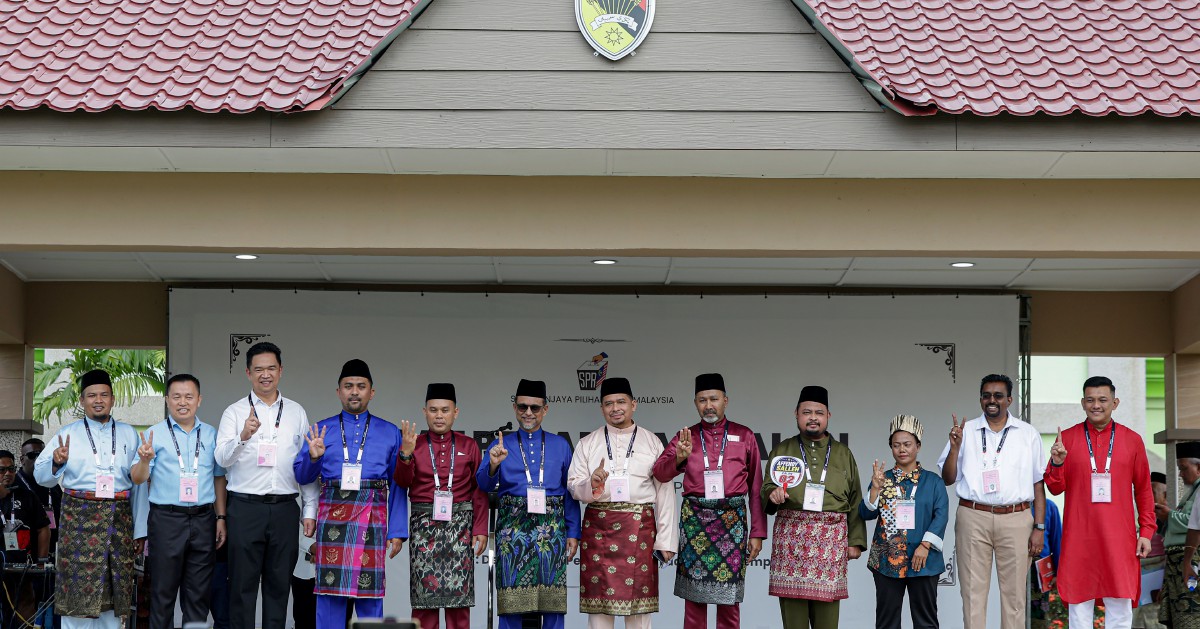
With Negri Sembilan's state election campaign intensifying, Pakatan Harapan's four candidates representing the state seats nested within Jempol parliamentary constituency have made strengthened commitments to address longstanding development gaps and welfare concerns that have affected rural communities in the district. The pledges reflect broader efforts by the opposition coalition to recapture ground in constituencies where agricultural communities and smallholder farmers form a significant voting bloc, particularly among Federal Land Development Authority (Felda) scheme participants whose economic fortunes have fluctuated considerably over recent years.
The Jempol parliamentary constituency, straddling Negri Sembilan's rural interior, encompasses four state assembly seats whose voters comprise a demographic heavily dependent on smallholding agriculture, palm oil cultivation, and related agribusiness activities. Infrastructure deficiencies have long been a focal point of community grievance, with inadequate road networks, unreliable water supply systems, and sporadic electricity services affecting productivity and quality of life. The commitment by PH candidates to place structural rehabilitation at the forefront of their campaign messaging indicates recognition that tangible improvements to essential services represent the threshold issue upon which electoral support will ultimately hinge.
Felda welfare has emerged as a particularly potent electoral concern across rural Peninsular Malaysia, with settler communities voicing persistent complaints about declining yields, insufficient government support, and inadequate mechanisms for debt relief and income stabilisation. The cooperative's historical role as a vehicle for rural development and social mobility has been substantially eroded by global commodity price volatility, particularly the sustained depression in palm oil values that have constrained smallholder incomes. PH candidates' explicit focus on settler welfare therefore addresses not merely an economic issue but a fundamental matter of livelihood security and intergenerational opportunity for families whose economic mobility has become increasingly constrained.
The emphasis on basic amenities reflects recognition among PH strategists that rural constituencies have historically experienced systematic underinvestment relative to urban centres, creating a legitimacy gap that opposition parties can exploit politically. Water supply remains chronically unreliable in several sub-districts, forcing households to depend on irregular tanker deliveries during extended dry seasons. Road infrastructure connecting agricultural areas to market towns remains inadequate for efficient transport of produce, forcing farmers to absorb transportation costs that substantially compress profit margins. Public healthcare facilities and educational institutions lack adequate resourcing and staffing, compelling rural families to undertake lengthy journeys to access services that urban-based constituents take for granted.
The candidates' public pledges must be contextualised within Negri Sembilan's shifting political landscape, where incumbent administrations have struggled to demonstrate demonstrable progress on development metrics that resonate with agricultural constituencies. The state has experienced considerable political volatility over recent election cycles, reflecting voter frustration with governance performance and perceived neglect of rural development priorities. PH's willingness to make specific, spatially-targeted commitments to the four constituencies within Jempol suggests a calculated effort to differentiate its campaign messaging from competitors by anchoring promises to identifiable, measurable improvements rather than abstract policy frameworks.
The particular focus on Felda communities carries significance beyond Negri Sembilan's borders, as the scheme remains institutionally central to rural development policy across Malaysia's Peninsula. Any demonstrable policy innovations or governance improvements that PH can implement within Felda constituencies could potentially be replicated or scaled across other regions, creating a demonstration effect that extends the electoral relevance of Jempol beyond its immediate constituency boundaries. Conversely, failure to deliver on commitments made during the campaign could substantially diminish PH's credibility with agricultural voters in other constituencies, effectively eroding its electoral competitiveness in rural Malaysia more broadly.
The pledges articulated by PH candidates also reflect broader recognition within the coalition that rural constituencies represent a consequential battleground in the incremental realignment of Malaysian electoral geography. Urban centres have gradually shifted toward opposition parties in successive electoral contests, while rural areas—particularly those encompassing smallholder agriculture and traditional industries—have proven more resistant to opposition messaging. By concentrating campaign rhetoric on infrastructure and welfare provision, PH is attempting to reframe the electoral conversation in rural constituencies away from identity-based and religious policy frameworks toward distributive and developmental concerns where opposition parties may possess comparative argumentative advantages.
The infrastructure commitments require substantially enhanced capital allocation to sub-district road networks, water supply augmentation projects, and electricity system reliability improvements that would necessitate coordination across multiple government agencies and potentially substantial public expenditure reallocation. Water security has become increasingly pressing as demographic growth in adjacent urban areas competes with agricultural demand for limited water resources, suggesting that any credible infrastructure improvement package would require sophisticated water resource management planning rather than simplistic supply augmentation. Such technical complexity underscores the distinction between campaign pledges and implementable policy responses, a distinction that voters in sophisticated constituencies are increasingly aware of and vigilant about.
Felda reform constitutes perhaps the more technically challenging element of the PH commitments, as the cooperative's economic viability depends substantially on global commodity markets over which any state or federal administration exercises limited control. Meaningful welfare improvements would necessarily focus on debt restructuring, processing value addition, and income diversification schemes rather than price support mechanisms that would be fiscally unsustainable. The candidates' emphasis on settler welfare therefore requires translation into specific, credible policy architectures that acknowledge market constraints while demonstrating genuine commitment to enhancing household economic security through pathways that enhance productivity and market access rather than through temporary transfers that do not address underlying structural vulnerabilities.
The competitive environment within Jempol's four state constituencies remains fluid, with multiple parties contesting seats and rural voters demonstrating considerable volatility in electoral preferences across successive contests. PH's strategic emphasis on infrastructure and welfare provision represents an effort to identify issue salience that transcends communal divisions and speaks to material concerns that affect the substantial majority of constituents. The credibility of these commitments will ultimately depend on the demonstrated capacity of PH candidates to articulate specific, sequenced implementation plans that allocation resources transparently and prioritise investments according to objectively measurable need assessments rather than patronage considerations.

