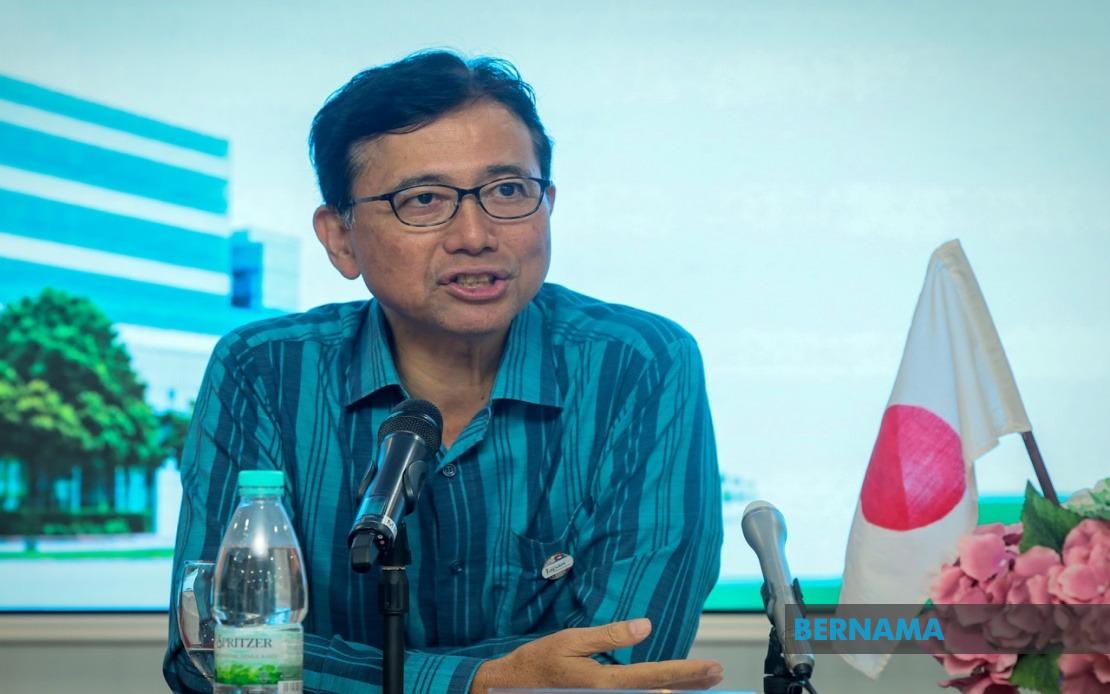
Japan's revised Free and Open Indo-Pacific (FOIP) strategy creates meaningful opportunities for Malaysia to accelerate its emergence as Southeast Asia's premier technology and digital destination, according to Japanese Ambassador to Malaysia Noriyuki Shikata. The framework, unveiled by Japanese Prime Minister Sanae Takaichi in May, represents a pivotal recalibration of Tokyo's regional approach, moving beyond its original 2016 iteration introduced by Shinzo Abe to encompass practical economic and technological cooperation that directly complements Kuala Lumpur's growth ambitions.
The revamped FOIP demonstrates Japan's commitment to supporting capacity development across the Indo-Pacific in strategically significant sectors including artificial intelligence, secure data infrastructure, undersea telecommunications cables and satellite networks. Rather than pursuing a traditional geopolitical containment strategy, the framework positions Japan as an active enabler of regional industrial advancement, particularly for developing economies seeking to upgrade their technological capabilities. This operational shift reflects Tokyo's recognition that sustained regional prosperity and stability depend on shared economic progress rather than strategic competition alone.
Ambassador Shikata characterised the updated framework as a pragmatic refinement rather than a wholesale departure from Japan's original Indo-Pacific vision. The evolution prioritises tangible outcomes in economic security, manufacturing resilience and collaborative innovation partnerships with Global South nations, principles that align remarkably well with ASEAN's own Outlook on the Indo-Pacific. This convergence is significant because it suggests Japan and Southeast Asia now operate from compatible strategic assumptions, reducing potential friction and creating space for deepened institutional cooperation across multiple sectors.
Financial backing underpins these aspirations through the POWERR Asia initiative, a US$10 billion commitment designed to strengthen ASEAN nations' energy independence and critical supply chain security. The funding mechanism addresses longstanding vulnerabilities in fuel procurement, energy reserves and access to essential materials, concerns that have gained urgency following recent global disruptions. For Malaysia specifically, this support infrastructure enables investment in technological upgrading without compromising energy affordability or supply stability, creating conditions for sustainable industrial transformation.
Japanese businesses operating in Malaysia stand to benefit substantially from this strategic reorientation. The framework promises a more secure, transparent and predictable operating environment, encouraging firms to shift capital away from conventional manufacturing toward advanced technology sectors. Japanese investors increasingly view Malaysia as a platform for next-generation ventures rather than a low-cost labour destination, a transition that promises higher-value employment and stronger links to global technology value chains. This recalibration aligns Japanese corporate strategy with Malaysia's own push toward high-skill, innovation-driven economy segments.
Malaysia's established position as a regional semiconductor manufacturing hub positions the nation to capture disproportionate benefits from Japanese technological investment. Major Japanese corporations have signalled keen interest in expanding operations in advanced semiconductor packaging, artificial intelligence infrastructure and cloud computing services. These sectors demand skilled workforces, reliable infrastructure and sophisticated regulatory environments—capabilities Malaysia has been systematically developing. The convergence of Japanese capital availability with Malaysia's sectoral readiness creates natural partnership dynamics that could accelerate both nations' technological advancement.
The Comprehensive Strategic Partnership between Japan and Malaysia, formalised in December 2023, marks the institutional foundation for this expanded cooperation. This arrangement transcends the historical Look East Policy framework that shaped Malaysia-Japan ties throughout the 1980s and 1990s, establishing instead a relationship structured around innovation, intellectual property exchange and co-created technological solutions. The partnership reflects both nations' evolution: Malaysia no longer seeks primarily to import Japanese industrial models wholesale, while Japan recognises that meaningful engagement requires genuine collaboration with a sophisticated regional partner rather than unidirectional technology transfer.
Prime Minister Datuk Seri Anwar Ibrahim's recent engagement with leading Japanese industrial conglomerates including Mitsubishi Corporation, ENEOS, DENSO, IBM and Marubeni during his Japan visit established concrete momentum behind these strategic intentions. Direct engagement between Malaysian political leadership and corporate decision-makers at the highest levels demonstrates governmental commitment to facilitating business environment improvements necessary for technology sector expansion. These interactions generate practical policy pathways rather than abstract diplomatic commitments, increasing the probability that announced intentions translate into tangible investment and employment outcomes.
Forecast collaboration encompasses development of artificial intelligence and quantum computing solutions through joint ventures combining Japanese technological expertise with Malaysia's emerging capabilities. Beyond commercial applications, joint initiatives addressing critical infrastructure protection and supply chain resilience will position both nations to navigate increasingly uncertain geopolitical environments with greater confidence. Such security-focused cooperation acknowledges shared vulnerabilities in semiconductor supply chains and digital infrastructure while building institutional relationships that strengthen collective resilience.
For Malaysia's broader economic development strategy, Japan's updated FOIP framework provides external validation and concrete support for the nation's digital transformation agenda. Rather than proceeding alone through costly infrastructure development and workforce reskilling initiatives, Malaysia can leverage Japanese capital, technology and expertise to accelerate progress toward knowledge-economy status. This partnership model, premised on mutual benefit rather than aid dependency, creates sustainable foundations for long-term technological advancement benefiting both economies.
The timing of this strategic alignment proves particularly significant given regional competition for technology sector dominance. Vietnam, Thailand and Indonesia are simultaneously pursuing similar digital hub aspirations, creating dynamic competition for Japanese investment. Malaysia's ability to translate strategic partnership commitments into concrete policy advantages—through regulatory streamlining, intellectual property protections and workforce development—will determine whether the framework produces tangible economic benefits or remains aspirational. Ambassador Shikata's emphasis on Japan's commitment suggests Tokyo intends substantive rather than symbolic engagement, but implementation outcomes will ultimately define the partnership's success.
Looking forward, the Malaysia-Japan relationship enters a qualitatively different phase characterised by technological co-development rather than technology absorption. This maturation reflects Malaysia's two-decade journey from manufacturing hub toward digital economy participant. Successful execution of announced cooperation frameworks could position Malaysia as a preferred location for advanced technology companies seeking Southeast Asian operations, creating employment opportunities across professional, technical and skilled worker categories. The updated FOIP framework thus represents not merely diplomatic coordination but a structural realignment potentially reshaping Malaysia's role within regional and global technology ecosystems.

