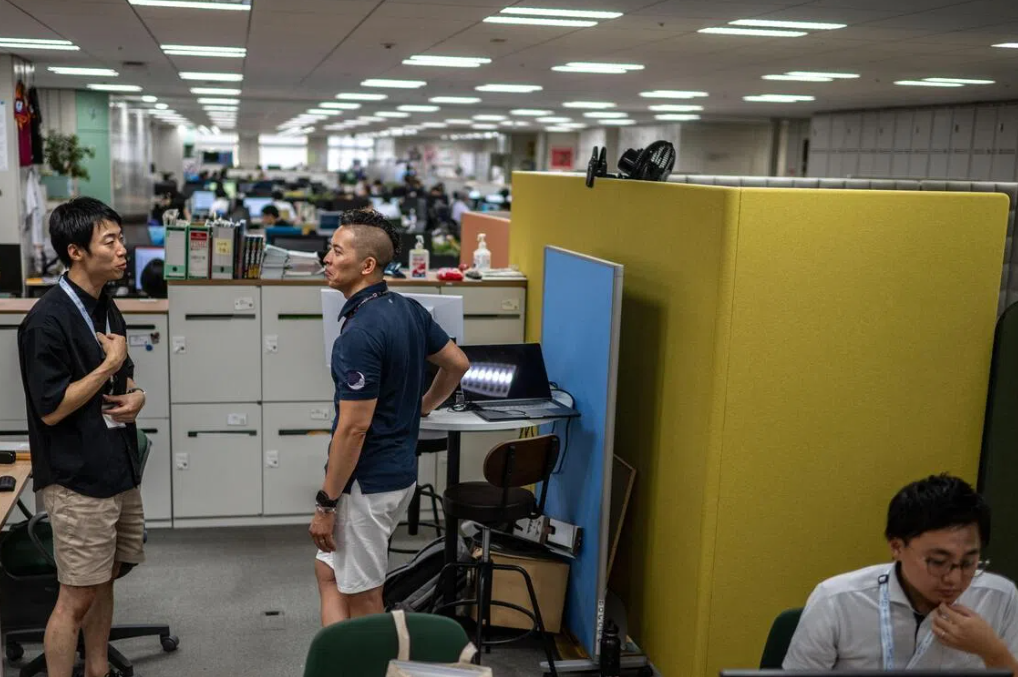
Japan's capital is grappling with an unexpected social complication as it seeks to help workers endure sweltering summer conditions through more relaxed office dress codes. The Tokyo metropolitan government's April announcement that employees could swap traditional suits and ties for casual wear—including T-shirts, trainers, and crucially, shorts—was designed as a practical response to the region's punishing heat. Yet the initiative has inadvertently exposed deeper cultural tensions around workplace aesthetics, body image, and gender expectations in Japanese professional settings.
The phenomenon dubbed "sunehara", or "leg hair harassment", captures growing concern among some workers, particularly women, about the prospect of viewing exposed male colleagues' shin hair in close office quarters. What began as an environmental and health-focused policy has become an unlikely flashpoint for discussion about bodily presentation, social propriety, and the limits of casualisation in Japan's historically formal corporate culture. Tokyo environmental official Noboru Watanabe attempted to defuse concerns by emphasising the campaign's flexibility, telling the BBC that the government's intention is to expand clothing options during extreme heat rather than mandate specific attire, provided nothing deemed offensive appears in workplaces.
However, determining what constitutes offensive workplace appearance has proved far murkier than anticipated. A June survey conducted by Gorilla Clinic, a major Japanese men's cosmetic treatment provider, revealed the depth of public ambivalence around shorts at work. The poll found that 53.5 per cent of respondents actively opposed wearing shorts in professional environments, while 46.5 per cent endorsed the practice—a near-even split that suggests no clear consensus exists. The opposition frequently cited anxieties centred on body shape and visible body hair, underscoring how clothing decisions intersect with broader insecurities about physical appearance in Japanese workplaces.
Demographic patterns in the survey data illuminate the gender dimension of this unexpected controversy. Women respondents substantially outnumbered men in opposing office shorts, signalling that female employees may harbour particular reservations about viewing their male colleagues' exposed legs and associated hair. This gendered response reflects traditional Japanese workplace dynamics, where appearance standards have historically fallen more heavily on women, and suggests that relaxing dress codes creates new discomfort zones rather than simply liberating workers from restrictive norms. The disparity hints at unspoken hierarchies in how different bodies and their presentation are policed within Japanese corporate settings.
The debate has triggered an intriguing market response that underscores how office fashion anxieties translate into consumer demand. Akifumi Funatsu, a director at Gorilla Clinic, reports a notable uptick in male clients seeking laser hair removal services. Significantly, these men are motivated not primarily by aesthetic preference but by a sense of "social etiquette when wearing shorts", suggesting they have internalised concerns about making colleagues uncomfortable through their body hair visibility. This phenomenon reveals how ostensibly personal grooming decisions become entangled with workplace conformity pressures, particularly as dress codes shift and new standards of acceptability remain ambiguous.
Japan's gradual shift toward more informal office attire represents a decades-long cultural evolution, though progress has been uneven. The original Cool Biz campaign launched in 2005 under then-environment minister Yuriko Koike—who now serves as Tokyo Governor—encouraged workers to abandon jackets and ties in favour of short-sleeved shirts, framed explicitly as an energy conservation measure. The campaign gained symbolic momentum when Prime Minister Junichiro Koizumi publicly embraced the dress code, lending political legitimacy to informality. Following the 2011 earthquake and tsunami, which severely strained Japan's power infrastructure, the government introduced "Super Cool Biz", further dismantling workplace dress restrictions and paving the way for today's more relaxed environment.
Over the past decade, particularly at technology companies and start-ups, casual workwear has become increasingly normalised. Nonetheless, Japan's corporate mainstream remains considerably more formal than counterparts in North America or parts of Europe, and the Tokyo government's specific endorsement of shorts represents a notably aggressive push beyond previous boundaries. This latest expansion reflects not merely fashion preference but a direct response to genuine public health threats posed by Japan's intensifying summer climate. Between July 6 and July 12 alone, according to the Fire and Disaster Management Agency, heatstroke claimed seven lives and hospitalised 4,580 individuals, illustrating the severity of seasonal thermal stress affecting the population.
Japan's extreme summer temperatures, combined with high humidity that compromises the body's natural cooling mechanisms through perspiration, create conditions that officials have increasingly recognised as life-threatening public health emergencies. Government guidance emphasises hydration, air-conditioning use, and gradual heat acclimatisation as protective measures. Simultaneously, consumer markets have responded with innovation, offering clothing embedded with cooling technology, specially formulated cooling wipes, heat-reflective umbrellas, and portable fan devices. Within this broader context of combating dangerous heat, the Cool Biz initiative represents rational policy rather than fashion-driven change, yet its social complications reveal how deeply clothing practices remain bound to unstated cultural rules.
For Malaysian and Southeast Asian readers, Japan's "leg hair harassment" controversy offers illuminating parallels and contrasts with regional workplace cultures. While Malaysia's tropical climate creates similar heat pressures that necessitate practical clothing solutions, professional dress codes in Malaysian offices remain comparatively formal, with business casual representing the minimum standard in many sectors. The Japanese experience demonstrates how seemingly straightforward measures—permitting shorts in summer—can activate deeper anxieties about propriety, gender, and bodily presentation that exist beneath formal workplace rules. Moreover, the gendered nature of opposition to dress code relaxation, evident in Japan's survey data, reflects patterns visible across Asia where women bear disproportionate scrutiny regarding appearance while simultaneously expressing concern about men's presentation standards.
The unresolved tension between Cool Biz's rational heat-management objectives and cultural discomfort with particular dress choices suggests that workplace modernisation cannot be purely technical or environmental in nature—it inevitably intersects with embodied social norms. Japan's debate about leg hair illustrates how, even as formal dress codes gradually erode, new and sometimes unexpected standards emerge to govern bodies in professional spaces. Whether the nation ultimately embraces shorts as acceptable summer workwear, restricts them to certain industries, or allows continued ambiguity about acceptability will depend partly on whether cultural norms can evolve alongside climate realities. For now, the boundaries of acceptable leg remain conspicuously contested.

