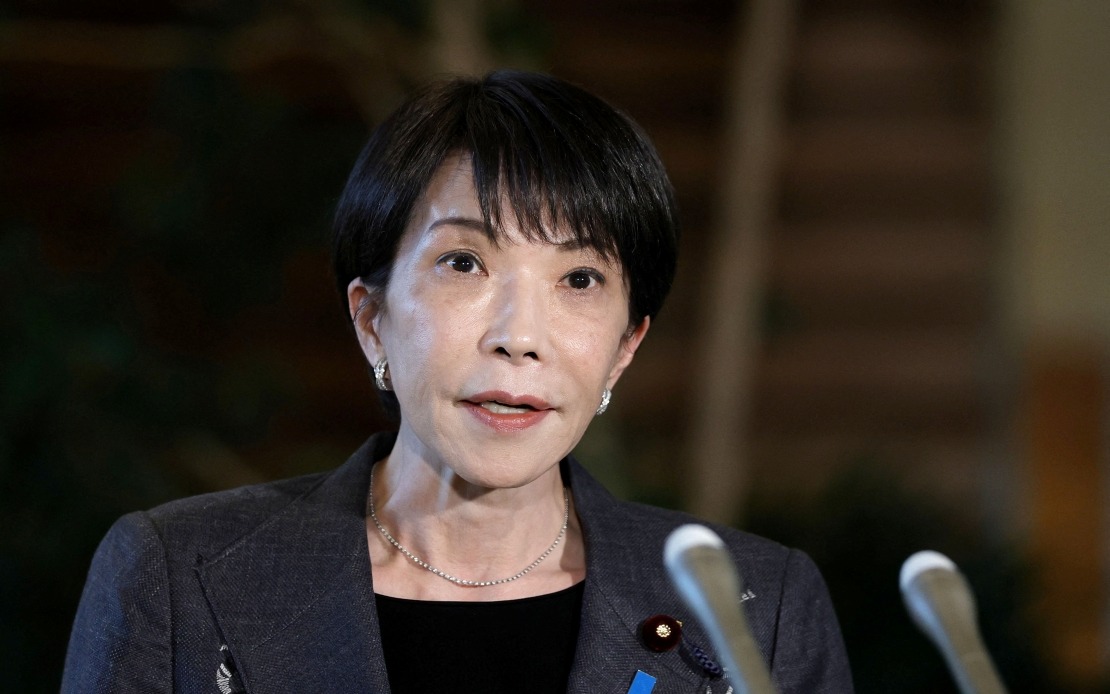
Prime Minister Sanae Takaichi has moved to quell speculation about the permanence of a planned consumption tax reduction on food, explicitly promising during a parliamentary session that the levy will return to its standard 8 per cent after a two-year trial period beginning in April 2027. The assurance represents a significant clarification of the ruling Liberal Democratic Party's position on the divisive economic measure, which has become central to Japan's efforts to ease inflationary pressures on household budgets while maintaining fiscal discipline.
The LDP had initially campaigned in February's lower house election on a pledge to eliminate consumption tax entirely on food and beverages, a promise echoed by coalition partner Japan Innovation Party and various opposition factions seeking to demonstrate responsiveness to public concerns about the rising cost of living. However, the party's cross-party national council on taxation and social security reconsidered this commitment and instead proposed a more modest approach: reducing the rate to just 1 per cent for two years, with Takaichi's explicit assurance that the reduction would be temporary.
The shift away from a zero-rate plan stems partly from practical considerations. Implementing a completely eliminated tax would require extensive modifications to retailers' point-of-sale systems across the nation, a logistical undertaking that would consume considerable time and resources. The 1 per cent compromise emerged as a more operationally feasible middle ground that could still deliver meaningful relief to consumers without requiring as extensive a technological overhaul of commercial infrastructure.
Takaichi's parliamentary testimony, delivered in response to questioning from Democratic Party for the People lawmaker Ken Tanaka, directly addressed widespread scepticism about whether any government could politically withstand restoring a tax once reduced. Tanaka had argued that lowering the rate would create powerful public resistance to any subsequent increase, as voters would inevitably perceive it as a "tax increase" rather than a return to normal levels. This concern reflects Japan's political history, where consumption tax adjustments have repeatedly triggered public backlash and contributed to electoral setbacks for governing parties.
The LDP's commitment comes at a moment of significant fiscal anxiety. Japan's government bond yields have climbed to their highest levels in decades, while the yen remains persistently weak against major currencies. These developments have intensified concerns about Japan's public debt position, which already constitutes the worst fiscal condition among Group of Seven economies. Any major revenue-reducing measure risks further straining the nation's already precarious balance sheet and potentially triggering credit rating downgrades or increased borrowing costs.
To partially offset the revenue loss from the reduced consumption tax, the LDP proposed distributing annual cash handouts totalling 600 billion yen, equivalent to approximately US$3.7 billion. This represents the estimated tax revenue that a 1 per cent levy on food would generate. By coupling the tax reduction with direct cash payments rather than forgone government revenue, the party attempts to frame the initiative as a targeted support mechanism rather than a broad-based fiscal concession. The approach allows the government to maintain some revenue collection while directing benefits toward households most affected by inflation.
Takaichi has signalled her intention to move forward with implementing the tax reduction "as soon as possible" following publication of the national council's formal interim report, expected later in June. This timeline suggests the government views the measure as a priority, though the multiple layers of approval and coordination required—including finalising the tax council's recommendations and navigating coalition politics—means several months would likely elapse before legislative action occurs.
For Southeast Asian observers, particularly Malaysia, the Japanese experience offers instructive lessons about the political economy of consumption tax administration. Malaysia's own goods and services tax debates have similarly involved tensions between addressing consumer price pressures and maintaining fiscal sustainability. Japan's gradual approach to narrowing the scope of its tax cut, compared to its original campaign promises, illustrates how fiscal realities ultimately constrain even popular electoral commitments.
The controversy also underscores the difficulty democratic governments face when attempting to implement temporary tax measures. Takaichi's explicit parliamentary commitment to restoration aims to establish political credibility and signal to international investors that Japan recognises its fiscal constraints. Yet the prime minister's need to make such an emphatic public pledge suggests considerable uncertainty about whether a future government—whether her own or a successor administration—would actually follow through. The very act of requiring reassurance indicates how fragile such commitments can be in electoral politics.
Japan's fiscal trajectory remains a critical concern for regional economics, given Tokyo's role as the world's third-largest economy and a major trading partner for Southeast Asian nations. Any significant fiscal deterioration could constrain Japan's capacity for regional investment, development assistance, and economic cooperation. The consumption tax debate thus carries implications extending well beyond Japan's borders, affecting confidence in Japanese fiscal management and potentially influencing regional economic stability and growth prospects.
The practical implementation details—particularly how the government would coordinate the 1 per cent rate across prefectures and ensure uniform application across different merchant categories—remain to be clarified once the tax council finalises its recommendations. These technical questions will significantly influence both the measure's actual impact on consumer prices and the political durability of any subsequent government commitment to restoration.

